 1-800-656-4211



Blog
Quercetin Supplement: What It Actually Does, How to Dose It, and Who Should Take It

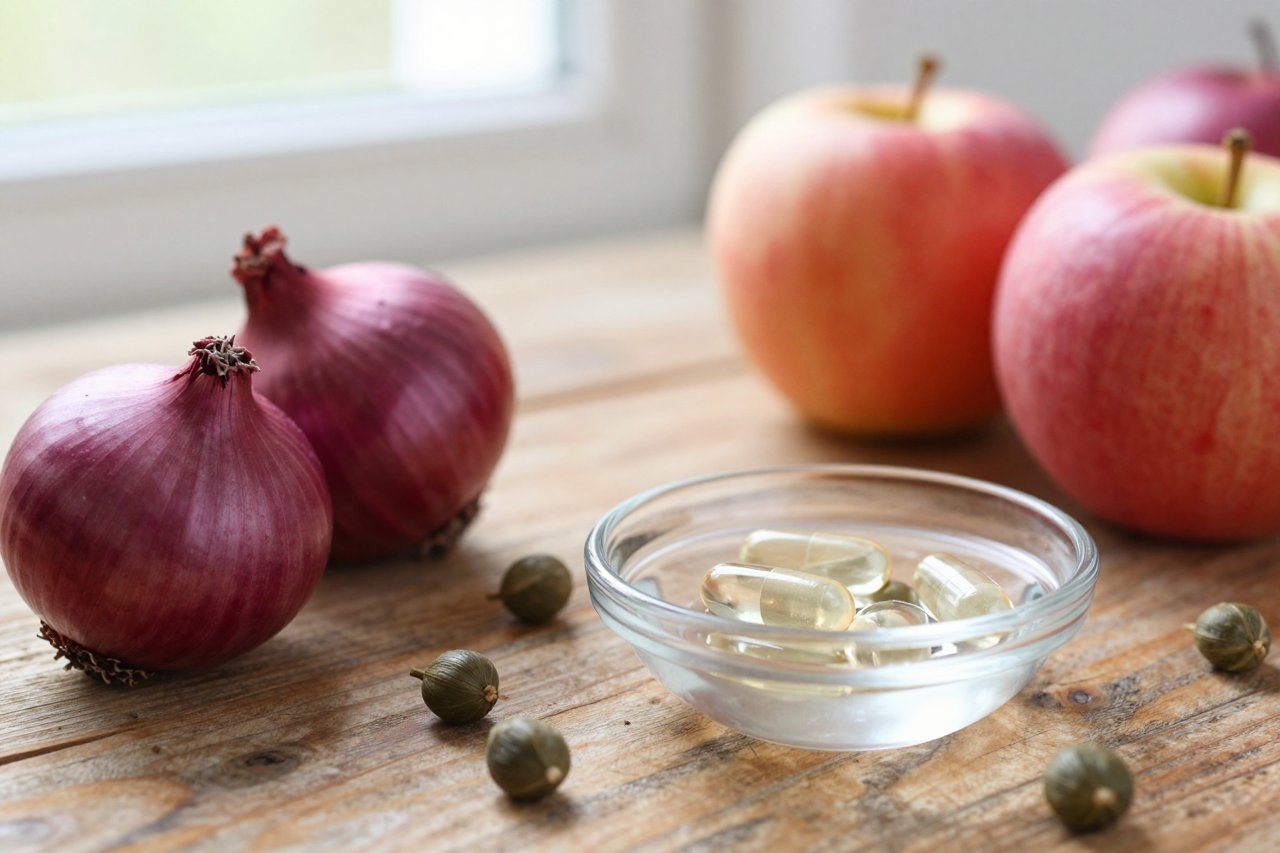
A red onion contains roughly 20 milligrams of quercetin. A cup of capers? Over 300. That gap matters when you’re trying to figure out whether a quercetin supplement is worth your money.
Quercetin is a flavonoid, one of those plant pigments that give fruits and vegetables their color. It’s also one of the most studied polyphenols on the planet. But getting enough from food alone is tough. Most people consume less than 10 milligrams a day, while clinical studies often use 500 to 1,000 milligrams. That’s why supplements exist. They deliver a concentrated dose that food can’t realistically match.
The catch is that quercetin doesn’t absorb well on its own. Its cousin, a form called quercetin phytosome, solves that problem. So do combinations with bromelain or vitamin C. If you’re going to spend money on a supplement, you need to know which form works, how much to take, and what it can realistically do for allergies, inflammation, and long-term health.
What Quercetin Actually Is (and Why It’s Not Just Hype)
Quercetin belongs to a class of plant compounds called flavonoids. You’ll find it in onions, apples, berries, capers, tea, and red wine. In plants, it helps defend against UV radiation and pathogens. In humans, it acts as an antioxidant and influences several cellular pathways.
What makes quercetin interesting to researchers is its ability to stabilize mast cells. Those are the immune cells that release histamine during an allergic reaction. Quercetin also inhibits certain enzymes involved in inflammation, like lipoxygenase and phospholipase A2. That’s a fancy way of saying it may help calm the immune system without shutting it down completely.
Unlike many antioxidants, quercetin has been tested in dozens of human trials. Some show real benefits. Others are mixed. The key is understanding the dose, the form, and the condition being studied.
How Quercetin Works in the Body
Quercetin’s effects come from a few overlapping mechanisms:
- Antioxidant activity: It neutralizes free radicals and boosts the body’s own antioxidant enzymes, like glutathione.
- Anti-inflammatory action: It blocks inflammatory signaling molecules such as TNF-alpha and interleukin-6.
- Mast cell stabilization: It prevents the release of histamine, which is why it’s popular for seasonal allergies.
- Zinc transport: Quercetin acts as a zinc ionophore, helping zinc get inside cells where it can interfere with viral replication.
- Blood vessel support: It improves nitric oxide production, which relaxes arteries and can lower blood pressure.
These aren’t just test-tube findings. Human studies have measured changes in blood pressure, inflammatory markers, and allergy symptoms after quercetin supplementation.
The Most Researched Quercetin Benefits
Allergies and Sinus Relief
If you deal with hay fever, quercetin might be the most relevant supplement in your cabinet. A 2016 study in the Journal of Clinical and Diagnostic Research found that 500 mg of quercetin daily reduced allergy symptoms like sneezing, runny nose, and itchy eyes in people with seasonal allergies. It didn’t eliminate symptoms, but participants reported noticeable relief.
Quercetin works best for allergies when paired with bromelain, an enzyme from pineapple that improves absorption and adds its own anti-inflammatory effects. You can read more about that combination in this guide to bromelain and quercetin for swelling, sinuses, and allergies.
Inflammation and Joint Health
Chronic inflammation drives everything from arthritis to metabolic syndrome. Quercetin has been shown to lower C-reactive protein (CRP), a key marker of systemic inflammation. In a small trial of women with rheumatoid arthritis, 500 mg of quercetin daily for eight weeks reduced early morning stiffness and pain.
For general joint discomfort, some people stack quercetin with bromelain supplements, which can enhance its anti-inflammatory effects. The pair is often sold together for this reason.
Heart and Blood Vessel Support
Quercetin’s effect on blood pressure is one of its better-established benefits. A meta-analysis of nine randomized controlled trials found that quercetin supplementation lowered systolic blood pressure by about 3.5 mmHg and diastolic by 2.6 mmHg. That’s modest but meaningful, especially for people with mildly elevated readings.
The effect comes from quercetin’s ability to increase nitric oxide, which helps blood vessels dilate. It also reduces oxidative stress in the arteries. If you’re on blood pressure medication, talk to your doctor before adding quercetin, as the combination could lower pressure too much.
Immune and Antiviral Activity
Quercetin’s zinc ionophore action has made it a subject of interest for viral infections. By helping zinc enter cells, it may interfere with the replication of viruses like the common cold and influenza. Some research suggests it could shorten the duration of a cold if taken early.
For immune support, quercetin is often combined with elderberry, which has its own antiviral and immune-modulating properties. The two work through different pathways, so they can complement each other.
Exercise Recovery and Oxidative Stress
Intense exercise creates free radicals that damage muscle cells and slow recovery. Quercetin’s antioxidant power may help. A study of cyclists found that 1,000 mg of quercetin daily for three weeks reduced muscle damage markers after a strenuous ride. It also improved time to exhaustion in some trials.
Other antioxidant-rich fruits like sea buckthorn and goji berries offer similar support. Some athletes rotate between them to cover different pathways.
Quercetin Dosage: What Studies Actually Use
Most human trials use between 500 and 1,000 mg per day, divided into two or three doses. For allergies, 500 mg twice daily is common. For blood pressure, 500 mg once or twice daily. For exercise recovery, doses go up to 1,000 mg per day.
Higher isn’t always better. Quercetin has a ceiling effect, and taking more than 1,500 mg daily hasn’t shown extra benefits in most studies. It can also cause stomach upset in sensitive people.
Timing matters too. Quercetin has a short half-life, so splitting doses keeps levels steadier in your blood. Take it with a meal containing fat to improve absorption.
Forms of Quercetin Supplements (and Which Ones Absorb Better)
Not all quercetin supplements are created equal. The raw powder, called quercetin dihydrate, is cheap but poorly absorbed. Only about 2-4% makes it into your bloodstream. Here are the main forms you’ll see:
- Quercetin dihydrate: The standard form. Cheap, but low bioavailability. Needs higher doses.
- Quercetin aglycone: The pure form without sugar molecules. Slightly better absorbed than dihydrate.
- Quercetin phytosome (Quercefit): Quercetin bound to phospholipids from sunflower. Absorption is up to 20 times higher. Doses of 100-200 mg can match 500 mg of dihydrate.
- Quercetin with bromelain: Bromelain improves absorption and adds anti-inflammatory benefits. Common in allergy formulas.
- Quercetin with vitamin C: Vitamin C enhances quercetin’s stability and adds its own antioxidant support.
If you want the most bang for your buck, look for a phytosome form or a combination with bromelain. The upfront cost is higher, but you may need less product to get the same effect.
Potential Side Effects and Who Should Be Careful
Quercetin is generally well tolerated. Most people don’t experience side effects at doses up to 1,000 mg per day. When they do, it’s usually mild: headache, stomach ache, or tingling in the hands and feet.
But quercetin interacts with several medications. It can enhance the effects of blood thinners like warfarin, increasing bleeding risk. It may also interfere with certain antibiotics and chemotherapy drugs. If you’re on any prescription medication, check with your pharmacist before starting.
People with kidney disease should be cautious. Quercetin is processed by the kidneys, and high doses could put extra strain on them. Pregnant and breastfeeding women should avoid supplements unless a doctor approves.
How to Choose a Quality Quercetin Supplement
Walk into any health food store and you’ll see dozens of options. Here’s what to look for:
- Third-party testing: Brands that use NSF, USP, or Informed Choice have their products verified for purity and potency.
- Clear dosage: The label should state how much quercetin is in each capsule, not just the total blend weight.
- Minimal fillers: Avoid unnecessary additives like magnesium stearate, titanium dioxide, or artificial colors.
- Form matters: Phytosome or bromelain combos are worth the extra cost if you want results.
- Reputable brand: Look for companies with a history of quality control, not just the cheapest option on Amazon.
You don’t need a subscription or a fancy label. A simple, well-dosed product from a trusted brand will do the job.
Stacking Quercetin with Other Supplements
Quercetin rarely works alone. Its absorption and effects improve when paired with the right partners. The most common stacks include:
- Bromelain: Enhances absorption and adds anti-inflammatory enzymes. Great for allergies and joint pain.
- Vitamin C: Stabilizes quercetin and supports immune function. A classic combo.
- Elderberry: Adds antiviral support for cold and flu season.
- Sea buckthorn or goji berries: Provide complementary antioxidants for overall wellness.
Don’t stack everything at once. Start with one or two combinations and see how you feel. More isn’t always better, and some ingredients can compete for absorption.
Realistic Expectations: What Quercetin Won’t Do
Quercetin is not a miracle cure. It won’t replace medication for high blood pressure, and it won’t stop a severe allergic reaction. It’s a supportive supplement, not a treatment.
You also won’t feel it working immediately. Most benefits show up after two to four weeks of consistent use. For allergies, it may take a few days to build up in your system. For blood pressure, give it a month.
If you’re looking for a quick fix, quercetin will disappoint you. If you’re looking for a well-researched, generally safe supplement that can nudge your body in a healthier direction, it’s a solid choice. Just set your expectations accordingly, choose a quality form, and give it time.
