 1-800-656-4211




Blog
Sea Buckthorn Benefits: What This Tart Orange Berry Really Does for Your Body

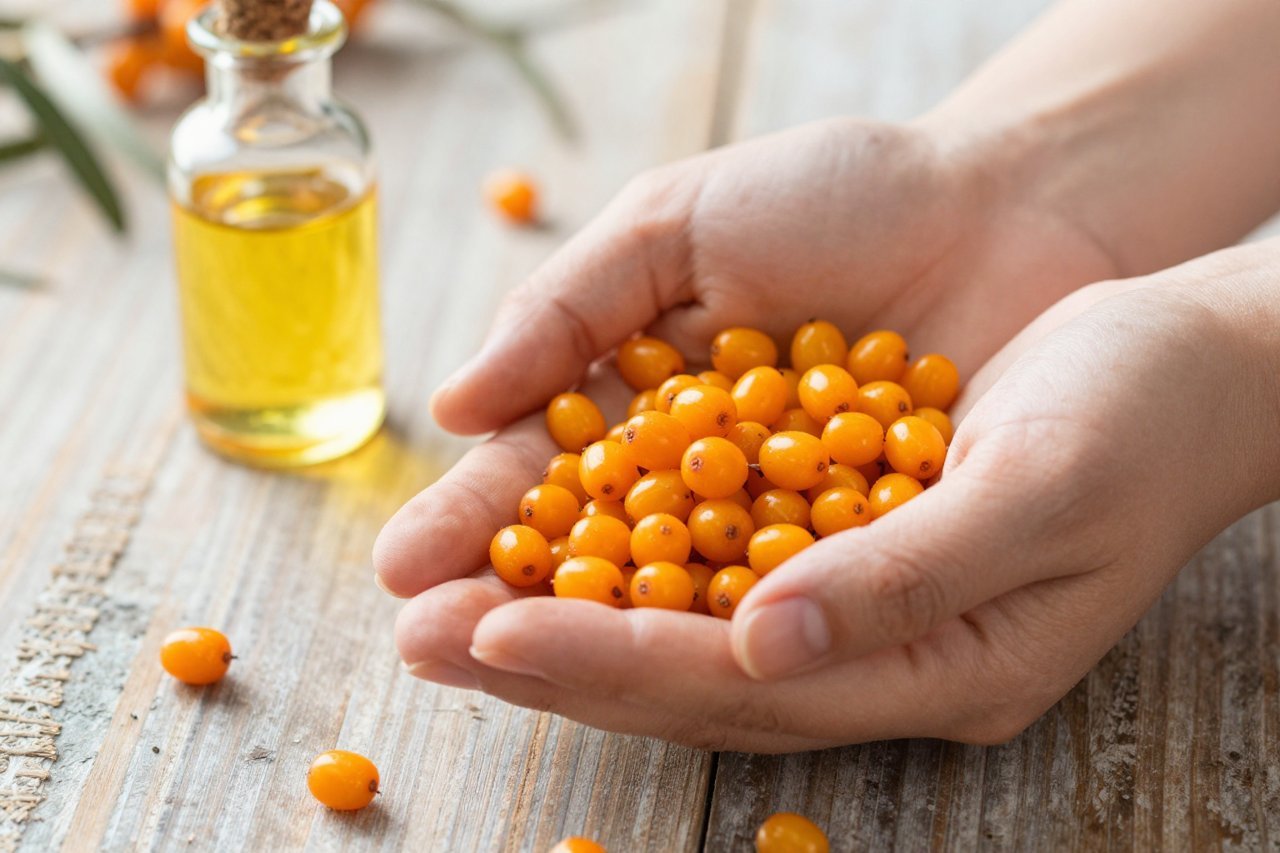
A Sour Berry With an Unreasonably Long Résumé
Sea buckthorn (Hippophae rhamnoides) is a thorny shrub that grows along coastlines, riverbanks and mountain slopes from the Baltic Sea to the Tibetan plateau. The berries are small, bright orange and aggressively tart, somewhere between a sour tangerine and a mouthful of lemon pith. They also carry one of the strangest nutrient profiles in the plant kingdom, which is why the plant has been eaten, pressed and prescribed across Asia and Eastern Europe for well over a thousand years.
Today you’ll find it as juice concentrate, seed oil, softgel capsules, powder and face cream. Sorting genuine effects from smart marketing takes a bit of work. If you want the plant’s backstory first, there’s a good piece on why this sour orange berry is more than a pretty coastal shrub. Otherwise, read on for what the research actually supports.
What’s Actually Inside the Berry
The headline number is vitamin C. Depending on variety, altitude and ripeness, 100g of raw sea buckthorn berries can hold anywhere from roughly 100mg to well over 1,000mg of ascorbic acid. A navel orange delivers about 53mg per 100g. The berries also bring vitamin E, vitamin K, several B vitamins, carotenoids such as beta-carotene and lycopene, and a wide set of flavonoids including quercetin and isorhamnetin.
Then there’s the fat, which is where sea buckthorn gets genuinely unusual. It’s one of very few plant foods with meaningful amounts of palmitoleic acid, an omega-7 fatty acid otherwise found mainly in human tissue and dairy fat. The soft pulp is rich in omega-7 and omega-9; the seeds carry most of the omega-3 and omega-6. Because those oils sit in different parts of the fruit, seed oil and berry oil do different jobs, and serious brands sell them separately for exactly that reason.
Skin: Where the Evidence Is Strongest
Most clinical work on sea buckthorn focuses on skin, and the results are more convincing than for most superfood claims. A three-month trial published in the Journal of Nutritional Science gave Finnish women either sea buckthorn oil or a placebo, and the oil group finished with better skin elasticity and less water escaping through the skin’s surface. Other small trials have found similar improvements in dryness and roughness, from capsules as well as from creams containing berry oil.
The likely reasons are layered. Vitamin C is a cofactor your body needs to build collagen. The omega-7 and omega-3 fats feed into the lipid barrier that keeps moisture in. Carotenoids and vitamin E mop up some of the oxidative damage that shows up as dullness and fine lines.
None of that makes sea buckthorn a replacement for retinol or sunscreen, and anyone stacking skin supplements should first know which collagen supplements are worth buying and which are just expensive powder. Used alongside a sensible routine, though, it earns its place.
Topical or oral?
Both have support. Berry oil applied directly seems to help with barrier repair and mild inflammation, which is why it turns up in balms for cracked skin and eczema-prone patches. Taken internally, the effect builds slowly over eight to twelve weeks. If dry, tight skin is your main complaint, capsules are the easier habit to keep.
Heart Health and Cholesterol
Chinese cardiology researchers were studying sea buckthorn extracts for angina and elevated cholesterol back in the 1980s, long before the West caught on. More recent trials point to modest improvements in total cholesterol and LDL oxidation, plus a mild antiplatelet effect from the flavonoids.
The honest summary is that the effect is real but small, and it sits alongside medication rather than replacing it. If you take warfarin, aspirin or another blood thinner, have a word with your doctor before starting, because that antiplatelet action adds up.
Immunity and the Vitamin C Question
Sea buckthorn’s vitamin C load is the main reason it gets sold as an immune booster, and here it pays to be precise. Vitamin C doesn’t stop most people from catching colds. What it does do, across several large reviews, is shave roughly a day off how long a cold lasts and ease how rough those days feel. The flavonoids in the berry may add a little antioxidant support on top.
For anyone whose diet runs short on fruit and vegetables, a sea buckthorn juice or powder is an efficient way to close that gap. For someone already eating well, expect a modest nudge rather than a transformation.
The Omega-7 Angle: Dry Eyes and Mucous Membranes
Palmitoleic acid is the star of a smaller but intriguing area of research. A randomised trial in Finland found that oral sea buckthorn oil reduced tear film osmolarity and eye discomfort in people with dry eye, and traditional Russian and Chinese practice uses the oil for dry mouth, sore throats and irritated mucous membranes generally.
If you live with dry eye, it’s a reasonable add-on to lubricating drops and regular screen breaks. Give it at least two months before judging.
Digestion, Liver and Blood Sugar
Sea buckthorn has a long folk history as a digestive tonic in Mongolia and Tibet, and modern animal studies show its flavonoids protecting liver tissue from chemical damage and improving lipid profiles in fatty liver models. Human data is thinner, so treat this as promising rather than proven.
On blood sugar, small trials in people with type 2 diabetes have reported lower fasting glucose after sea buckthorn supplementation, possibly because the fibre and polyphenols slow carbohydrate absorption. It is not a treatment for diabetes. Sweetened juice concentrates can also carry as much sugar as a soft drink, which rather defeats the point.
How to Take It Without Wincing
- Juice: the easiest entry point, but check for added sugar. Straight concentrate is punishingly sour, so dilute it.
- Berry (pulp) oil: the omega-7 option, usually 1-2 teaspoons or 2-3 capsules daily, best taken with food.
- Seed oil: higher in omega-3, sold in capsules, often chosen for skin and cholesterol goals.
- Powder: freeze-dried whole fruit, easy to stir into yoghurt, porridge or a smoothie. Around 5-10g a day is typical.
Whole berries freeze well and cook down into a sharp sauce for pork, duck or oily fish. If you’d rather someone else tested the recipes first, there’s a longer rundown of sea buckthorn benefits with three health and beauty recipes attached.
Who Should Be Cautious
Sea buckthorn is a food, and reactions are uncommon, but a few groups should slow down. People on blood thinners need a clinician’s input, as noted above. Some users report loose stools, reflux or a sour stomach if they take the oil on an empty one. Anyone with a history of kidney stones may want to moderate very high vitamin C intakes, and if you react to latex or related plants, patch test a topical oil first, since reactions have been reported.
Pregnant women are better off sticking to food amounts rather than concentrated supplements unless a doctor says otherwise.
Reading the Label Properly
Quality varies wildly between brands. A few things are worth checking before you pay:
- Which oil? “Sea buckthorn oil” alone is vague. Look for seed oil or berry/pulp oil named specifically.
- Origin and extraction: cold-pressed Baltic, Siberian or Himalayan fruit is the norm, and supercritical CO2 extraction is common for seed oil.
- Sugar: juice blends are often topped up with apple or grape concentrate. Read the ingredients panel, not the front of the bottle.
- Dose: capsules holding 250mg of oil are a very different proposition from ones holding 1,000mg.
Store oils in the fridge once opened and use them within a few months, because the unsaturated fats go rancid faster than olive oil does. A fresh bottle smells faintly fruity and slightly grassy. A bitter, paint-like smell means it’s past its best.
