 1-800-656-4211




Blog
Goji Berry Fruit Benefits: Science, Nutrition, and Simple Ways to Enjoy Them

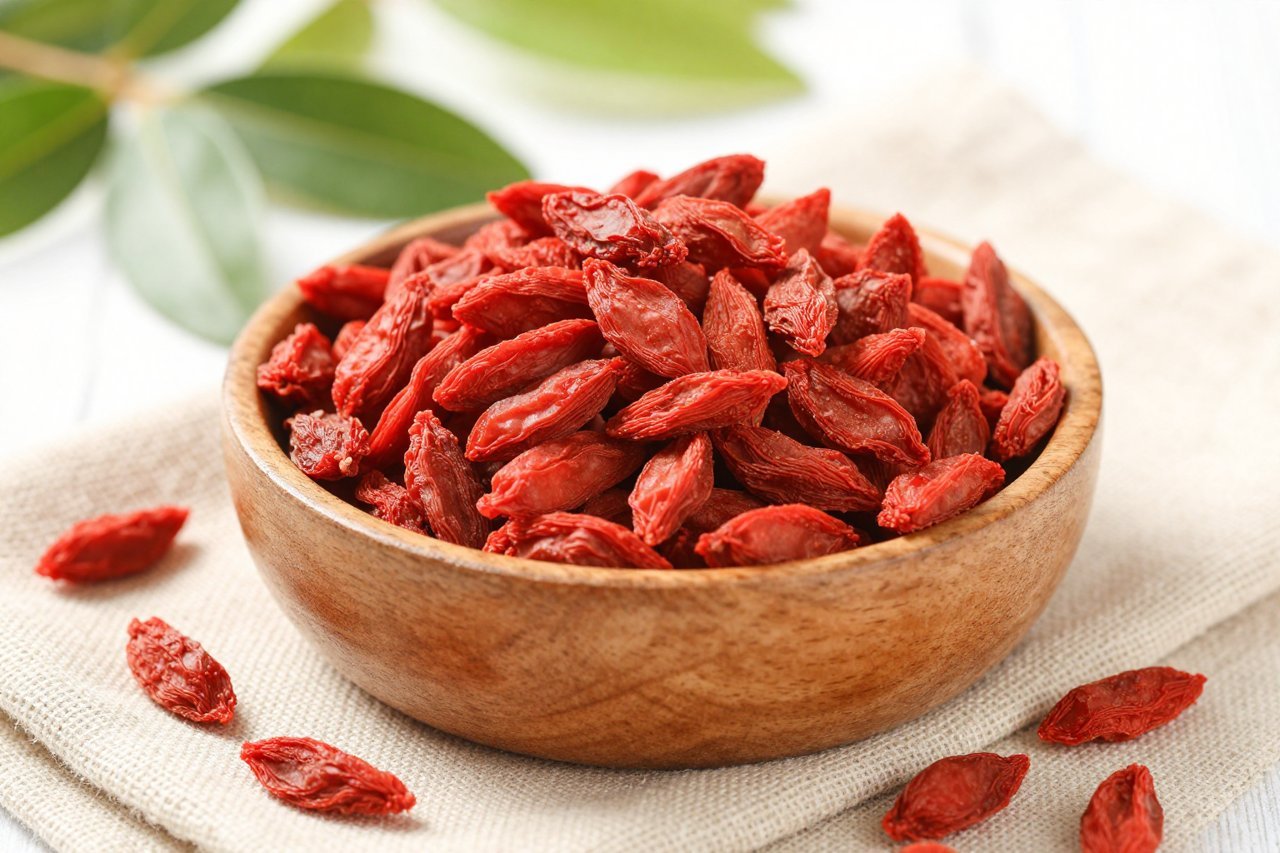
Some superfoods owe their reputation to clever packaging. Goji berries have been building theirs for centuries. Eaten fresh in parts of Asia and dried almost everywhere else, these small red fruits carry a genuine food culture. But if you set aside the marketing, what do goji berry fruit benefits look like in practice? Let’s break them down into nutrients, research, and real-world use.
What Are Goji Berries?
Goji berries come from the Lycium barbarum plant, a hardy shrub that grows across sunny hillsides in China, Mongolia, and the Himalayan plateau. On the vine, the berries hang in small red clusters that resemble glossy teardrops. Once dried, they turn into soft, chewy bites with a taste that mixes cranberry tartness with a subtle herbal note. Traditional Chinese medicine has used these berries for more than two thousand years, often recommending them for liver, kidney, and eye health.
Nutritionally, a 28-gram serving (about four tablespoons of dried goji berries) provides around 100 calories, 4 grams of protein, 3 grams of fibre, plus copper, selenium, and vitamin C. Goji berries are especially rich in the carotenoids zeaxanthin and lutein, two pigments that end up in high concentrations in your retina. If you want a deeper comparison of how goji berries stack up against other popular health foods, this science-based review of goji berry health benefits is worth reading.
Goji Berry Fruit Benefits Worth Paying Attention To
You’ll find plenty of exaggerated “miracle berry” claims online. The truth is more modest, but it’s still exciting if you like foods that genuinely support your body. Here are the benefits with the strongest evidence behind them.
1. Eye Health: More Than a Dose of Beta-Carotene
The most distinctive benefit of goji berries shows up in the macula, a small spot in the centre of your retina responsible for sharp, detailed vision. Goji berries contain high amounts of zeaxanthin, which your body can deposit directly into this tissue. Once there, zeaxanthin acts as a little internal pair of sunglasses, helping filter high-energy blue light and neutralise oxidative stress. Randomised trials have shown that eating a handful of goji berries daily can raise macular pigment density within ninety days. A separate study in office workers who stared at screens all day reported that the goji berry group experienced less eye fatigue and dry eye symptoms than the placebo group. This doesn’t fix existing eye diseases, but it’s a helpful, cheap way to feed your eyes a nutrient many people miss.
2. Immune Support with a Calmer, Measured Response
When people talk about boosting immunity, goji berries usually come up because of their vitamin C content. But the more interesting player is a family of complex carbohydrates known as Lycium barbarum polysaccharides. These polysaccharides interact with immune cells in your gut, helping regulate the activity of macrophages and certain T-cells. That isn’t the same as saying goji berries will stop you catching every cold. Rather, research points to a more balanced immune temperament: adequate response when needed, with less background inflammation. Some human studies in older adults have linked daily goji consumption with higher white blood cell activity and better markers of immune health. There’s a reason these berries have been part of Chinese soups for centuries, and modern science is finally catching up.
3. Blood Sugar and Metabolic Balance
Because dried goji berries taste sweet, you might assume they’re off-limits if you’re worried about blood sugar. But goji berries have a surprisingly moderate glycaemic load, especially compared with dates or raisins. This comes down to their complex mix of fibre, polyphenols, and polysaccharides, which appear to slow the breakdown of carbohydrates and improve insulin signalling. In animal studies, goji berry extract has been shown to reduce post-meal blood sugar spikes and improve insulin sensitivity in diabetic mice. Human studies are smaller, but the existing evidence suggests goji berries are a far better sweet snack choice than many conventional dried fruits. If you want the full science rundown in list form, check out these five science-backed reasons to add red berries to your diet.
4. Skin Elasticity and UV-Related Oxidative Stress
Your skin is exposed to UV radiation, pollution, and invisible oxidative stress every day. Goji berries bring a diverse set of antioxidants to the table, including rutin, quercetin, and zeaxanthin. These compounds appear to protect skin cells and support collagen maintenance, which is why goji appears in so many topical beauty products. Some early human research found that drinking a daily goji juice blend improved skin hydration and elasticity after a few weeks. While more robust trials are needed, the antioxidant mechanism is solid, and adding goji to your diet won’t hurt your complexion. For a closer look at what the research says, this summary of goji berries health benefits covers the evidence in a straightforward way.
Other Goji Berry Fruit Benefits Being Investigated
Alongside the big four above, researchers continue to explore goji berries in several other areas. These don’t have the same human evidence yet, but they’re worth keeping on your radar:
- Exercise recovery: Some preliminary research suggests goji polysaccharides may lower markers of exercise-induced muscle damage and fatigue.
- Gut health: The prebiotic fibre in goji can feed beneficial bacteria, potentially contributing to a healthier microbiome.
- Liver function: Animal models show goji extracts can reduce oxidative stress in liver tissue and support healthy enzyme levels.
- Mood and sleep: A few small studies have hinted that goji supplements might improve feelings of calm and overall sleep quality, though larger trials are needed.
Dried Berries, Juice, or Powder: Which Earns the Spot?
Walk down a supplement aisle and you’ll see goji in every format you can imagine. Dried berries are the whole food, which means you get the fibre and the full nutrient matrix. When you select goji juice, you might lose most of that fibre and often pick up added sugar if you are not careful with labels. Powdered goji is great in smoothies, but it is still a concentrated product. If you are after whole-food nutrition, the dried berries should be your default. For an evidence-based look at the goji juice benefits and limits, you can read our dedicated guide to goji juice science.
Easy Ways to Eat More Goji Berries (Without Feeling Like a Wellness Blogger)
If the health benefits have convinced you, you don’t need to own a full dehydrator or a laboratory-grade blender. Start with easy, enjoyable habits:
- Sprinkle a tablespoon onto morning porridge, muesli, or oatmeal before cooking.
- Add them to herbal tea and let them rehydrate for a few minutes; you can snack on the softened berries at the bottom.
- Mix into a homemade trail mix with almonds, walnuts, and dark chocolate chips.
- Soak them in warm water for 5 minutes, then stir through cooked quinoa, brown rice, or roasted vegetables.
- Toss into a smoothie with banana and spinach; the sweetness balances the greens.
Because goji berries are naturally sweet, they replace the need for extra sugar in many recipes. They also pair beautifully with spices like cinnamon, cardamom, and ginger. If you want more meal ideas, don’t miss our guide to the surprising goji berry benefits and easy ways to eat more. After a couple of weeks you’ll probably find it hard to eat a handful of them every day, but your eyes, immune system, and skin will quietly thank you.
