 1-800-656-4211




Blog
Elderberries Benefits: What the Science Really Says and How to Use Them

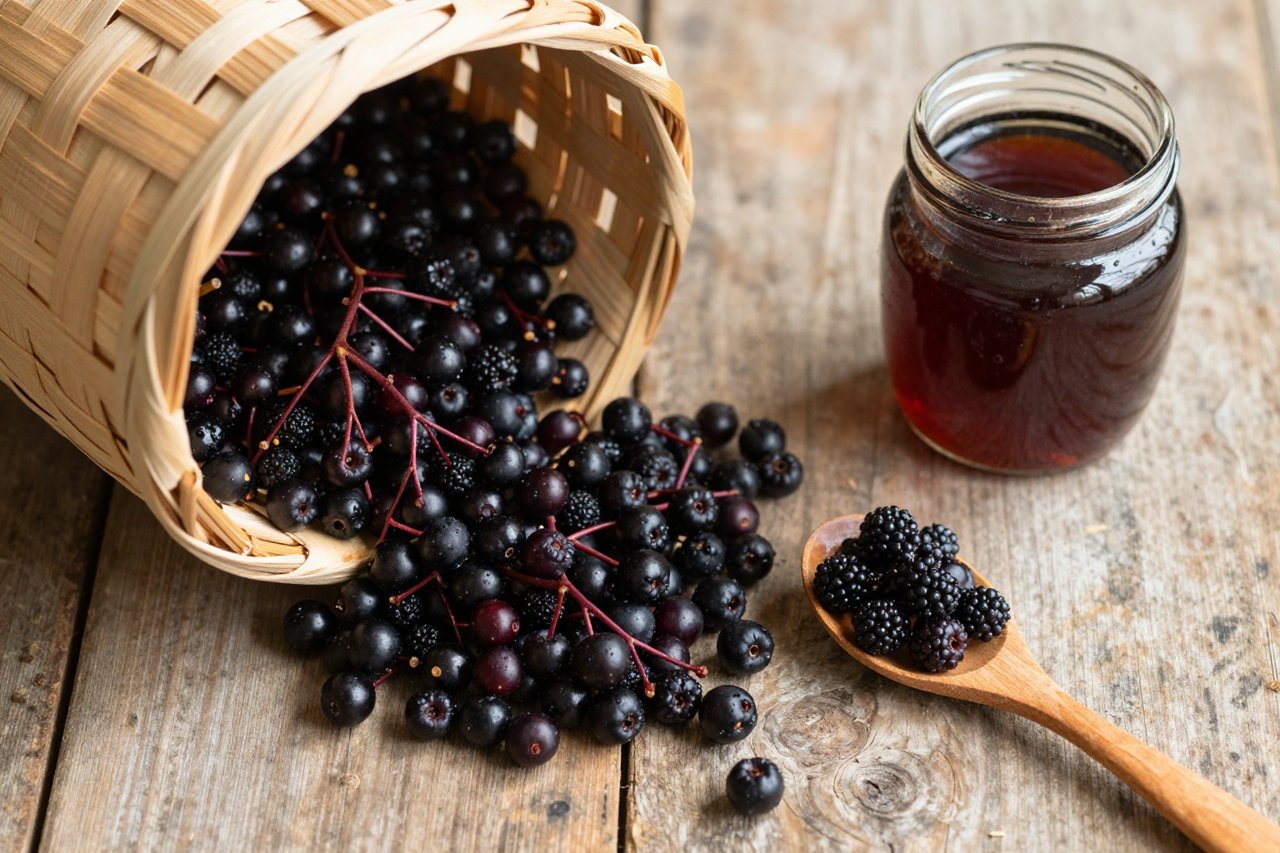
Dark purple, slightly sour, and sticky with syrup, elderberries have built a reputation as nature’s answer to cold season. You will find them in gummies, powders, lozenges, and syrups on almost any pharmacy shelf. Elderberries benefits, however, are not just a modern supplement trend. Humans have been using this fruit for thousands of years.
Hippocrates mentioned the elder tree as one of his key medicinal plants. Several Native American healing traditions used elderberry preparations for fever and infections. What changed over the centuries is not the berries but the research. In the past two decades, controlled trials and lab studies have begun to map out exactly what these small dark fruits can do.
What Are Elderberries, Really?
Elderberries are tiny dark berries that grow in clusters on Sambucus shrubs. European elder (Sambucus nigra) is the most studied species, while American elder (Sambucus canadensis) is widely foraged in North America. The berries taste tart, earthy, and slightly floral. Cooking softens that tartness and takes them from an unpleasant raw nibble to something closer to a rustic currant.
That cooking step is non-negotiable. Raw elderberries contain lectins and small amounts of cyanogenic glycosides, which can upset your stomach. Heat breaks those compounds down, which is one reason most traditional elderberry remedies are syrups, wines, and jams rather than fresh fruit bowls.
Why Elderberries Outperform Blueberries on Some Measures
You know blueberries are healthy. Elderberries deserve a similar claim. When researchers analyze the polyphenol content of common fruits, elderberries routinely land near the top. One widely cited analysis found more anthocyanins in elderberries than in blueberries, blackberries, or cranberries. Anthocyanins are the pigments responsible for the deep purple color and for many of the protective effects.
Elderberries also contain flavonols like quercetin and rutin. Those compounds are not rare, but the combination and concentration inside a single berry is what separates elderberry from a generic antioxidant supplement.
Elderberries Benefits for Your Immune System
What the Human Studies Show
The biggest area of elderberry research is immunity. A number of small trials suggest elderberry extract can shorten the duration of a cold by one to two days, particularly when taken early. One randomised study monitored 312 air passengers flying from Australia to an overseas destination. The people who took an elderberry extract in the weeks around their flight came down with fewer colds, and the colds they did catch lasted about two days less.
A 2021 meta-analysis of randomised controlled trials looked at four high-quality studies and reported something similar. Elderberry supplementation reduced the average duration of upper respiratory symptoms by roughly 1.3 days. That does not sound dramatic, but for someone who gets three or four colds per winter, it adds up to meaningful relief.
How does it work? The anthocyanins appear to reduce the ability of certain viruses to bind to cell surfaces and enter them. Elderberry extracts have also been shown to increase certain inflammatory signaling molecules that activate immune cells early. The intent is not to inflame for the sake of it, but to make the immune response faster and more efficient.
How to Use It for Cold Season
Timing matters. Clinical trials usually begin elderberry at the first sign of symptoms and continue for five to seven days. If you start when you are already three days into a cough, the effect is smaller. For prevention, many herbalists suggest a daily maintenance dose for two to three weeks at a time, while acknowledging the prevention evidence is weaker.
Antioxidant Defense and Cellular Protection
Free radicals are unstable molecules that your body produces during normal metabolism, sunlight exposure, and exercise. When they pile up faster than your body can neutralize them, they damage lipids, proteins, and DNA. This oxidative stress is one of the underlying drivers of aging and chronic disease.
Elderberry polyphenols act as an extra layer of shielding. Because they are water soluble, they travel in the bloodstream and can enter interstitial spaces around your cells. One small human pilot study fed men powdered organic elderberry every day for two weeks. At the end of that period, the men had higher blood antioxidant capacity and lower levels of oxidative DNA damage than at baseline. It is not a cure for aging, but it gives your cells more buffering capacity.
Support for Heart Health and Better Cholesterol Numbers
Heart disease is a long-game disease, and no berry is going to reverse blocked arteries overnight. Elderberry extract may, however, improve several cardiovascular markers that you have some control over.
In a clinical study from 2004, volunteers drank 400 milliliters of elderberry juice every day for two weeks. Their LDL cholesterol dropped by around 6 percent while their HDL cholesterol increased. The authors also noted a mild blood pressure reduction. More recent animal research points to the same direction. Elderberry flavonoids relax the inner lining of blood vessels, which improves blood flow and lowers the workload on your heart.
Possible Blood Sugar and Metabolic Benefits
Metabolic research on elderberry is in earlier stages but interesting. A particular anthocyanin in elderberry, cyanidin 3-sambubioside, prompts insulin release in pancreatic cells when tested in the lab. Other in vitro studies demonstrate that elderberry extract increases glucose uptake in muscle cells.
If these effects occur in a real body, elderberry could be useful for people watching their blood sugar. The problem is that most elderberry syrups you can buy are loaded with honey, which raises blood sugar. Look for sugar-free liquid extracts or capsules if this is a goal for you. Check with a doctor before combining elderberry with blood sugar medication, since the two may compound each other.
Anti-Inflammatory Effects and Sinus Comfort
Inflammation is not always bad. It is part of the body’s repair protocol. Many people, though, have too much lingering inflammation in their sinuses, joints, and gut. Elderberry has a moderating effect on inflammatory cytokines, partly because of the same anthocyanins that influence immune cells.
Clinical herbalists often recommend elderberry syrup during sinus infections to soothe swollen mucous membranes and thin congestion. Again, this is supportive care, not a treatment for bacterial sinusitis, but it can make the wait for antibiotics or natural resolution more comfortable.
Which Form of Elderberry Should You Choose?
You can buy elderberry in nearly every supplement format. They are not all equivalent in strength or convenience.
- Elderberry syrup: The classic choice. Good for colds, easy to swallow, but usually sweetened.
- Standardized capsules: No sugar, portable, consistent polyphenol content. The best option for daily metabolic support.
- Gummies: Easy and tasty, but watch the added sugar and lower extract percentage.
- Tinctures: Alcohol-based and shelf-stable. A few drops under the tongue deliver concentrated compounds fast.
- Dried elderberries: Perfect for making tea, syrups, or jams at home. The most budget-friendly form.
Dosage changes with the format. Clinical trials generally use an extract providing 300 to 500 milligrams of polyphenols daily. For a typical elderberry syrup, the label often suggests 10 to 15 milliliters four times a day during acute illness. Brands differ significantly, so read the supplement facts panel and follow the manufacturer for your specific product.
Safety, Dosing, and Who Should Skip Elderberry
For healthy adults, elderberry extract is well tolerated, but there are important exceptions. Do not eat raw or undercooked berries, leaves, or stems. They can trigger nausea, vomiting, and diarrhea. Cooking or commercial processing eliminates that risk.
Pregnant and breastfeeding women do not have adequate safety data, so most healthcare providers suggest avoiding it. People with autoimmune conditions such as multiple sclerosis or rheumatoid arthritis may want to skip elderberry or at least talk to a doctor, because immune stimulation is not always desirable in those cases. The same goes for anyone taking immunosuppressive drugs after an organ transplant.
For children, commercial syrup can be used, but never give honey to a baby under one year old because of botulism risk. Look for a honey-free elderberry syrup made with glycerin or agave if you need it for an infant (after checking with your pediatrician).
How to Make Elderberry Syrup at Home
Making your own syrup is simple, inexpensive, and gives you control over ingredients. Find dried black elderberries that are already de-stemmed and safe for food use.
Start with 100 grams (roughly 1 packed cup) of dried elderberries. Rinse them briefly, then place in a heavy saucepan with 4 cups of filtered water. Add a one-inch piece of peeled ginger, sliced, and one cinnamon stick. Bring to a boil, drop to a rapid simmer, and cook for 30 minutes. The liquid will darken and reduce by about a third.
Turn off the heat and wait until the mixture is no longer steaming. Mash the berries with a potato masher to release the remaining juice, then strain through a fine-mesh sieve lined with muslin. Measure the liquid. For every cup of strained liquid, add one half cup of raw honey, stirring until completely dissolved. Raw honey carries enzymes and adds the classic sweetness. Once the honey is fully mixed, pour the syrup into clean glass jars and refrigerate. It will keep for two to three weeks.
If you want to keep a larger batch, freeze the syrup in ice cube trays. Each cube is roughly one serving. Thaw a cube in a mug of hot water for an instant elderberry drink that tastes like a gentle autumn tea.
