 1-800-656-4211




Blog
Creatine Monohydrate Powder: How to Use It, What to Buy, and What It Actually Does

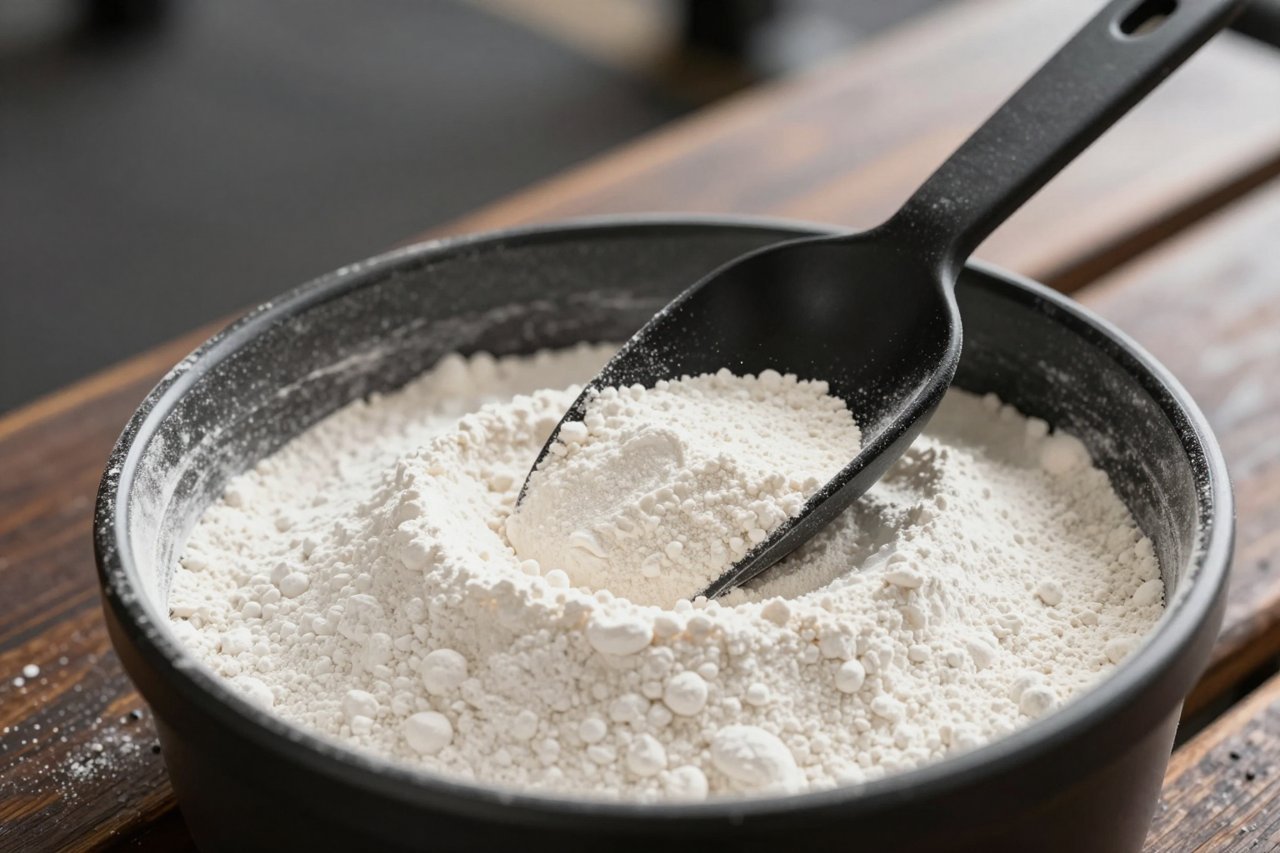
Creatine monohydrate powder is the least glamorous item on the supplement shelf. It shows up in a fat tub, usually white, almost always unflavoured, and it makes no promises about torching belly fat while you sleep. It also happens to be the only product in that aisle backed by several hundred human trials, and it works out to roughly ten cents a serving.
If you’ve been circling the tub for months, wondering about water weight, stomach cramps, or whether you’re just paying for expensive chalk, here’s the practical version: what the powder does, how to use it without overthinking it, and where most people quietly get it wrong.
What You’re Actually Scooping
Creatine is a molecule your body already makes, mostly in the liver and kidneys, and stores in your muscles as phosphocreatine. When you sprint, squat, or grind out a final rep, your muscles burn through ATP fast. Phosphocreatine rebuilds that ATP in a fraction of a second. More of it sitting in the muscle means you can squeeze out another rep or two before your legs quit.
Meat and fish contain creatine. A pound of beef delivers roughly 1 to 2 grams, which is why vegetarians tend to start with lower muscle stores and often notice the biggest response to supplementing.
The “monohydrate” part just describes the molecule plus one water molecule stuck to it. That powder is about 88% creatine by weight, so a 5-gram scoop gives you roughly 4.4 grams of actual creatine. Everything else in the tub is flavouring or packaging.
Why Not HCl, Nitrate, or “Buffered” Creatine?
Creatine hydrochloride, nitrate, ethyl ester, and buffered blends all sell for two to four times the price. The pitch is better solubility, less bloating, superior absorption. Head-to-head trials haven’t found meaningful differences in how much creatine reaches your muscle or how it affects performance. The pricier forms are usually just better marketed.
That’s the pattern behind the boring supplement that beats almost everything else. Cheap, unglamorous, and still undefeated after three decades of attempts to replace it.
The Evidence Is Unusually Solid
Most supplements live on rodent studies and hope. Creatine has thousands of participants across controlled trials, and the findings have held up remarkably well. Strength gains of roughly 5 to 15% on trained lifts, more reps at a given weight, slightly better sprint performance, and modest increases in lean mass when paired with resistance training.
There’s also a growing body of work on non-muscle outcomes: memory tasks in sleep-deprived adults, cognitive performance in vegetarians, and some preliminary findings in older adults. The muscle data is far stronger than the brain data, but it’s an active area. If you want the fuller picture, what three decades of research actually shows is worth an hour of your time.
How Much, and Whether Timing Matters
Three to five grams a day, every day, is the standard dose. That’s it. You don’t need to cycle it, you don’t need to load it, and you don’t need to take it on training days only. The muscle saturation approach is what does the work, not the timing around your workout.
- Standard dose: 3–5 g daily for most adults, taken whenever you’ll actually remember it.
- Loading (optional): 20 g per day split into four doses for 5–7 days, then drop to 3–5 g. It saturates your muscles in about a week instead of three to four weeks.
- Larger bodies: people over roughly 90 kg sometimes do better at the higher end, around 5–7 g.
- With food: taking it alongside a meal, especially one with carbs, may improve uptake slightly. Slightly, not dramatically.
If you want the detailed breakdown on dosing strategy and why some of the timing advice online is overstated, how much to take and when it matters covers it properly.
Powder, Capsules, or Gummies
Powder is the cheapest per gram by a wide margin, and it’s the form used in nearly every study. Capsules are convenient but you’d need six to eight of them for a 5-gram dose, which gets expensive fast. Gummies have become popular, and they taste better, but several independent tests have found products containing far less creatine than the label claims. Some had less than half.
What to Look For on the Label
You want one ingredient: creatine monohydrate. Ideally micronised, which just means finer particles that dissolve more easily. A third-party testing seal from a lab like Informed Sport or NSF is a genuine plus, particularly if you compete in a drug-tested sport.
Skip anything with proprietary blends, “advanced delivery systems,” or a dozen extra ingredients bundled in. If you want a checklist for sorting good tubs from bad ones, how to choose the best creatine monohydrate without wasting money lays it out clearly.
Getting It Down Without Gagging
Unflavoured creatine has almost no taste, but it has a faint chalky texture that people either ignore completely or can’t stand. A few things that help:
Stir it into warm water rather than cold. It dissolves far more easily. Once it’s in solution, drink it within a reasonable window. Creatine slowly converts to creatinine in liquid, and faster when it’s warm, so don’t leave a shaker in a hot car overnight and expect it to be the same the next day.
Mixing it into coffee, orange juice, a protein shake, or a smoothie all work. The old warning that caffeine cancels out creatine hasn’t held up in controlled trials. Some people mix it into yoghurt or oatmeal to avoid the drink entirely.
The Myths That Refuse to Die
Kidney damage is the big one. It comes from the fact that creatine raises creatinine on a standard blood panel, and doctors use creatinine to estimate kidney function. That’s a measurement artefact, not damage. Long-term studies in healthy adults, including several running past four years, haven’t found kidney harm at normal doses. If you have pre-existing kidney disease, talk to your doctor first.
Water retention is real but frequently exaggerated. Expect 1 to 2 kg in the first couple of weeks, held inside the muscle cell rather than under the skin. Most people look fuller rather than puffier.
The hair loss claim traces back to a single 2009 rugby study that measured DHT levels in 20 players and never looked at hair at all. It has never been replicated. Meanwhile, dehydration and cramping concerns have been tested in football players, endurance athletes, and hot-weather training, with no increased risk found.
What It Pairs Well With
Creatine doesn’t need a stack, but it plays nicely with a few things. Beta-alanine covers a different energy system and stacks well for repeated efforts. Protein powder just makes hitting your daily target easier. Caffeine still works alongside it for acute performance.
The one pairing to be sceptical about is the pre-workout tub that lists creatine somewhere near the bottom of a long blend. You’ll get a fraction of a real dose. Buying plain powder separately is cheaper and more predictable, and this breakdown of what actually works in pre-workout supplements versus what’s hype is a useful filter before you buy another tub.
Who Genuinely Doesn’t Need It
If you lift twice a week, eat a lot of red meat, and have zero interest in squeezing out an extra rep or two, your money is probably better spent on food. Creatine helps most in short, intense efforts lasting a few seconds to about a minute. If your training is long-distance running, cycling, or mostly yoga and walking, the benefit is marginal at best.
It also isn’t a fat burner, a hormone booster, or a shortcut. It’s a small, reliable edge on top of training you’re already doing.
For everyone else, the honest summary is this: buy a plain tub of micronised monohydrate, take 5 grams a day, and forget about it for the next three months. That unremarkable habit, repeated consistently, will outperform almost anything else you could add to your routine. Just don’t expect the packaging to make it look exciting.
