 1-800-656-4211




Blog
Creatine Monohydrate: How Much to Take, When It Matters, and Which Form to Buy

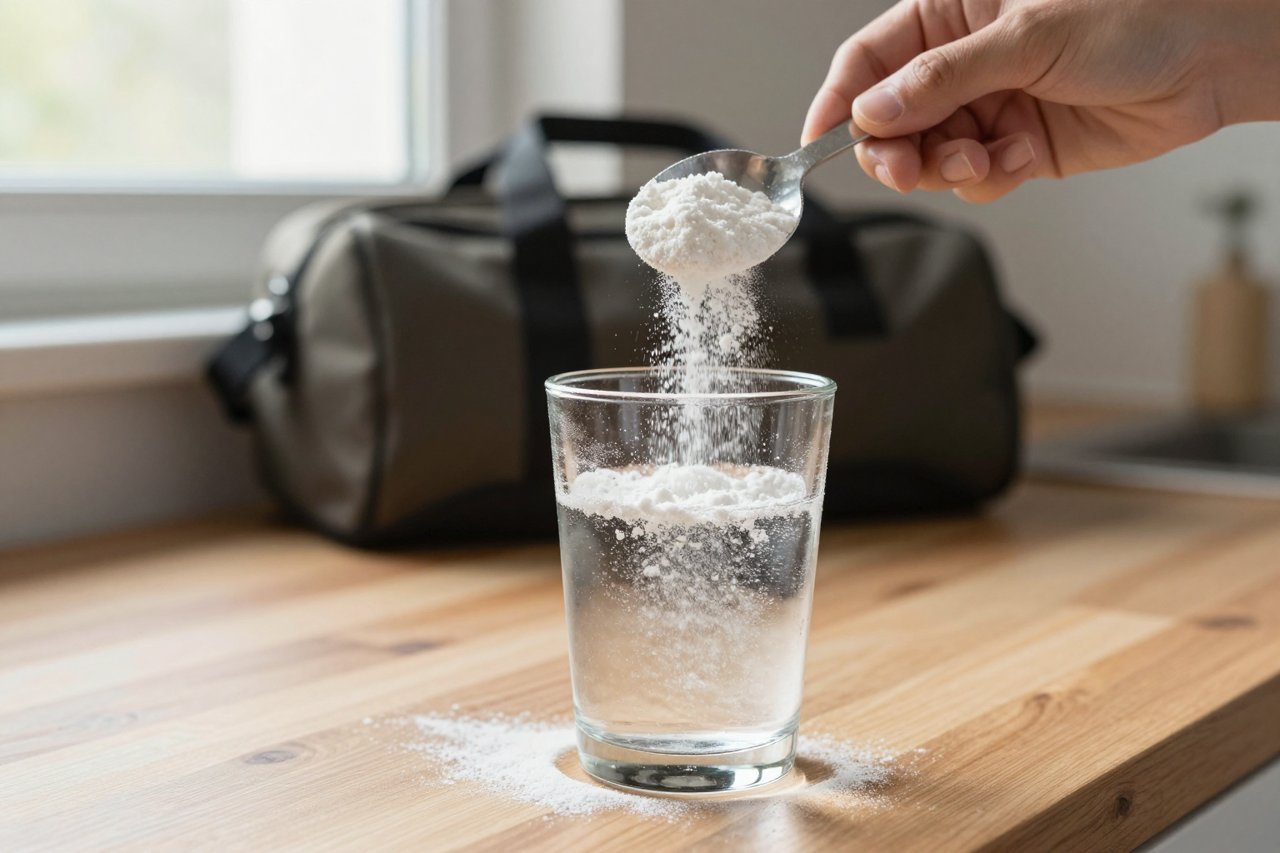
Creatine monohydrate is the least exciting supplement on the shelf. No bright label, no proprietary blend with a trademarked name, no promise that it’ll torch belly fat while you sleep. Just a white powder that dissolves badly in cold water and tastes like nothing. It also happens to be the one with roughly 500 human studies behind it and a consistent record of doing exactly what it claims.
Michel Eugène Chevreul isolated creatine from meat back in 1832. Scientists worked out the muscle energetics side of things in the 1920s and 30s. The first serious athletics research landed in the early 1990s, and the volume hasn’t let up since. Few things in nutrition have been picked apart this thoroughly.
What It Actually Does Inside a Muscle Cell
Your body already makes creatine and stores most of it in skeletal muscle as phosphocreatine. When you do something hard and short, a set of squats, a 100-metre sprint, a heavy deadlift, your muscles burn through ATP in seconds. Phosphocreatine donates a phosphate group to rebuild ATP fast. That’s the whole trick. You’re topping up a fuel tank that empties in about ten seconds of all-out effort.
Someone with low baseline stores who supplements can increase muscle creatine content by 20 to 40 percent. That translates into a couple more reps at a given weight, or the same reps with a bit more load. Across weeks of training, those extra reps become extra volume, and extra volume becomes the actual adaptation. Creatine doesn’t build muscle by itself. It lets you do more work, and the work builds the muscle.
It’s worth being clear about what it isn’t. It’s not a stimulant, so you won’t feel a buzz. It’s not a hormone. And it isn’t something you cycle on and off like a fat burner, which is a point worth repeating because gym folklore keeps insisting otherwise.
The Dose That Works (and How Fast You Want It to Work)
Two approaches get you to the same place. The slow one is 3 to 5 grams a day, every day. Muscle stores creep up over three to four weeks and stay there. The fast one is a loading phase: 20 grams a day split into four 5-gram doses for five to seven days, then drop to 3 to 5 grams to hold it. You’ll be saturated in about a week instead of a month.
Loading isn’t mandatory. It’s just faster, and it’s more likely to give you looser stools if you swallow 20 grams in one go rather than spreading it out. If you go that route, split the doses and take them with food.
Timing barely matters
This is where people overthink things. Because creatine works by saturating a storage pool rather than spiking something acute, the time of day is close to irrelevant. Morning, evening, pre-workout, post-workout. Take it whenever you’ll remember. Consistency over months is the only variable that reliably shows up in the data.
If you want the marginal edge, taking it with a meal containing carbohydrate is fine, since insulin helps with uptake. But we’re talking about a rounding error compared to simply not skipping days.
Caffeine is a slightly different animal. Some research suggests high doses of caffeine close to the time you take creatine may blunt the performance benefit, though the effect is inconsistent. If you use a pre-workout supplement that mixes both, you’re probably fine. Just don’t agonise over it.
Which Form Should You Buy?
Monohydrate. That’s the answer, and it has been for thirty years.
Creatine hydrochloride, buffered creatine, creatine ethyl ester, nitrate, liquid creatine. All of them have been compared against plain monohydrate, and none has produced a meaningful advantage in muscle uptake or performance. Several are worse, and creatine ethyl ester in particular converts to creatinine in the gut before it does anything useful. You pay two to four times more for a marketing story.
A kilogram of plain monohydrate costs roughly £20 to £35 and lasts about 200 days at 5 grams a day. That’s under 20p per serving for the most evidence-backed ergogenic aid in existence, which is a genuinely strange state of affairs. There’s a longer argument for why this boring powder keeps outperforming its flashier competitors in this breakdown of creatine monohydrate versus the rest of the market.
Two buying rules. Look for a brand that states third-party testing, ideally Informed Sport or a Creapure raw material source, because supplement manufacturing is loosely regulated and you want what the label says. And buy unflavoured. Flavoured versions add sweeteners and cost more for no benefit.
Water Weight, Kidneys, and Other Worries
Expect to gain one to two kilograms in the first couple of weeks. It’s water drawn into muscle cells, not subcutaneous puffiness, and it’s the same mechanism that makes the supplement work. Your muscles look fuller, not bloated. It also means the scale moves for reasons that have nothing to do with fat, which is worth knowing if you’re tracking weight.
Kidney concerns come up constantly and aren’t supported. Creatine raises serum creatinine on a blood test, which is a marker clinicians use to estimate kidney function, so the numbers can look off even when nothing is wrong. Long-term studies in healthy people, including trials running several years, haven’t found kidney damage at normal doses. If you already have kidney disease, talk to your doctor first. Otherwise, drink water and move on.
Gastrointestinal upset is the real side effect to watch for, and it’s almost always a dose problem. 20 grams at once will bother some people. 5 grams almost never does.
Who Gets the Most Out of It
Everyone responds, but the size of the response varies with how much creatine you already have stored.
- Vegetarians and vegans. Dietary creatine comes from meat and fish, so people eating none start with lower muscle stores and typically see the largest increases, often 20 to 30 percent higher than omnivores.
- Strength and power athletes. Sprinters, throwers, rugby forwards, anyone whose sport lives in the one-to-ten-second window.
- Older adults. Muscle creatine declines with age, and supplementation paired with resistance training supports strength and lean mass in people over 60.
- People in a calorie deficit. It helps preserve training quality when recovery is compromised, which is exactly when you can least afford to lose intensity.
Endurance athletes benefit less, though there’s still a case for it in sports with repeated surges. And the research has moved well past muscle. Creatine’s role in brain energy metabolism is a growing area, with trials looking at cognition, sleep deprivation, and mild head injury. Recent findings on creatine beyond muscle cover where that line of work is heading, and it’s more interesting than most people expect.
What to Expect in the First Month
Week one, if you load, you’ll notice the scale move before you notice anything in the gym. Weeks two and three, the last two reps of a hard set stop feeling like a wall. That’s the signal. Over a full training block, most people see somewhere between a 5 and 15 percent improvement in strength or reps at a given load, though that number depends heavily on how well you were eating and sleeping before you started.
If you don’t load, push the timeline out by a couple of weeks and expect the same endpoint. Either way, the honest test is eight to twelve weeks of consistent use alongside training that actually gives you something to recover from. Creatine amplifies good training. It doesn’t substitute for it, and it won’t do anything noticeable if your programme is three half-hearted sessions a week.
Buy a plain bag, take 5 grams a day, and forget about it. The full picture of what that habit delivers over time is laid out in what three decades of creatine research actually shows, and the short version is that almost nothing else in the supplement aisle comes close for the money.
