 1-800-656-4211




Blog
Creatine Monohydrate Benefits: What Three Decades of Research Actually Shows

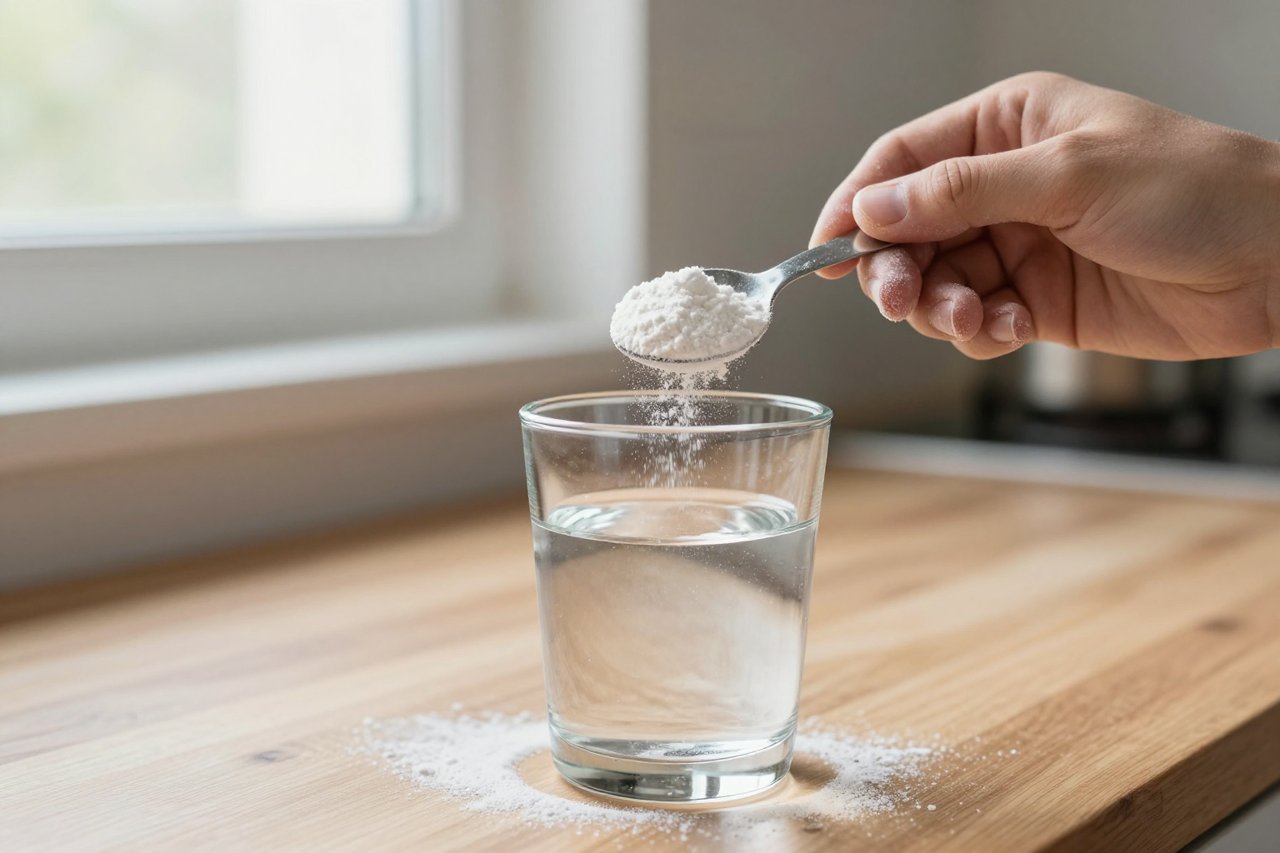
Walk into a supplement aisle and creatine turns up in a dozen dressed-up forms: hydrochloride, ethyl ester, nitrate, buffered blends, gummies. Meanwhile the plain white powder that costs roughly 15p a serving has more human research behind it than every other sports supplement combined. Creatine monohydrate has been studied in people since the early 1990s, and the list of proven benefits has only grown since.
Here’s what it genuinely does, who benefits most, and how to take it without turning it into a project.
What creatine actually does in muscle
Every muscular contraction runs on ATP. During a heavy set of squats or the final 20 seconds of a hill sprint, ATP gets burned faster than your body can manufacture it. Creatine is the buffer that covers the gap.
About 95% of the creatine in your body is stored in skeletal muscle as phosphocreatine. When ATP drops, phosphocreatine donates a phosphate group to rebuild it, buying a few extra seconds of near-maximal output. That window is small, but it lands exactly where strength and muscle adaptations are built.
Your body makes around 1g of creatine a day. Meat and fish add another 1g to 2g. Taking 5g daily pushes muscle stores to their ceiling, usually 20% to 40% above where they started. Full saturation takes three to four weeks and lasts only as long as you keep supplementing.
Strength, size and training volume
The performance data is consistent. Meta-analyses of resistance training studies show creatine adds roughly 5% to 15% more strength than training alone, with the biggest jumps in upper-body pressing and lower-body squat patterns. More reps per set and a few extra kilos on the bar compound over months.
There’s an indirect effect too. Because you recover faster between sets, you accumulate more total training volume, and volume is one of the strongest drivers of hypertrophy. Creatine doesn’t build muscle directly. It lets you do more work, and the work builds the muscle.
For explosive sports the case is even clearer. Sprinters, jumpers and team-sport athletes typically see 1% to 5% improvements in peak power output. At elite level that’s the difference between making a final and watching it.
The brain benefits are no longer fringe
Your brain uses creatine too, and it’s the second-largest consumer after muscle. Research into sleep deprivation, cognitive fatigue and mental performance under stress has produced measurable effects, especially on tasks that demand short bursts of focus or working memory. Creatine’s reach beyond muscle is now taken seriously by researchers rather than dismissed as a curiosity. The emerging picture is that people starting with lower baseline stores, including vegetarians, older adults and anyone running short on sleep, gain the most.
Who notices the biggest difference
Vegetarians and vegans
Dietary creatine comes almost entirely from animal tissue. Vegetarians typically start with muscle stores 20% to 30% below omnivores, so supplementing moves them closer to a normal baseline rather than far above it. It’s one of the few supplements where the gap between responders and non-responders almost disappears.
Older adults
Muscle creatine falls with age, and so does the ability to hold onto lean mass. Combined with resistance training, creatine helps older adults add muscle and improve the kind of functional strength that shows up in stair climbing and getting out of a chair. Some trials have also paired it with vitamin D for bone and muscle outcomes.
Women
Women have historically been left out of sports nutrition research, but that’s shifting. Oestrogen appears to influence creatine metabolism, and studies in female athletes show similar strength and power gains to men, without the bloating fears that get passed around online. Premenopausal women may even benefit from slightly higher relative doses than the standard 5g.
How to take it properly
- Dose: 3g to 5g per day covers almost everyone. Larger bodies can go to 10g, smaller people do fine on 3g.
- Timing: largely irrelevant. Muscle stores depend on total intake over weeks, not the hour you swallow it.
- Loading: optional. 20g a day split into four doses for five to seven days saturates muscle faster, but it’s more likely to upset your stomach. At 5g a day you get there in about a month.
- Form: monohydrate. Every alternative form has weaker evidence and a higher price.
- Fluid: creatine pulls water into muscle cells, so drink normally and don’t panic if the scale creeps up by a kilo or two.
One thing creatine is not is a stimulant. It won’t give you the jolt caffeine does, which is why it often gets bundled into formulas where it contributes nothing to the immediate buzz. If you’re choosing a pre-workout supplement, treat the caffeine content and the creatine content as two separate decisions.
Myths that refuse to die
Kidney damage. Creatine raises creatinine on a blood test, and creatinine is used to estimate kidney function. That rise reflects more creatine in your system, not injured kidneys. Studies running up to five years in healthy people show no harm.
Hair loss. This traces back to a single 2009 study of rugby players measuring DHT. Nobody has replicated it, and the original didn’t measure hair at all.
Cramps and dehydration. The opposite tends to be true. Creatine increases intracellular water, and most trials report fewer cramping episodes, not more.
It’s basically a steroid. It isn’t. It’s a molecule found in beef, herring and your own muscles, and it works through the phosphocreatine system, not hormones.
Reading the label
Buy plain creatine monohydrate, ideally micronised, from a brand that publishes third-party testing. Creapure is the most widely verified raw material, though plenty of other suppliers test clean. Skip anything with sweeteners, “proprietary blends” or a flavoured price tag three times higher than the unflavoured tub. As the case for boring, well-tested creatine makes clear, the exotic versions rarely justify the markup.
The part most people get wrong
Creatine isn’t a switch you flip. Stop taking it and muscle stores drift back to baseline within four to six weeks, taking the performance edge with them. That’s why the people who get the most out of it are the least dramatic about it: 5g in a glass of water, same time every day, for years. No cycling, no loading rituals, no weekends off.
If you train hard three or more times a week and eat enough protein, creatine is the cheapest lever you have. It won’t rescue a bad programme or a poor diet. It will make a good one measurably better, and the evidence behind it is about as settled as sports nutrition ever gets.
