 1-800-656-4211




Blog
How to Choose the Best Creatine Monohydrate (Without Wasting Money)

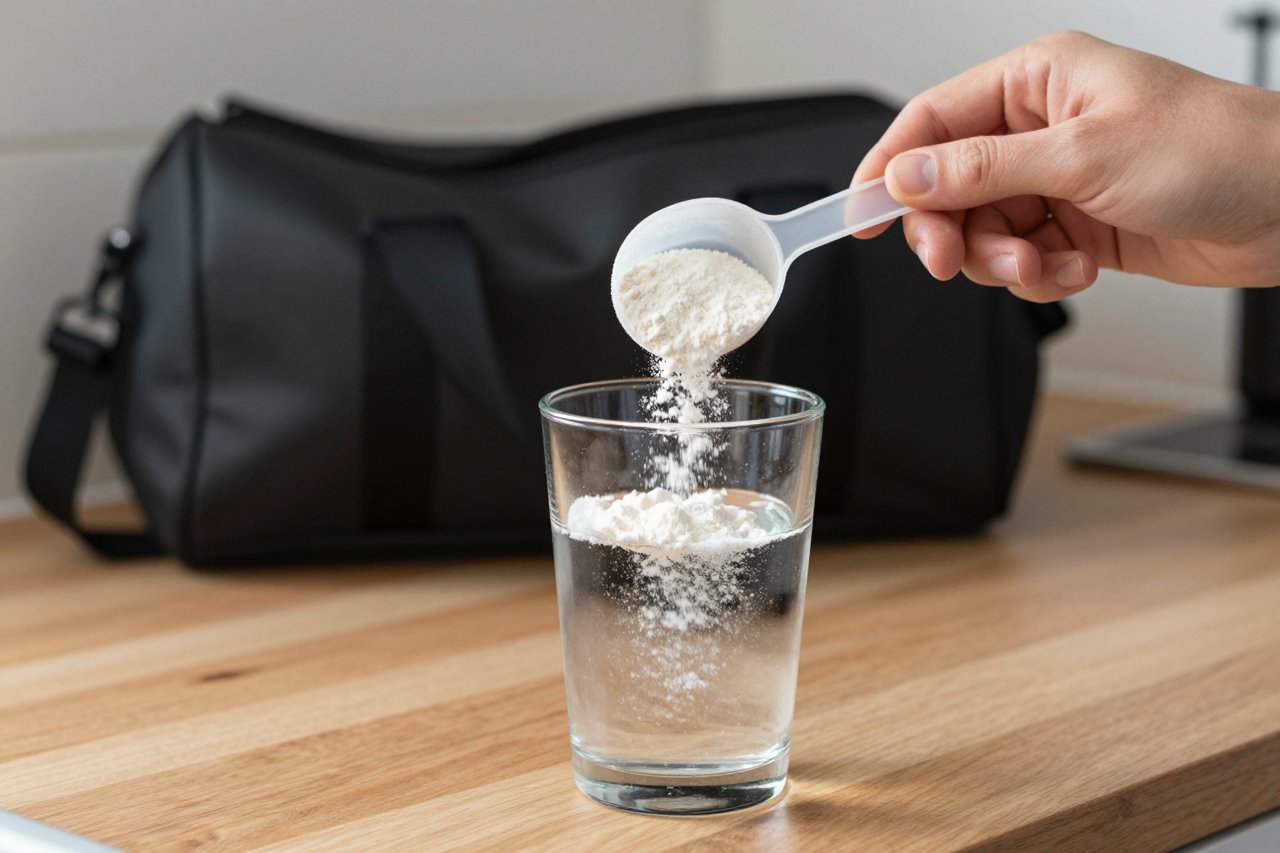
Walk into any supplement shop and you’ll face a wall of creatine: tubs, pouches, gummies, capsules, and powders in flavours from blue raspberry to completely unflavoured. Prices run from a few pounds to more than £50 for something that looks identical through the plastic. The reassuring part is that the best creatine monohydrate is usually the boring one, and narrowing down which tub to buy takes about five minutes once you know what to check.
Why Monohydrate Still Beats Everything Else
Creatine monohydrate has been studied more than any other sports supplement on the planet, with hundreds of human trials stretching back to the early 1990s covering strength, sprint power, muscle volume, and recovery. Plenty of newer research goes further than the gym floor, and if you want the wider picture there’s good evidence behind creatine’s hidden power beyond muscle gains, including brain and clinical applications.
Every other form on the shelf exists largely for one reason: it lets a brand charge more. Here’s how they stack up.
- Creatine monohydrate: the researched standard, typically 99%+ pure, and cheap to produce.
- Creatine HCl: marketed on better solubility. At matched doses it hasn’t outperformed monohydrate in trials, and it costs three to four times as much.
- Ethyl ester: poorly absorbed and converts to creatinine in the gut, which means you excrete much of what you paid for.
- Buffered versions (Kre-Alkalyn and similar): pH-adjusted powders with no meaningful advantage over plain monohydrate.
- Gummies: convenient, but doses are often 1g per sweet, the creatine can degrade during manufacturing, and you’ll pay a premium.
What Actually Matters on the Label
Third-party testing
This is the single biggest quality signal. Informed Sport and NSF Certified for Sport screen batches for substances banned in competition, and many reputable brands publish a batch-specific certificate of analysis you can look up by lot number. If you play a sport with drug testing, this isn’t optional. Even if you don’t, it tells you the powder is what the label claims and hasn’t picked up contaminants in manufacturing.
Creapure vs generic material
Creapure is creatine made in Germany by AlzChem, with purity documented above 99.9% and a long track record. It costs a little more and the logo is worth paying a small premium for. Generic creatine from other sources can be perfectly good, but you’re trusting the brand’s own testing rather than an independent certificate.
Micronized or standard grind
Micronized creatine has been milled to a finer particle size, so it mixes into water more smoothly and settles less at the bottom of the shaker. It doesn’t change effectiveness at all, only texture. If gritty powder bothers you, pay the extra couple of pounds.
Cost per gram, not cost per tub
A 500g tub at £25 works out at 5p per 5g serving. A 300g “ultra premium” tub at £40 is closer to 13p for the same dose. Since most people need 3g to 5g a day, a 500g tub lasts three to five months. That’s the number worth comparing, not the sticker price.
Flavoured, Unflavoured, and Mixability
Unflavoured monohydrate stirs into water with almost no taste, which is why it’s the default for anyone who takes it daily and doesn’t want another sweet drink. The trade-off is a faint chalky texture, especially in cold water. Flavoured versions add sucralose, stevia, or similar and usually cost 30% to 50% more for the same amount of creatine.
If you already take a pre-workout, read the panel before buying a standalone tub. Most pre-workout supplements include somewhere between 1g and 3g of creatine, which sits below the effective daily dose. Topping up with a separate scoop is the simple fix, and plenty of pre-workouts skip creatine altogether, which is no problem at all.
Dosing: Simpler Than the Internet Suggests
Three to five grams a day, every day, including rest days. Someone around 70kg to 80kg does fine on 3g to 5g; heavier lifters can go to 5g to 8g. Muscle creatine stores do plateau, so more isn’t better once you’re saturated.
Timing barely matters. The old advice about taking it straight after training has been tested repeatedly and the differences are trivial. Take it whenever you’ll remember, with water, coffee, a protein shake, or a meal.
A loading phase of 20g per day, split into four 5g doses for five to seven days, fills your stores faster, then you drop to 3g to 5g daily. Without loading, expect two to four weeks to reach the same point. Loading can cause loose stools in some people, so there’s no harm in skipping it.
Storage and Shelf Life
Creatine degrades into creatinine when it meets moisture and heat. Keep the lid sealed, store the tub somewhere dry rather than a steamy bathroom shelf, and always use a dry scoop. Clumps that form from humidity are usually harmless, so break them up and carry on. If a tub has sat open for two years in a warm kitchen, replace it.
Red Flags Worth Walking Away From
- No testing information and no batch certificate anywhere on the site
- “Proprietary blend” wording on a product that should be a single ingredient
- Claims about “no loading phase” or “no water retention” that no form of creatine can honestly deliver
- Gummies or capsules delivering under 1.5g per serving, which makes hitting 5g an expensive chore
- Per-serving costs above roughly 15p per 5g, which is marketing, not chemistry
What a Good Purchase Actually Looks Like
Picture the sensible buy: 500g of unflavoured, micronized monohydrate with a batch certificate available online, priced somewhere between £20 and £30, or $25 to $35 in the US. Add Creapure branding and you’ve bought extra certainty for a couple of pounds more. Buy two tubs when there’s an offer, because you’ll use them.
Creatine is one of the few supplements where the cheapest tested option and the most effective option are often the same product. Ignore the neon packaging, check the testing, do the cost-per-gram maths, and put the money you save towards protein or a decent pair of lifting shoes. That tub of plain white powder sitting quietly at the back of the shelf is almost always the right answer.
