 1-800-656-4211




Blog
Creatine Monohydrate: The Boring Supplement That Beats Almost Everything Else

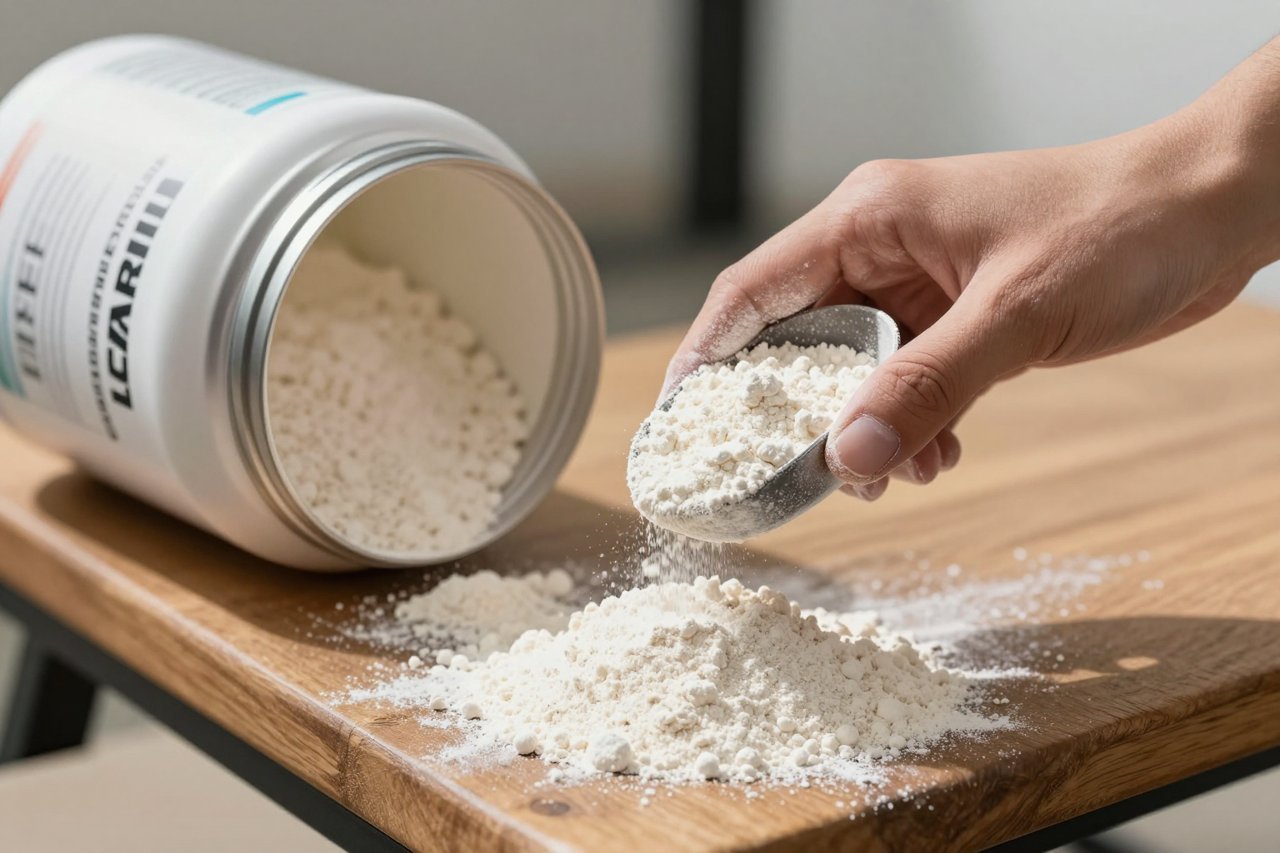
Rumours swirled around the 1992 Barcelona Olympics that a handful of British track athletes had found something new. Within a decade, creatine monohydrate had gone from a lab curiosity to the most researched sports supplement in existence, with more than 1,000 published studies and counting. Thirty-odd years later it’s still the first thing almost every sports nutritionist tells you to buy.
The reason isn’t marketing. It’s the boring one: it works, it’s cheap, and study after study keeps failing to find anything seriously wrong with it. Yet walk into a supplement shop and you’ll be steered towards something “advanced” in a shiny tub costing four times as much.
What creatine actually does in your body
Creatine is a small molecule built from three amino acids: glycine, arginine and methionine. Your liver, kidneys and pancreas make roughly a gram of it a day, and you pick up another gram or two from meat and fish. A 70kg adult stores around 120–140g of the stuff, with about 95% of it sitting in skeletal muscle.
Its job is energy. When you do something explosive, such as a heavy squat, a 40-metre sprint or a max-effort jump, your muscles burn through ATP in a couple of seconds. Phosphocreatine donates a phosphate group to rebuild that ATP fast, and that reaction covers the first 8 to 10 seconds of all-out effort. After that, you’re running on other systems.
Supplementing tops up those phosphocreatine stores. Most people walk around with muscles that are 60–80% saturated; a few weeks of daily creatine pushes that closer to the ceiling. More fuel on hand means one or two extra reps per set, and those reps compound into extra training volume over a few months.
What the results look like in practice
Expect modest, reliable gains rather than a transformation. Meta-analyses pooling hundreds of trials generally find strength improvements in the 5–15% range and a few kilos of lean mass over 8–12 weeks, though some of that weight is water drawn into muscle cells rather than new tissue.
Beyond lifting, creatine shows up in sprint performance, repeated-sprint ability and recovery between hard bouts. Researchers are also looking closely at the brain, and the evidence for creatine’s benefits beyond muscle growth, from sleep-deprived cognition to memory under stress, is genuinely interesting. It’s promising rather than settled, but it’s a long way from the “just a gym supplement” label.
How much to take, and whether timing matters
Three to five grams a day, every day, is the standard. Body weight nudges that figure slightly. A rough rule of thumb is 0.03g per kilo of bodyweight for maintenance, but 5g covers most people comfortably.
There are two routes to the same place:
- Loading: 20g a day split into four 5g doses for 5–7 days, then drop to 3–5g. Saturates your muscles in about a week. Some people get loose stools or cramping from this.
- Slow and steady: 3–5g daily. Takes three to four weeks to reach the same point, with far fewer digestive complaints.
Total intake over time is what counts, so timing is a minor detail. Taking it with a meal containing carbs and protein may help slightly, and post-workout has a small edge in a few studies. None of that matters if you skip days.
The water retention worry
Creatine pulls water into muscle cells, not under your skin. That distinction matters. Intracellular water makes a muscle look fuller rather than puffy, and the typical 1–2kg shift plateaus after a few weeks. If you gain 5kg in a fortnight, look at your diet before blaming the powder.
Why monohydrate beats the expensive versions
Creatine hydrochloride, ethyl ester, nitrate, buffered Kre-Alkalyn. They all sound better. Almost none of them are.
Ethyl ester was designed to absorb faster but largely converts to creatinine, a waste product, in the gut. HCl uses less powder per dose, which sounds efficient until you notice monohydrate costs pennies per serving. Buffered versions haven’t shown meaningful advantages over the plain form in head-to-head work. There are a few interesting studies on creatine nitrate for blood pressure and oxygen uptake, but the research is thin and the price isn’t.
Sourcing is what actually matters. Look for micronised monohydrate, which is a finer powder that dissolves more easily and leaves less grit at the bottom of the shaker. Check for third-party testing too: Creapure, Informed Sport, or a brand that publishes its certificates of analysis. A 300g tub should run you somewhere between $15 and $30 and last about two months.
Who responds, and who barely notices
Individual response varies a lot, and it’s mostly about where you start. Vegetarians and vegans usually have lower baseline muscle creatine, so they tend to see bigger gains. People who eat a lot of red meat may already be near saturation and get a smaller bump.
Training style plays a role as well. If your sport is marathon running or long-distance cycling, extra phosphocreatine won’t do much. If it’s sprinting, powerlifting, rowing, rugby or high-rep bodybuilding, it’s squarely in your wheelhouse. Roughly a quarter of people are strong responders, a quarter get almost nothing, and everyone else lands somewhere in between.
Safety, stomach trouble and the caffeine question
The kidney scare traces back to a flawed reading of creatinine, a normal breakdown product that rises slightly on creatine and can look like impaired kidney function on a blood test. Long-term studies in athletes, some running several years, haven’t found harm in healthy people. If you already have kidney disease, speak to a doctor first.
Stomach upset is the realistic complaint, and it’s dose-related. Splitting your daily dose, taking it with food and drinking enough water solves it for most people. You don’t need to cycle off it, and there’s no benefit to “resting” anything. That isn’t how it works.
Caffeine is a different conversation. Both are performance-enhancing, and combining them in one scoop is common. For a breakdown of the ingredients worth paying for versus the filler, see this guide to what actually works in pre-workout supplements. Older research hinted that caffeine might blunt creatine’s effect, but later studies haven’t backed that up convincingly. Taking them together is fine.
Getting started without overthinking it
Buy plain, unflavoured monohydrate. Skip the loading phase if you’d rather dodge the stomach drama: just take 5g a day and be patient for three weeks. Stir it into water, coffee or a smoothie. It’s tasteless enough to disappear.
Take it on rest days too. The goal is keeping muscle stores topped up, not timing a single dose around a workout. Set a phone reminder for a fortnight until it becomes automatic, and keep the tub somewhere you’ll see it.
Then wait. Creatine isn’t a stimulant and you won’t feel it switch on. The proof turns up six weeks later, when the bar that felt heavy in January moves for eight reps instead of six.
