 1-800-656-4211




Blog
Cherry Fruit Health Benefits: From Better Sleep to Less Joint Pain

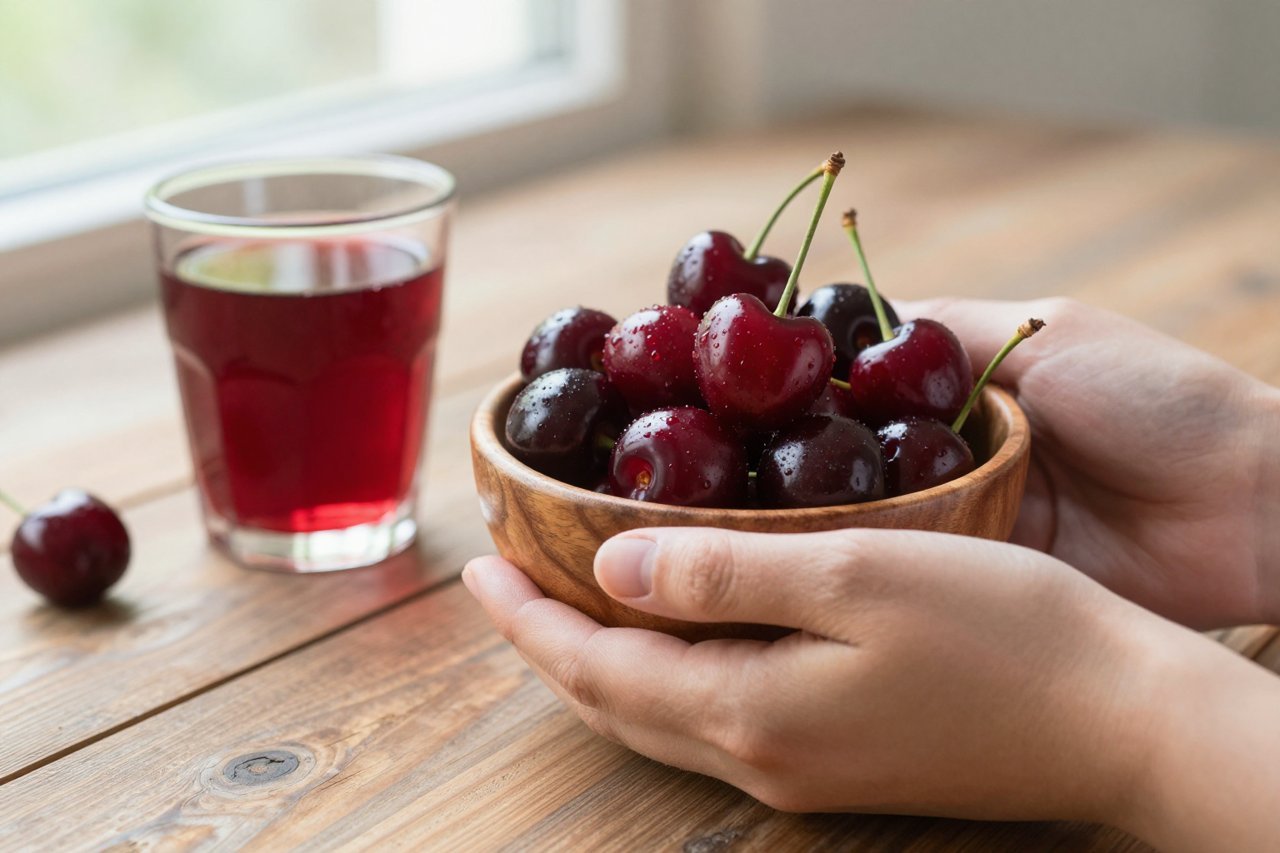
Cherries have a season, but cherry fruit health benefits don’t. For most of the year, the fresh fruit is either underripe, expensive, or absent. Then, for four glorious weeks, bowls of them appear at every family gathering. If you only think about cherries as a summer snack, you are missing the point. Research on tart and sweet varieties keeps uncovering effects that would make any other fruit blush.
No one argues about the flavour, but cherries deserve a full-time spot in your kitchen. Let’s look at what the fruit actually does inside your body, how the two main varieties differ, and a few easy ways to get the benefits beyond June.
The Difference Between Sweet and Tart Varieties Matters
All cherries are not created equal. The two main types you’ll find at the store are sweet cherries (Bing, Rainier, Lambert) and tart or sour cherries (Montmorency, Morello). Sweet cherries are the ones you snack on raw by the handful. Tart cherries are too sour for most palates, so they end up in juices, dried mixes, and pie fillings. That flavour gap translates directly to an antioxidant gap.
Tart cherries contain roughly twice as many anthocyanins as sweet cherries, those pigments responsible for the deep red colour and most of the anti-inflammatory punch in cherry fruit health research. Sweet cherries don’t come empty-handed, but the dose per serving is noticeably lower. If you want to fix a specific issue, like sleep or joint pain, tart varieties are usually the most reliable choice. The full sweet and sour truth about cherries and health benefits comes down to these anthocyanin levels and how the fruit is processed.
How Tart Cherry Helps You Sleep Longer
If there’s one area where the science is surprisingly repeatable, it’s sleep. Tart cherries are one of the few natural food sources of melatonin, though the levels in a single fruit are small. That’s why clinical trials almost always use a concentrated juice. In a study published in the American Journal of Therapeutics, middle-aged adults with insomnia drank 240 mL of tart cherry juice in the morning and again in the evening for two weeks. Compared to a placebo drink, they reported lower insomnia severity and a meaningful increase in sleep time.
Why does it work? Blame the tryptophan and melatonin synergy. Tryptophan serves as a precursor to melatonin, and the anthocyanins in tart cherry appear to help keep tryptophan available in the brain for longer. If you are curious about dosage, timing, and whether juice or whole fruit works best, this deep dive on tart cherry and sleep covers the most reliable studies in plain language.
Anti-Inflammatory and Joint Support
The most impressive cherry fruit health benefits show up on the inflammation front. Endurance athletes have adopted a seven-to-ten-day protocol around race day: two 12-ounce bottles of tart cherry juice daily. Studies from the British Journal of Sports Medicine and the University of Vermont both found that this protocol significantly reduced markers of muscle damage and self-reported soreness after marathon running. It doesn’t make you faster; it just helps you bounce back sooner.
There’s also a direct line to gout prevention. In a widely cited Boston University study of over 600 gout patients, eating just one serving of cherries over two days reduced the risk of an acute flare by 35%. When cherry intake was combined with allopurinol, the standard medication, the odds dropped by 75%. If you want to understand the biochemistry behind that effect, the reason a tiny fruit acts like a mild anti-inflammatory is genuinely fascinating.
What Sweet Cherries Do for Your Heart and Blood Sugar
Sweet cherries have a reputation as a sugary fruit, but the research tells another story. Fresh Bing cherries have a glycemic index around 22, lower than grapes and far lower than bananas. A one-cup portion contains nearly three grams of fibre and polyphenols that slow sugar absorption.
The potassium content deserves attention too. A cup of cherries delivers roughly 8% of your daily target, which helps counter sodium and may support healthy artery function. Controlled trials have also found that regular cherry consumption, regardless of variety, tends to lower LDL cholesterol and markers of oxidative stress in people with metabolic risk factors. For a complete picture of what cherry fruit can do for metabolic health, this overview of the health benefits of cherries walks through the latest trial results.
How to Eat Cherries Without Getting Sick of Them
Fresh cherries are fleeting, but frozen and dried versions last all year. You get health benefits from every form, though processing changes the dose. Frozen cherries usually retain more anthocyanins than “fresh” ones that spent two weeks in a warehouse. Dried cherries are convenient but lose some antioxidants and often carry added sugar. Unsweetened tart cherry juice or concentrate is a potent, easy option if you don’t want to chew through a pound of sour fruit.
A Quick Cheat Sheet for Matching Form to Benefit
- For better sleep: drink 200-240 mL of unsweetened tart cherry juice about an hour before bed.
- To recover after training: add 30-60 mL of tart cherry concentrate to your post-workout shake, starting three days before a heavy session.
- For daily antioxidants: stir half a cup of frozen cherries into oatmeal or yogurt. They thaw quickly and taste like dessert.
- For gout prevention: eat 18 to 20 cherries, roughly one cup, on days when you feel a flare might be coming on.
- For a portable snack: choose dried tart cherries without added sugar or oil, and keep the serving to about one ounce.
The goal is consistent intake rather than one giant bowl once a week. Anthocyanins have a short half-life, so eating a small serving most days is the strategy that produces measurable results.
One Reason to Be Mindful
Cherry fruit health benefits are impressive, but a few groups should check portions. People on beta-blockers need to watch potassium, since cherries are moderately potassium-dense. If you have a birch pollen allergy, fresh cherries can trigger oral allergy syndrome, an itchy mouth or throat. And never eat the pits, which contain cyanogenic glycosides. Stick with whole fruit, pit-free frozen cherries, or commercial juices, and you are on safe ground.
