 1-800-656-4211




Blog
Cherries and Health Benefits: The Sweet and Sour Truth You Need to Know

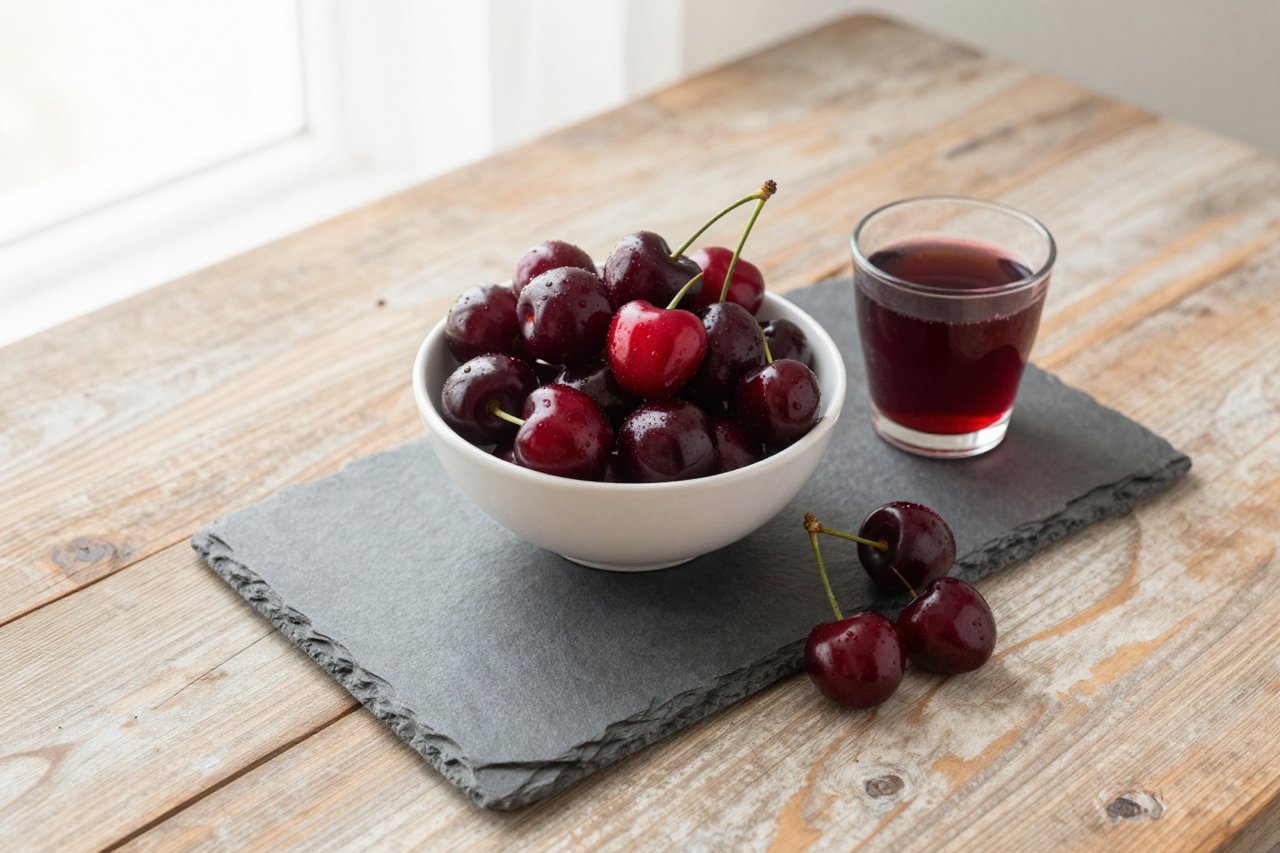
For just a few weeks each year, market stalls fill with glossy red and purple stone fruit. Sweet cherries vanish quickly, which makes them feel like a seasonal luxury. Yet when nutrition researchers speak about cherries and health benefits together, they are rarely talking about taste. The fruit contains a group of polyphenols that have been studied for pain relief, sleep improvement, and heart protection. It is a small, unassuming package with an impressive amount of science behind it.
Sweet cherries and tart cherries have different personalities. Tart types are less pleasant to eat by the handful but appear in most of the clinical trials because of their higher concentrations of certain active compounds. In this article, you will learn what the research really says, why the season doesn’t matter as much as you think, and several practical ways to use cherries throughout the year.
What’s Really Inside a Cup of Cherries
One cup of raw sweet cherries (around 150g) supplies roughly 90 calories, 3g of fibre, and about 18% of your daily vitamin C. It also contributes 260mg of potassium, along with copper and vitamin K. For a fruit this sweet, that is a fair trade. But the compounds that draw researchers to cherries are the pigments.
The anthocyanin factor
The deep-red anthocyanins, especially cyanidin-3-rutinoside and glucoside, are among the most abundant polyphenols in cherries. They have shown antioxidant activity and appear to inhibit the same COX inflammatory pathway that aspirin blocks, but through a gentler interaction. Tart cherries, particularly the Montmorency variety, often contain higher measured amounts than sweet cherries. The benefit remains after freezing and drying, so you don’t have to rely on the supermarket produce section.
Sweet or sour: Does the variety change the benefit?
Sweet cherries have more sugar and some benefits of their own, including a slightly higher concentration of vitamin C. Tart cherries contain melatonin and more of certain phenolic acids. Researchers typically use tart cherry concentrate or juice in sleep and exercise studies because it is easier to standardize. If you enjoy sweet cherries, keep eating them, but don’t assume they deliver the same melatonin-related effects.
For a more complete ingredient-by-ingredient breakdown, this detailed guide to cherry health benefits covers the laboratory findings and how they apply to food.
What Tart Cherry Does for Muscle Soreness and Gout
Imagine running a long-distance relay for two days; your legs lose power and the stiffness sets in. In a well-known study, researchers had participants drink about 350ml of tart cherry juice every morning and evening for several days before the event and 48 hours afterwards. The cherry group reported less pain and showed a smaller decline in muscle strength compared with the placebo group. Later trials with strength-trained individuals noted lower creatine kinase, which is a marker of muscle damage, after tart cherry concentrate.
The gout connection is equally compelling. Gout develops when uric acid accumulates and forms sharp crystals in the joints. Some small studies have reported that tart cherry juice lowers serum urate concentrations in healthy adults, while an observational study found that gout patients who consumed cherries for two days had a 35% lower chance of a flare-up. That doesn’t make sour cherries a substitute for medication, but the mechanism makes sense. The full details are covered in Tart Cherry: The Sour Fruit with Surprising Health Perks.
Tart Cherry and Sleep: A Natural Option Worth Trying
Tart cherries are one of the few plant sources of melatonin, the hormone that tells the brain it’s time to rest. Montmorency cherries have been used in most of the sleep trials. In a two-week study with older adults who had insomnia, participants drank a glass of tart cherry juice in the morning and a second glass in the evening. The group experienced modest improvements in time spent asleep and sleep efficiency. Tart cherry powder has also outperformed placebo in a smaller pilot trial.
No single food will cure chronic insomnia, and the sugar and calories in juice matter if you drink it every night. What many people do is take a 120ml shot of unsweetened concentrate diluted with water one or two hours before bed. The exact study details and doses are described in Tart Cherry and Sleep: The Sour Fruit That Helps You Slip Into a Deeper Rest.
Heart Health and Blood Sugar in One Serving
Potassium in cherries is modest, but combined with their polyphenol content, they fit nicely into a heart-friendly eating pattern. A cup provides about 6% of your daily potassium target, and anthocyanins are associated with better blood vessel elasticity. A 2017 review of controlled trials concluded that cherries and cherry products can lower systolic blood pressure by a few points and improve LDL cholesterol in some populations. None of these numbers are dramatic, but they build a case for eating them as part of a larger plant-rich diet.
For blood glucose, sweet cherries have a glycaemic index around 63, lower than many tropical fruits. When eaten with protein or fat, they do not spike blood sugar the way a ripe mango might. Dried cherries are more concentrated, so keep the portion to a quarter-cup rather than a whole bowl.
Practical Ways to Add Cherries to Your Daily Menu
Cherries have a short fresh season, but frozen and dried versions hold up well. If you’ve only eaten them over ice cream, try these strategies through the winter:
- Freeze your own as soon as they appear. Pit the cherries, place them in a single layer on a baking sheet lined with baking paper, and freeze for two hours. Transfer to a zip-lock bag and keep for up to nine months. Thaw overnight in the fridge or use them directly in smoothies.
- Add them to a savoury salad. Frozen or fresh halved cherries go with rocket, goat cheese and a little balsamic vinegar. The bright acidity works like dried cranberries, but with a more subtle flavour.
- Use 100% tart cherry juice as a small evening tonic. Choose unsweetened juice without added concentrates, and stick to 100–150ml. If you need a quiet routine before bed, this guide on tart cherry juice for sleep explains the practical dosing.
- Stir dried cherries into porridge or granola. Look for packages without added sugar and keep the serving to a generous tablespoon.
- Build a colourful snack bowl. Mix fresh cherries with almond butter and a square of dark chocolate, or combine them with diced mango, lime and mint for a quick fruit salsa.
Try keeping a jar of dried cherries on your desk and a bag of frozen cherries in the freezer. When you reach for something sweet, these little halves will satisfy the urge while delivering fibre and antioxidants. You might find that a week of regular cherry consumption changes the way you sleep and recover, which is exactly what the research suggests.
