 1-800-656-4211




Blog
Antioxidants in Blueberries: What a Daily Handful Actually Does for Your Body

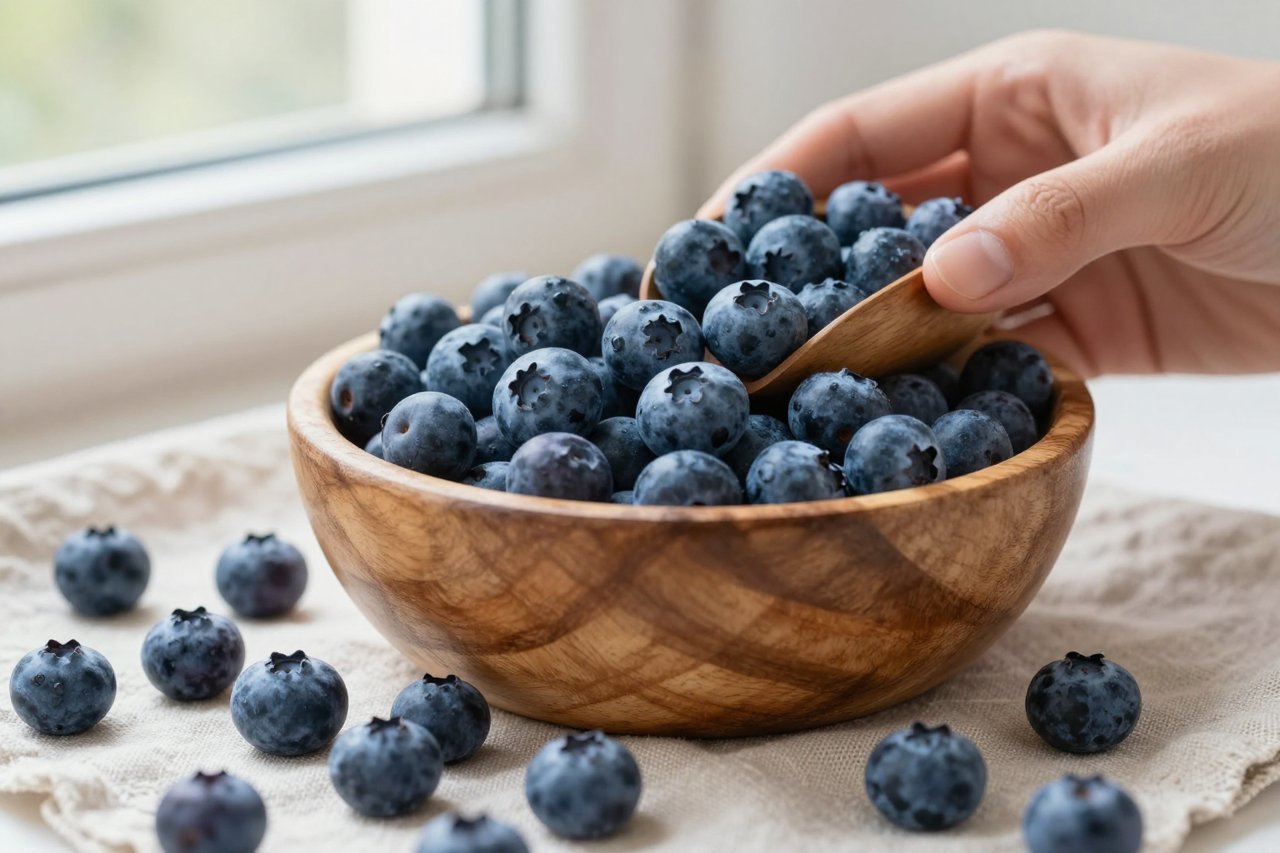
Blueberries stain. That dark blue juice that lingers on your fingers and cutting board is not just a messy inconvenience. It is anthocyanin, the flavonoid pigment that also colours blackberries, elderberries and red grapes. Anthocyanins are also why antioxidants in blueberries have caught the attention of researchers for the last twenty years.
But there is a gap between what you read in headlines and what actually happens after you swallow the berries. This article looks at the science, the practical serving sizes, and the frozen-versus-fresh question, so you can make sensible choices without chasing expensive health claims.
What antioxidants actually do in your body
Your cells constantly produce free radicals. Digesting food, fighting off a minor infection, even breathing in polluted air creates these unstable molecules. In small amounts, free radicals are useful signals. When they pile up, they can attack fats, proteins and DNA in a process called oxidative stress.
Antioxidants are the molecules that help keep that process under control. Vitamin C works in watery parts of cells, vitamin E protects fatty membranes, and plant pigments like anthocyanins add another layer of defence. Yet the common idea that antioxidants simply cruise around “mopping up” free radicals is incomplete.
Many polyphenols from blueberries are poorly absorbed and are quickly transformed by gut bacteria. Instead, they seem to act as signals. They nudge your cells to switch on their own internal antioxidant systems, including enzymes like glutathione peroxidase and catalase. In other words, blueberries may help your body build better defences rather than acting as a direct shield all by themselves.
The blue pigment that steals the show
Anthocyanins have a chemistry that changes with pH, which is why blueberry juice looks different in acidic lemon dressing or alkaline baking soda. More importantly, these compounds have been linked to better blood flow, improved insulin sensitivity and lower levels of inflammatory markers in human trials.
Blueberries are not the only source. But they deliver a particularly high concentration for the calories involved. If you want variety, blackberries and raspberries each have their own phenolic fingerprint. From the same family, these berries share similar benefits, and a recent look at the science-backed benefits of blackberries makes for an interesting comparison if you rotate them through your fruit bowl.
What human studies show about blueberries and antioxidant power
Early research often tested berries in a test tube, which made blueberries look unrealistically heroic. More modern studies feed people actual blueberries and measure what happens in their arteries, blood pressure readings and cognitive performance.
Blood vessels and blood pressure
The most consistent findings are in vascular health. A serving of about 100 to 150 grams appears to improve the way blood vessels expand in response to increased flow. Several randomised trials have also reported modest reductions in both systolic and diastolic blood pressure after a few weeks of daily berry consumption.
This may be partly because anthocyanins encourage the body to produce more nitric oxide, the molecule that tells blood vessels to relax. The effect is not massive, but it is meaningful in the context of an otherwise healthy diet. If you prefer the bigger picture in list form, this set of five science-backed reasons to eat blueberries every day rounds up what the trials support.
Post-workout recovery and everyday inflammation
Exercise produces free radicals too, and antioxidants can help limit the muscle soreness that follows intense sessions. In older adults, blueberry extracts have been shown to speed up recovery of muscle strength after eccentric exercise, the kind that causes micro-damage and stiffness.
There is also developing research on memory and executive function. Most of the benefits appear after regular intake over several weeks rather than one single snack. You cannot expect to eat blueberries at breakfast and suddenly remember every name you have ever heard. But the slower cognitive decline seen in long-term observational studies makes this fruit a reasonable part of a brain-friendly diet.
Does frozen fruit lose antioxidant power?
A common concern is that freezing destroys antioxidants. For blueberries, frozen berries are generally just as good as fresh, and sometimes slightly better. Commercial frozen blueberries are picked at peak ripeness and frozen quickly, which locks in the anthocyanins. Fresh berries that sit in a plastic container for a week gradually lose vitamin C and some phenolic content because of exposure to light and oxygen.
One practical difference is texture. Freezing ruptures cell walls, so thawed berries are softer and wetter. That is fine for smoothies and baking, but less appealing if you want that firm pop in a fruit salad. If you buy frozen, you can add them directly to porridge or yoghurt, which works particularly well in winter. A weekly habit of adding frozen berries to breakfast is often the simplest way to get the same antioxidants without paying out-of-season prices.
Simple and realistic ways to eat more blueberries
You do not need a fancy smoothie bowl to get the benefits. A few habits work surprisingly well in ordinary meals:
- Stir a handful of frozen or fresh blueberries into warm porridge or overnight oats before serving. The berries soften and release their juice without added sugar.
- Make a quick compote by mashing berries with a squeeze of lemon and a teaspoon of water. Warm it on the hob for two minutes and spoon it over pancakes or natural yoghurt.
- Toss whole blueberries into a savoury salad with rocket, toasted walnuts and crumbled feta. The sweet-tart pop goes well with a simple balsamic dressing.
- Blend them into a smoothie with spinach, a few almonds and a piece of banana. Adding the berries to a balanced breakfast keeps you fuller for longer.
If you find plain blueberries too tart, roast them for ten minutes with a tiny amount of maple syrup and a pinch of cinnamon. That turns them into something closer to a dessert while keeping most of their polyphenols intact.
How many blueberries should you actually aim for?
Most intervention trials use roughly one cup of blueberries a day, which is about 150 grams. That is a realistic serving for many people, but it can be expensive when you no longer are buying in season or choose organic all year. There is nothing magical about that exact quantity. Because most of the anthocyanins are concentrated in the skin, even three-quarters of a cup of fresh or frozen berries gives you a rich dose.
Think of antioxidants in blueberries as one layer of a larger eating pattern. A person who regularly eats a handful of berries alongside nuts, vegetables and whole grains will almost certainly benefit more than someone who adds berries to an otherwise ultra-processed diet. The idea that you can supplement your way out of a poor diet has repeatedly failed in clinical research.
What matters more is repetition. Enjoying half a cup of blueberries on most days, whether fresh in summer or frozen in winter, is far more useful than eating a giant bowl once a month. That regular pattern aligns with the science, respects your budget and gives your body a dependable supply of the compounds that make these berries so interesting. And if you want to understand the broader everyday impact, take a look at what happens when you eat blueberries daily, because changes in blood pressure and cognitive performance are rarely felt as a single dramatic moment. Instead, they appear slowly, after many small bowls.
