 1-800-656-4211




Blog
The Benefits in Cherries: Why Your Summer Fruit Deserves a Full-Time Spot

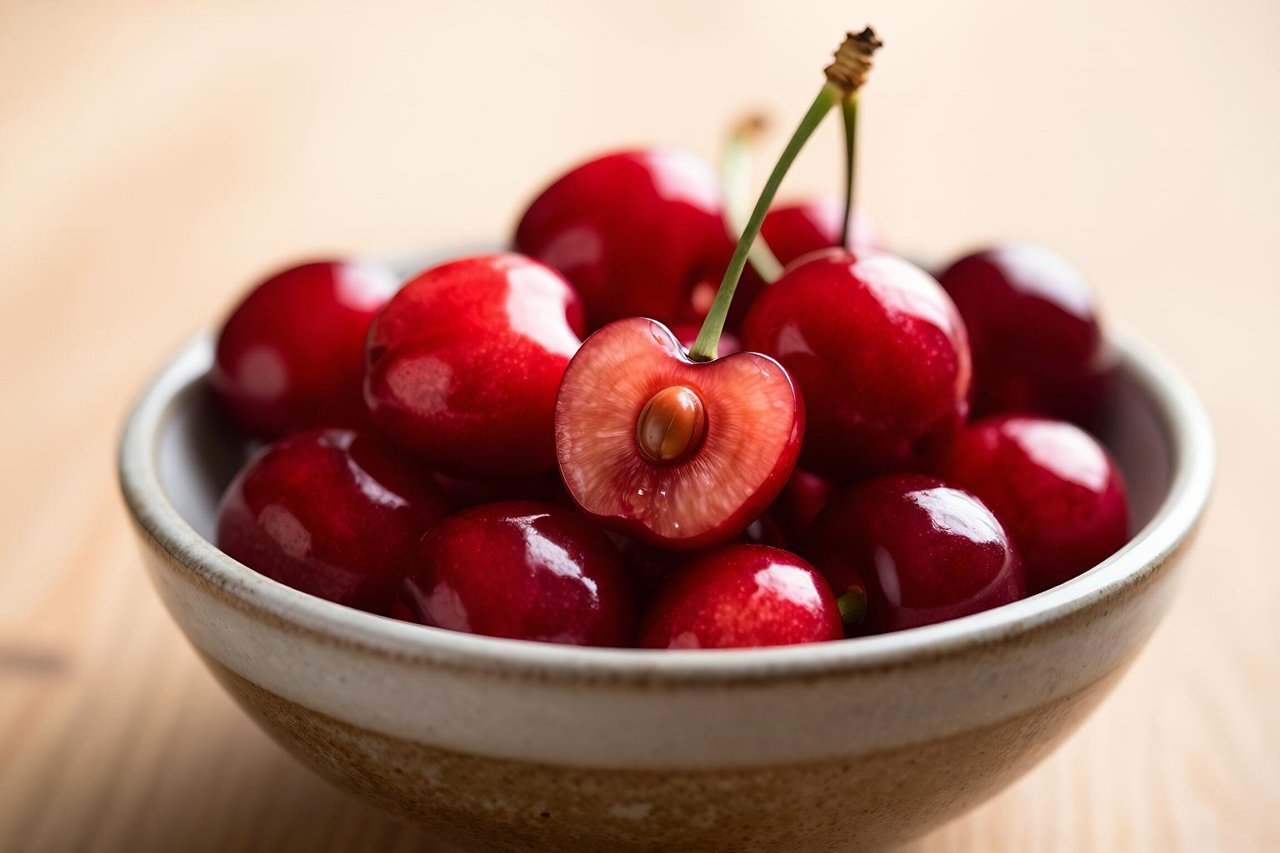
Come late June, a bowl of cherries doesn’t stay untouched for long. The best fruit snaps open with a clean pop, leaves a red ring around the rim, and disappears faster than almost anything else in the kitchen. But once the pits go into the compost, the fruit’s work is usually forgotten. That’s a shame, because the best benefits in cherries never make it onto a nutrition label.
A Small Fruit With a Surprisingly Long Ingredient List
One cup of pitted sweet cherries weighs in at around 100 calories, gives you roughly three grams of fibre and a useful slice of potassium: about 340 milligrams, or seven percent of your daily quota. You also get close to ten milligrams of vitamin C, plus smaller amounts of copper and manganese. The standout isn’t a vitamin though. It is the red pigment.
Cherries are among the most anthocyanin-rich fruits on produce shelves. These polyphenols are what turn ripe cherries dark red, and once inside the body they help control inflammation, protect blood vessel linings and support the repair processes that follow exercise or injury. Tart cherries are built from a different mix of compounds than sweet ones, which is why cherry research rarely treats them as identical. Scientists still have no shortage of work to do, but the list of findings keeps growing. If you like the molecular detail, you can read the surprising science behind this tiny red superfruit.
Sweet cherries versus tart: know which one you are buying
Sweet varieties, think Bing or Rainier, are best for eating fresh. Their dark skin still delivers anthocyanins, although the total concentration tends to be lower than in sour types. Tart cherries, particularly Montmorency, make your lips pucker because they hold more organic acids and plant pigments by weight. Many of the most convincing recovery and sleep studies use tart cherries, so the two categories should not be swapped when you are chasing a specific effect.
Tart Cherries Help You Sleep More Deeply
People have sipped sour cherry juice before bed for generations, and sleep researchers eventually grew curious why. Tart cherries contain measurable amounts of melatonin, the hormone that tells the body it is time to wind down. They also provide tryptophan and several anti-inflammatory compounds that may keep nighttime muscle tension and arousal in check.
In a placebo-controlled crossover study, older adults with insomnia who drank tart cherry juice for two weeks slept noticeably longer and reported better sleep efficiency than they did during the placebo period. That is not a massive effect, but it is a practical reason to test it before reaching for a stronger sleep aid. Human data now cover enough ground to be worth a look, especially in the connection between tart cherries and sleep.
Muscle Soreness and Exercise Recovery Improve With Tart Cherries
Anyone who has tried the first run after a long break knows the stiffness that shows up 24 hours later. Hard exercise causes microtears in muscle fibres and an immune response that makes things tender. Cherry polyphenols reduce oxidative stress on those fibres without blunting the systemic adaptation that comes from regular training.
The benefits in cherries have been tested in runners too. In a crossover trial with 54 healthy runners, a week of tart cherry juice before a relay race and two days afterward led to faster recovery of muscle strength and lower markers of muscle damage than the placebo drink. Other studies on resistance training report similar movement in the right direction. The advantage may be small, but it can change how you feel when you train again less than a day later.
Joints, Gout and Lowered Inflammation
Exercise gets a lot of attention, but chronic inflammation is a quieter threat. One of the strongest lines of evidence connects cherry intake with uric acid metabolism. Gout develops when uric acid crystallises in a joint, and dietary strategies to remove that acid matter.
A Boston University study followed 633 adults with gout and found that eating cherries over a two-day period lowered the odds of a gout attack by about a third compared with eating none. The effect appeared even among those who already used medication. If you live with gout or arthritis, treat this as a supporting habit, not a medicine. The context matters because cherry research is easily overstated. For a balanced read on what can and cannot be concluded, the sweet and sour truth about cherry health benefits sorts the evidence in more detail.
A Modest but Real Effect on Blood Pressure and Cholesterol
The same polyphenols that calm muscle inflammation also help blood vessels expand more easily. Cherries supply potassium, a mineral that acts on sodium balance, and antioxidants that keep LDL cholesterol particles from becoming oxidised and irritating artery walls.
Individual trials look promising, but the biggest benefits probably appear when cherries sit inside a diet that is already built on vegetables, whole grains and fish. Think of them as one of several colourful tools. A bowl of cherries alongside a plate of oats and walnuts earns more respect than a morning glass of cherry juice followed by a fast-food lunch.
Brain Health and Cognitive Ageing: An Emerging Area
Anthocyanins are small enough to cross the blood-brain barrier, and animal studies have shown that berry extracts can improve memory and delay age-related cognitive changes. Human research on cherries specifically is less developed, but the early signals are encouraging enough that researchers have begun testing them in mild cognitive impairment.
The gut also plays a role here, because polyphenols in cherries feed beneficial bacteria, and the gut-brain axis can influence mood and focus. Expect clearer answers in the next few years. For a broader map of what the current evidence does and doesn’t show, this review of the health benefits of cherries beyond summer brings the different effects together.
How to Move From Seasonal Snack to Daily Habit
The obvious obstacle is the season. Fresh cherries appear for only a few weeks, and prices rise quickly outside that window. Frozen cherries solve the problem because they are pitted, ripe at peak and often cheaper than fresh berries. Use them in smoothies, porridge or a quick compote with cinnamon.
- Keep a bag of frozen unsweetened cherries in the freezer for overnight oats and plain yoghurt.
- Drink about 100 ml of tart cherry juice 30 minutes before bed; check the label for added sugars first.
- Chop fresh sweet cherries into salsa with lime and eat it with grilled pork or chicken.
- Use dried cherries in trail mix, but choose ones with no added sugar or fruit juice concentrate.
If you want to extend the fresh season, freeze cherries in a single layer on a baking sheet before bagging them, so they don’t clump into one red brick. A handful at breakfast, a glass before sleep or a handful after a workout adds up quickly.
