 1-800-656-4211




Blog
Cherries and Benefits: The Surprising Science Behind a Tiny Red Superfruit

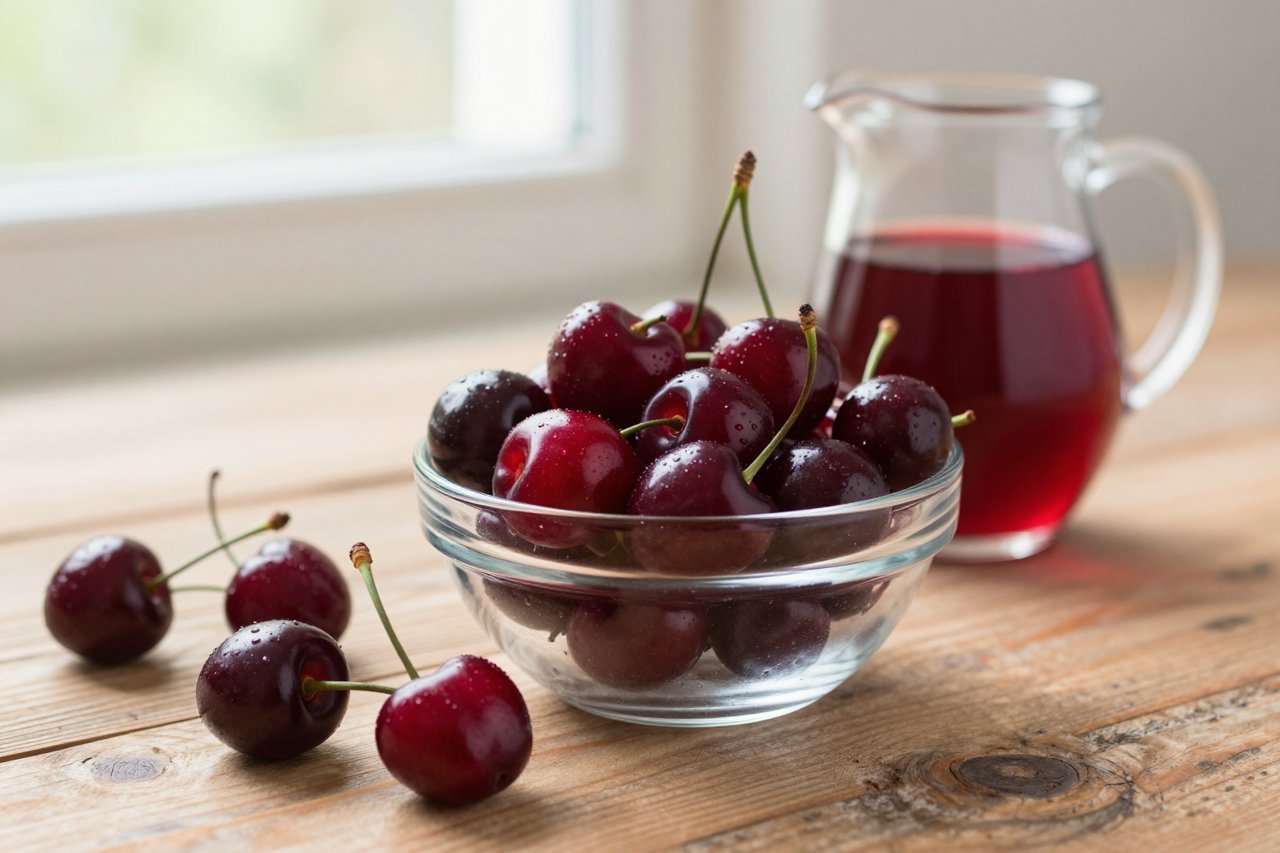
Cherries once meant one thing to most people: the sweet red bulbs that top an ice-cream sundae or hide in a holiday fruitcake. But cherries and benefits like lower inflammation, better recovery from hard workouts, and deeper, more restful sleep are starting to change that perception. The backyard stone fruit has quietly become one of the most studied berries in nutrition research – even if it is technically a drupe.
A Small Fruit with Serious Nutritional Depth
A single cup of raw heart cherries packs a lot of nutrients into a small serving. You get around 3 grams of fibre, 18% of the daily value for vitamin C, and a notable dose of potassium – roughly 342 mg per cup. That’s similar to what a banana delivers per serving, though with fewer calories and more anthocyanin pigments.
Cherries are also rich in plant compounds that don’t always show up on nutrition labels. The red-purple pigment in dark cherries comes from anthocyanins, naturally occurring chemicals with documented antioxidant activity. These compounds are considered the primary reason that cherry research often connects the fruit to a broad range of conditions – from soreness after exercise to joint discomfort and even sleep complaints. If you’re curious whether the fruit lives up to that billing, check out the detailed breakdown in this piece on cherries and health benefits: the sweet and sour truth for a closer look at the science.
Anthocyanins and Antioxidants: Why These Pigments Matter
Inside a dark cherry, pigments called anthocyanins act as antioxidants. Some varieties contain more than 400 milligrams of these polyphenols per 100 grams of fruit – a level high enough to rival strawberries and blackberries, which are often advertised more heavily as “red superfoods.”
Antioxidants matter because they help neutralise free radicals – unstable molecules that can damage cells and accelerate ageing when they pile up unchecked. The body produces free radicals all the time, but levels rise after intense exercise, during inflammation, and even after a poor night’s sleep.
What makes cherries interesting isn’t just their total antioxidant load – it’s the particular combination of flavonoids and phenolic acids that seems to nudge certain physical responses. Research on tart cherry juice, for instance, has repeatedly shown measurable drops in markers of oxidative stress in trained cyclists and runners, which helps explain why the fruit keeps showing up in recovery-oriented sports nutrition.
Cherries and Workout Recovery: Still Sore? Try Some Cherries
One well-known study followed long-distance runners who drank tart cherry juice twice daily for seven days before and on the day of a long relay race. Those runners reported significantly less muscle soreness compared with a placebo group, and their recovery of isometric strength happened faster.
The recovery effect isn’t limited to elite athletes. Researchers at Northumbria University found that individuals who consumed cherry concentrate capsules experienced less exercise-induced pain during elbow flexion exercises – a simple movement most gym-goers will recognise.
Theories about the mechanism are still being tested, but the general consensus is that anthocyanins reduce inflammatory signalling right after exercise. That lowers muscle protein breakdown and gives your tissues a quicker path back to baseline. So swapping an anti-inflammatory pill after a hard leg day for a glass of tart cherry juice may not be quite as far out as it sounds.
Tart Cherries and Sleep: The Melatonin Connection
Tart cherries – especially Montmorency cherries – contain small amounts of melatonin, the hormone that tells your brain it’s time to shut down for the night. A typical glass of tart cherry juice has roughly 1.5 micrograms of melatonin. To put that in perspective, supplements often deliver 1 to 5 milligrams of melatonin, but the cherry’s natural supply may matter less for absolute dosage than for how the fruit works with your body.
Your gut also uses compounds from cherries to make tryptophan and other amino acids that feed into your melatonin pathway. That’s why a 2021 meta-analysis concluded that tart cherry supplementation led to moderate, but genuine, sleep improvements in people with insomnia and general sleep difficulties. For a full look at how the sour fruit affects your sleep cycle, this article on tart cherry and sleep gives a helpful scientific overview.
How Cherries Fit Into a Sleep Plan
The usual recommendation in low-risk, non-pharmaceutical sleep studies is to drink tart cherry juice in the evening, or take a tart cherry extract supplement, about 30 to 60 minutes before bed. The key is consistency: the sleep-supporting advantage seems to emerge after a few nights of regular intake rather than after one glass.
One of the more popular ways people naturally add this into their routine is by using tart cherry juice. You can mix it with sparkling water and a dash of lime to soften its tartness. Alternatively, the supplement route is possible, and the article on tart cherry juice for sleep breaks down what to look for in a commercial product.
Heart Health and Blood Pressure Support
Cherry research also circles around cardiovascular markers. Dietary potassium helps counteract sodium pressure inside your blood vessels, and a single cup of sweet cherries supplies roughly 6–7% of your daily potassium needs. But the anthocyanins may do even more: several dietary analyses have associated higher anthocyanin intake with lower risk of hypertension. Specific to cherries, one 2020 animal feeding study found that tart cherry powder improved lipid profiles in obese rats, dropping LDL “bad” cholesterol and increasing HDL “good” cholesterol. Results like that don’t automatically translate to identical effects in humans, but they support the body of evidence that cherries can help maintain normal circulatory function inside a balanced diet.
And if you enjoy cherries mainly as a seasonal treat, it may put into perspective why these fruits are increasingly discussed not as a dessert topping but as a daily functional food. The article on the health benefits of cherries covers more on this angle.
Gout and Uric Acid: Sour Cherries as Traditional Medicine
Gout, a painful form of arthritis triggered by elevated uric acid, has a history of folk treatments involving cherries and cherry products. Unlike many remedies that stay in folklore, cherry’s gout connection has now been examined in clinical settings.
A widely cited 2012 study of over 600 gout patients showed that those who ate cherries for two days prior to a gout attack had a 35% lower chance of an acute flare compared with people who ate none. The effect was even stronger (45% less risk) when cherry consumption was paired with allopurinol, a common gout medication.
The likely explanation is that cherries suppress uric acid production by moderating certain oxidative pathways in the liver, but more granular research is needed to fully clarify the molecular mechanism. Even so, gout sufferers who take standard medication and add a daily serving of tart cherries often report fewer painful episodes – making it a worthwhile addition if the taste doesn’t bother you.
Sweet vs. Tart Cherries: Different Varieties, Different Perks
When you look at “cherries and benefits,” you’re really looking at two separate stories: sweet and tart cherries each bring a distinct nutritional chemistry.
Sweet Cherries
Bing, Rainier, and Chelan cherries are the ones you most often eat fresh. They have higher natural sugar content and milder flavour. Their antioxidant profile is dominated more by hydroxycinnamic acids than by melatonin, making them a solid choice for antioxidant boosting and muscle recovery post-workout.
Tart Cherries
Montmorency and Morello cherries are too tart to serve raw at most dinner tables, but they shine in juices, dried mixes, and concentrated extracts. Tart cherries have considerably higher melatonin content and are the primary focus of most sleep and gout research.
Here’s a quick comparison of how they might fit into your weekly routine:
- Fresh sweet cherries: great for snacking, fruit salads, and quick desserts.
- Frozen tart cherries: perfect for smoothies and overnight oats.
- Tart cherry juice: convenient liquid option for evening use and inflammation recovery.
- Dried cherries: portable but watch portion sizes, since drying concentrates natural sugars.
- Tart cherry extract: concentrated capsules or powder for those who don’t like the taste.
Easy Ways to Eat More Cherries Every Day
Incorporating this fruit goes beyond a bowl of cherries at the peak of July. Tart cherry concentrate can be stirred into oatmeal, plain Greek yogurt can get a handful of dark sweet cherries, and frozen pitted dark cherries blend into a drinkable smoothie in about 30 seconds.
If you buy cherry juice, be choosy. Many supermarket bottles contain a lot of added sugar and little actual cherry juice content. Check for labels that read “100% juice with no added sweeteners” or choose a concentrated extract with no fillers. A simple guideline is to look for a deep, opaque colour and a pleasantly sour taste – if it tastes like candy, you’ve probably got more sugar than fruit.
One practical suggestion is to keep frozen cherries on hand. They thaw quickly in a bowl and maintain more nutritional value than canned versions, which often sit in heavy syrup. Another simple route is to make a nightly tart cherry “mocktail,” mixing one part juice with two parts sparkling water and a squeeze of lemon – a habit that might also help reinforce a consistent sleep schedule.
The evidence base around cherries keeps growing, covering direct effects on sleep hormones, exercise inflammation, cardiovascular markers, and gout flare frequency. That’s a remarkably wide range for a fruit that many people still consider a simple summer snack. Whether you prefer the juicy sweetness of fresh Bing cherries or the sharp punch of a tart cherry concentrate, adding a consistent ruby-red dose to your day is a practical, science-backed step that goes far beyond a pleasant flavour.
