 1-800-656-4211




Blog
Vitamin C Supplement for Skin Lightening: What It Can and Can’t Do

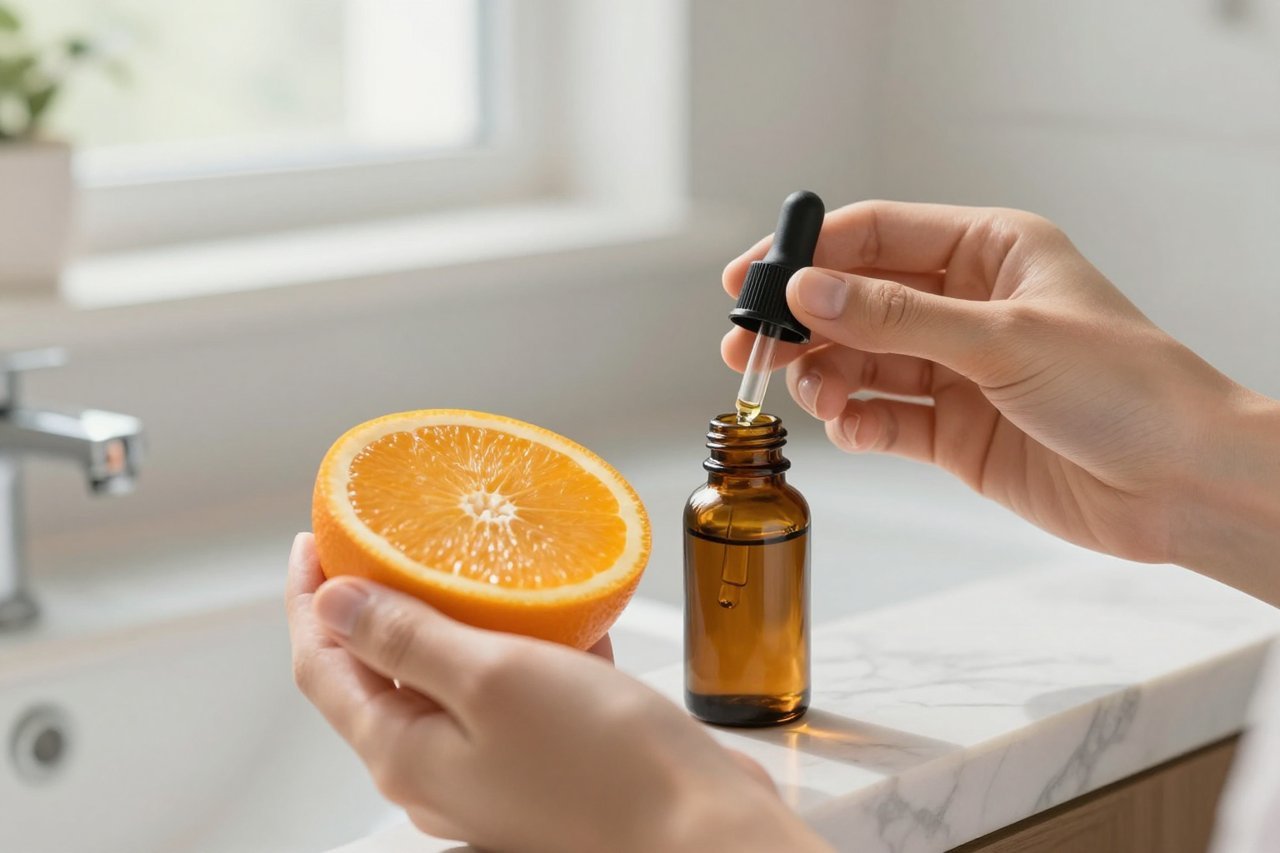
A 1,000 mg vitamin C tablet costs about eight cents. A prescription pigment cream costs far more and needs a dermatologist’s signature. That price gap explains why so many people search for a vitamin C supplement for skin lightening at midnight, hoping the cheap option works.
It partly does. Vitamin C has a genuine, well-documented role in how skin produces melanin. What it does not do is behave like a bleach in capsule form. Understanding where the line falls will save you money and a lot of frustration.
How Vitamin C Interferes With Melanin Production
Pigment starts with an enzyme called tyrosinase, which sits inside melanocytes and depends on copper to function. Ascorbic acid does two things here. It keeps that copper in its reduced, inactive state, and it converts dopaquinone back into dopa before the reaction can continue down the chain that ends in melanin.
Vitamin C is also an antioxidant. UV exposure generates free radicals in skin, and those radicals both damage cells and prod melanocytes into ramping up production. Soaking them up removes one of the signals telling your skin to make more pigment.
Skin does not absorb whatever is floating in your blood
This is where oral supplements run into biology. Ascorbate gets pulled into cells by transporter proteins called SVCT1 and SVCT2, and those transporters saturate quickly. Swallow 200 mg and you absorb nearly all of it. Swallow 1,000 mg and you absorb roughly half, then excrete the rest. Plasma levels climb, but skin levels rise far more slowly, and the epidermis, where pigment is actually made, gets a modest share of a large dose.
Pills and Serums Are Not Interchangeable
A 15% to 20% L-ascorbic acid serum delivers a concentrated dose straight to the layer you care about. That is why most convincing pigment research involves topical vitamin C, not capsules.
An oral supplement nourishes the whole body first, and skin queues behind the adrenal glands, brain and immune system, which grab ascorbate aggressively. Much of what does reach your skin gets spent neutralising UV damage before it ever encounters a tyrosinase enzyme.
None of this makes the pill pointless. It just means a supplement is a supporting actor, not the lead.
What the Trials Actually Show
Honest answer: the evidence for oral vitamin C alone is thin. Most studies reporting visible lightening combine ascorbic acid with vitamin E, collagen peptides, or a broader antioxidant blend, which makes it impossible to credit one ingredient.
When researchers do test oral antioxidants for melasma, improvements tend to be modest. Think a couple of points on a dermatologist’s pigment scale after 12 to 16 weeks, not a transformation. A 2018 review of oral antioxidant treatment for melasma found the overall evidence limited and the individual studies small.
So if you expect a pill to erase dark patches from melasma or old acne scars, you will be disappointed. If you are looking for a cheap, safe addition to a routine that already includes sun protection and topical actives, that is a very different calculation.
Dosage That Makes Sense
The recommended daily intake is 75 mg for women and 90 mg for men, with an upper limit of 2,000 mg. For skin purposes there is little reason to go past 500 mg a day. Beyond that, you are mostly funding expensive urine.
Splitting the dose beats one big tablet
Because absorption drops sharply as the dose climbs, 250 mg twice daily keeps your blood levels steadier than 500 mg in one go. If you prefer a single tablet with breakfast, that is fine too. Just do not assume doubling the dose doubles the benefit.
Form matters less than the label suggests
Ascorbic acid and sodium ascorbate both work. Sodium ascorbate is less acidic and easier on sensitive stomachs. Ester-C and liposomal products claim better absorption, and the marketing is persuasive, but there is very little skin-specific evidence backing those premiums.
Food Does Most of the Work
Getting 200 mg from meals is easier than it sounds.
- Half a red bell pepper: about 95 mg
- One guava: roughly 125 mg
- A medium kiwi: 64 mg
- One navel orange: 70 to 80 mg
- Half a cup of strawberries: 49 mg
- Half a cup of raw broccoli: 39 mg
Pepper at lunch and a kiwi at breakfast covers you. A supplement then becomes insurance for the days your diet falls apart, which is exactly the right role for it.
Who Should Be Careful With High Doses
Vitamin C is water-soluble and generally safe, but a few groups should stick to food-level amounts:
- Anyone with a history of oxalate kidney stones, since vitamin C can raise oxalate excretion
- People with hemochromatosis or iron overload, because ascorbic acid boosts iron absorption
- Anyone taking warfarin, where high doses can affect clotting measurements
- Patients midway through chemotherapy or radiation, who should clear antioxidants with their oncologist first
If any of those apply to you, talk to a doctor rather than a supplement aisle.
What Actually Fades Dark Spots
Sun protection does more for pigmentation than any pill on the market. UV is the main trigger for melanocytes, and without daily SPF 30 or higher you are refilling the bucket while trying to empty it. That includes cloudy days and the walk to your car.
Alongside sunscreen, the strongest performers are topical vitamin C at 15 to 20% each morning, niacinamide at 4 to 5%, azelaic acid, and a prescription retinoid at night. Hydroquinone remains the gold standard for melasma when used in short, supervised courses. Tranexamic acid, both oral and topical, has decent data behind it for stubborn cases.
Then there is the question of what caused the pigment in the first place. Melasma is hormonal and UV-driven and often needs a prescription approach. Post-inflammatory hyperpigmentation from acne fades on its own once breakouts stop. Freckles and sun spots respond to retinoids and lasers. A vitamin C supplement does not discriminate between these, which is another reason it tends to help a little across the board rather than a lot for any single problem.
If It Has Been Three Months and Nothing Has Changed
Twelve weeks is a fair trial period for anything involving pigment. If your dark spots look identical at that point, the supplement is not the thing to fix. Check three others instead.
First, are you actually wearing sunscreen every day, using enough of it, and reapplying during long stretches outdoors? Most people apply about a quarter of the amount used in SPF testing. Second, is there a topical active in your routine, or are you leaning on the capsule alone? Third, has a dermatologist looked at the pigmentation and named it? Melasma, PIH and sun damage each need different tools.
Keep taking vitamin C if you like it. It is cheap, it supports collagen production, and it does your skin no harm. Just do not ask a 500 mg tablet to do the job of a sunscreen habit, a topical serum and a proper diagnosis. Put the effort where it counts and let the supplement stay in its lane.
