 1-800-656-4211




Blog
Nigella Sativa Black Seed Oil: What It Really Does, How to Use It, and How to Spot a Good Bottle

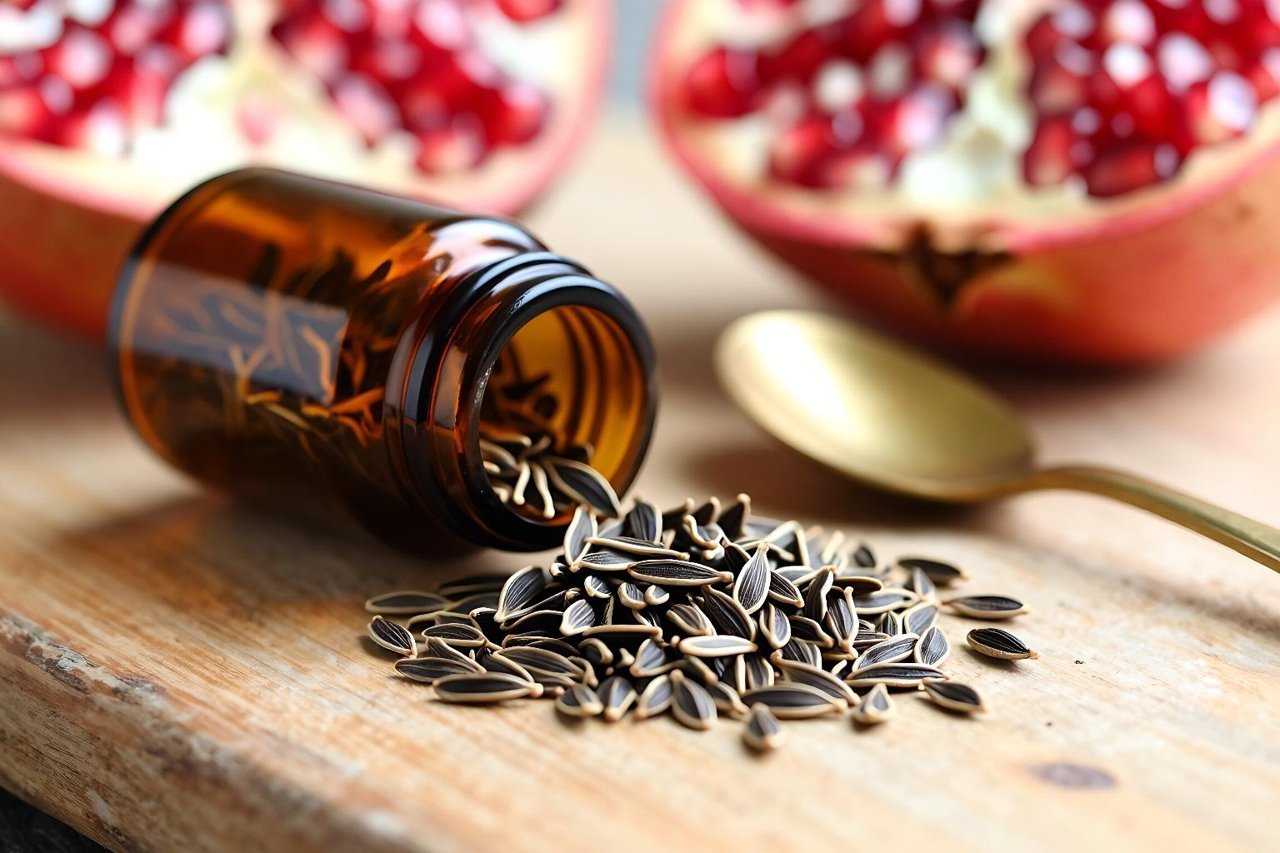
Black seed oil has been sitting on kitchen shelves in Cairo, Karachi and Istanbul for a very long time. Grandmothers stirred it into honey. Herbalists working in the Unani and Ayurvedic traditions reached for it constantly. Then it appeared in Western supplement aisles in softgel capsules with loud claims printed on the front. So is nigella sativa black seed oil the real thing, or just another overhyped bottle? The honest answer sits somewhere in the middle, and it’s more interesting than either extreme.
What nigella sativa actually is
Nigella sativa is a small annual flowering plant, a relative of buttercups, native to South and Southwest Asia and parts of the Mediterranean. It produces tiny black teardrop-shaped seeds, and those seeds get pressed to make the oil. You’ll see it sold under a confusing pile of names: black cumin, kalonji, black caraway, and the Arabic habbatus sauda, which translates roughly to “the blessed seed”.
Worth clearing up early: it isn’t cumin, it isn’t caraway, and it definitely isn’t black sesame. Those mix-ups cause a lot of confusion in shops and online listings.
The history is genuinely old. Seeds have been found in Egyptian tombs, including the burial site of Tutankhamun, and the plant appears in Greek, Persian and Indian medical texts stretching back well over two thousand years. It was used for breathing complaints, digestive trouble and skin problems long before anyone had a laboratory to test it in. That long folk history doesn’t prove much on its own, but it does explain why researchers eventually started looking closely.
The compounds behind the hype
Most of the attention lands on thymoquinone, usually shortened to TQ. It’s a quinone that behaves as an antioxidant and shows clear anti-inflammatory activity in laboratory and animal studies. It isn’t the only thing in the bottle, though:
- Thymoquinone (TQ): the headline compound and the one tested most often.
- Thymohydroquinone and p-cymene: related volatile compounds that contribute both aroma and activity.
- Nigellone: a larger molecule studied in the context of histamine release.
- Fatty acids: mostly linoleic and oleic acid, which is why the oil feels so rich on skin.
- Trace vitamin E and minerals: modest amounts, but they help protect the oil from turning rancid.
Here’s the catch. TQ is volatile and heat-sensitive, and its concentration varies wildly between brands. Independent testing of commercial bottles has turned up levels ranging from barely detectable to more than 2 percent. Two bottles with near-identical labels can be completely different products inside. That single fact explains a lot of the mixed reviews you’ll read online.
What the human research shows
Most of the evidence is animal work and small trials, so treat everything below as promising rather than proven.
Inflammation and immune activity
Laboratory studies consistently show black seed extracts calming inflammatory pathways. Human data is thinner and messier. A small trial in people with rheumatoid arthritis reported reduced joint swelling and morning stiffness, which is encouraging but nowhere near enough to replace standard treatment.
Asthma and breathing
This is one of the better-studied areas. Several randomised trials in adults and children with asthma found improved symptom scores and better lung function when black seed was added alongside usual care. The trials were small and short, often eight to twelve weeks, so the effect looks real but modest.
Blood sugar and cholesterol
Trials in type 2 diabetes using roughly one to three grams of seed daily have shown small drops in fasting glucose and HbA1c. Cholesterol results are mixed, with some studies reporting LDL improvements and others finding nothing much. Again, short studies, small groups.
Skin and hair
Small trials have looked at acne (one compared a topical black seed preparation with benzoyl peroxide and found broadly similar results), eczema, and hair loss (one pitted it against minoxidil). The quality of this research is weak, but applying diluted oil to skin and scalp is low risk, which is why so many people try it anyway.
Sensible amounts
There’s no official standard dose, but the ranges used in research and traditional practice are fairly consistent.
Seeds: one to three grams a day, roughly a level teaspoon, chewed well or ground fresh. Whole seeds swallowed intact tend to pass straight through.
Oil: half to one teaspoon daily covers most people. Capsules typically run 500 to 1,000 mg, taken once or twice a day with food.
Topically: dilute it first, roughly one part black seed oil to three or four parts carrier oil such as coconut or jojoba. Neat oil stings on sensitive skin.
Skip high-heat cooking with it. TQ breaks down quickly above moderate temperatures, so add the oil to warm dishes after the heat is off, or drizzle it over bread, yogurt and salads.
Getting it down
Black seed oil tastes peppery and slightly bitter, with an edge of oregano or thyme. Some people genuinely love it straight off the spoon. Plenty don’t, and there’s no shame in that.
Practical workarounds: stir it into a spoonful of raw honey, chase it with orange juice, or blend it into full-fat yogurt with chopped dates. A spoonful taken right before a bite of something strong also kills most of the aftertaste. If the flavour is a dealbreaker, capsules sidestep the problem entirely, though absorption from capsules is generally a little slower.
What separates a good bottle from a bad one
- Cold-pressed or expeller-pressed. Solvent extraction can strip or damage beneficial compounds.
- Dark glass rather than clear plastic. Light degrades thymoquinone quickly.
- One ingredient only. Blends listing sunflower or olive oil first usually contain very little black seed oil.
- A stated thymoquinone level or third-party lab test. Brands confident in their product publish it. Silence is a yellow flag.
- A harvest or expiry date. Twelve to eighteen months from pressing is a reasonable window.
Smell it when it arrives. Fresh oil is pungent and sharp. If it smells like crayons or old paint, it has gone rancid. Send it back.
Storage
Keep the bottle in a cool, dark cupboard away from the stove. The fridge works too, though it thickens the oil and makes it grainy, so run the bottle under warm water before use. Never decant it into a clear container, no matter how nice it looks on the counter.
Who should be careful with it
Most people tolerate black seed oil well. The usual complaints are mild nausea, stomach upset or loose stools at higher doses, which usually settle when you drop the amount.
A few situations deserve caution. Pregnancy is one: the plant has traditionally been used to encourage contractions, so skip supplemental doses. Anyone on blood thinners such as warfarin, aspirin or clopidogrel should be aware of a theoretical additive bleeding risk. People on diabetes or blood pressure medication may see a mild compounding effect and should monitor their readings. Stop two weeks before scheduled surgery, and use caution if you have a known allergy to buttercup-family plants.
