 1-800-656-4211




Blog
Vitamin C Benefits: What It Does for Your Skin, Immunity and Energy

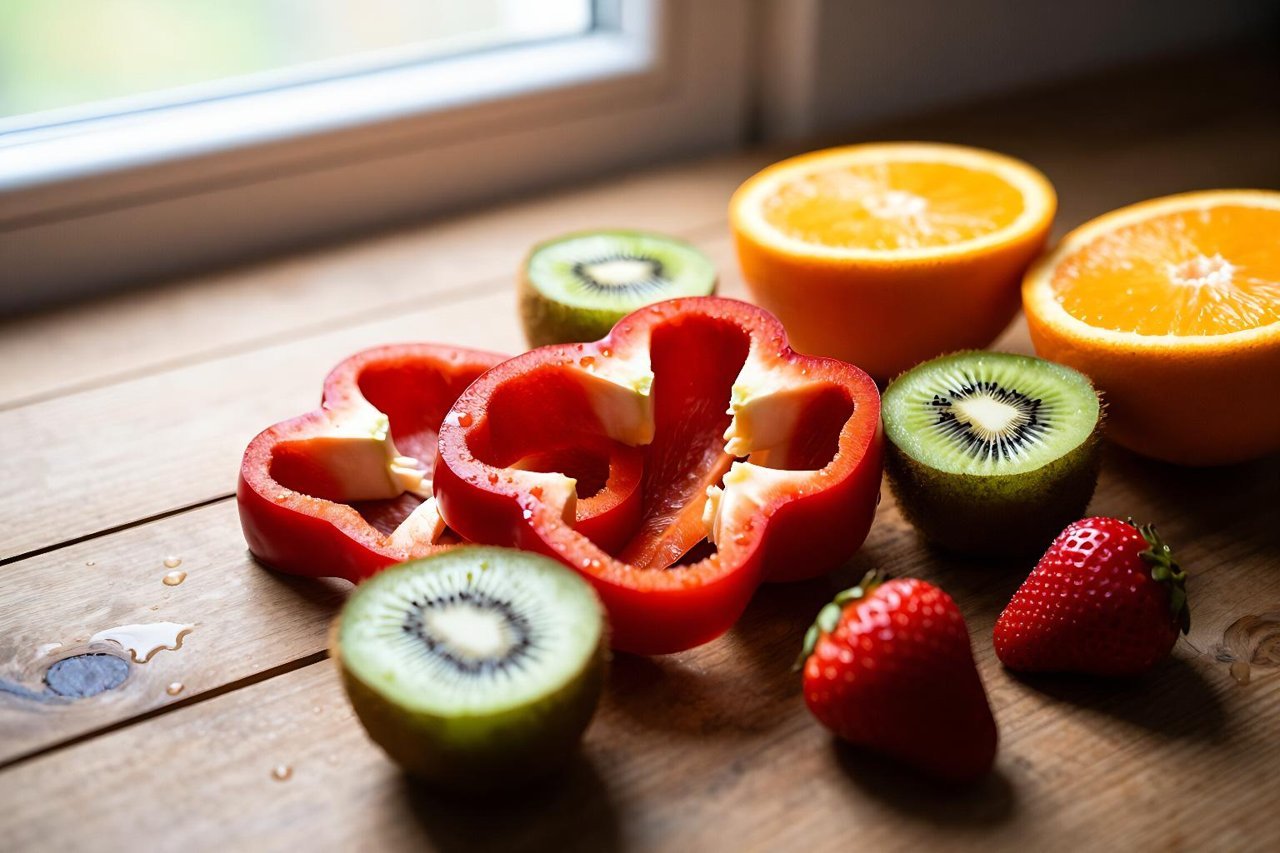
Vitamin C has a reputation problem. It’s the nutrient everyone already knows about, the one pushed alongside a glass of orange juice whenever someone sneezes, so it’s easy to dismiss as basic. Strip away the marketing and you find something more interesting: a molecule your body cannot manufacture, cannot store for long, and depends on for jobs that go well beyond cold season.
Here’s what the research actually shows about vitamin C benefits, how much genuinely matters, who tends to fall short, and the small daily habits that make the biggest difference.
What Vitamin C Is Actually Doing in Your Body
Vitamin C, or ascorbic acid, is water-soluble. Unlike vitamins A, D, E and K, it isn’t stockpiled in your fat tissue. Whatever your body doesn’t use within a few hours leaves through urine, which is why steady daily intake beats a giant dose once a week.
Inside your cells it works as a cofactor, a helper molecule that enzymes need before they can do their job at all. Three roles stand out:
- Collagen production. Vitamin C is required to stabilise the collagen triple helix. Without it, newly built collagen is weak and breaks down, which is why scurvy causes gums to bleed and old wounds to reopen.
- Antioxidant defence. It neutralises free radicals in watery parts of cells and plasma, and recharges vitamin E so that fat-soluble antioxidant can keep working.
- Neurotransmitter and energy metabolism. It’s needed to synthesise norepinephrine and carnitine, both involved in mood, alertness and how your cells burn fat for fuel.
The Immune System Connection, With a Caveat
Vitamin C accumulates inside immune cells such as neutrophils and lymphocytes, and it supports the physical barriers, like skin and mucous membranes, that keep pathogens out. That part isn’t controversial. What is often oversold is the cold-fighting claim.
A large body of randomised trials, pulled together in a Cochrane review, found that taking vitamin C regularly does not stop the average adult from catching a cold. It does shorten one slightly, by roughly 8 percent in adults and 14 percent in children. The one group where incidence genuinely dropped was people under extreme physical stress: marathon runners, skiers and soldiers training in subarctic conditions saw their risk roughly halved.
So the honest summary is this. Vitamin C keeps your immune system functioning properly. It isn’t a shield against every virus that crosses your path.
Skin, Joints and the Collagen Factory
Collagen is the scaffolding protein in skin, tendons, cartilage, blood vessels and bone. Vitamin C is essential for two enzymes that cross-link it, so a chronic shortfall shows up as sagging skin, easy bruising, joint aches and slow-healing cuts long before anything dramatic happens.
Eating enough is the foundation; supplements and serums sit on top of that. If firmer skin is your goal, it helps to understand how marine collagen supports skin, nails and joints, because the two nutrients work as a pair. Collagen supplies the raw material. Vitamin C supplies the tools to assemble it.
Better Iron Absorption and Fewer Sluggish Afternoons
Iron from plants, known as non-heme iron, is stubbornly hard to absorb. Your body takes in somewhere between 2 and 20 percent of it depending on what else is on the plate. Vitamin C is one of the strongest enhancers there is. As little as 25 to 50 mg alongside a meal can increase non-heme iron uptake two- to threefold, and larger amounts push it further.
That matters for anyone who eats mostly plant-based, donates blood regularly, or menstruates heavily. Low iron stores show up as fatigue that sleep doesn’t fix, breathlessness on stairs, and brittle nails. Squeezing lemon over lentils or pairing spinach with red pepper is a genuinely effective trick, not a wellness cliché.
Antioxidant Protection and Long-Term Heart Health
Oxidative stress is one of the threads running through heart disease. When LDL cholesterol oxidises, it becomes far more likely to lodge in artery walls. Vitamin C helps limit that process and supports the endothelium, the thin lining of your blood vessels that controls dilation and blood pressure.
Population studies that measure vitamin C levels in blood, rather than relying on questionnaires, tend to link higher concentrations with lower rates of stroke and heart disease. These aren’t proof of cause, but the pattern is consistent across countries and decades. Plant compounds work best in company, which is one reason matcha tea’s antioxidant and metabolism effects get studied alongside vitamin-rich whole foods rather than in isolation.
How Much Vitamin C Do You Actually Need?
Official guidance sets the daily target at 90 mg for adult men and 75 mg for women, with an extra 35 mg for smokers because tobacco depletes the vitamin faster. The tolerable upper limit is 2,000 mg per day for adults. Above that, the most common side effect is digestive: gas, cramps and loose stools.
Millions of people comfortably clear the target without thinking about it. Others quietly don’t. Smokers, heavy drinkers, older adults, people on very restricted diets, those with malabsorption conditions, and anyone recovering from surgery or burns are all at higher risk of running low.
Signs you might be running short
- Gums that bleed when you brush
- Bruises that appear without a clear cause
- Wounds and grazes that heal unusually slowly
- Rough, dry or bumpy skin on the upper arms
- Persistent tiredness and irritability
- Catching every bug that goes around the office
Where to find it in food
- Half a raw red bell pepper: about 95 mg
- One medium guava: about 125 mg
- One medium orange: about 70 mg
- One kiwi: about 64 mg
- Half a cup of cooked broccoli: about 51 mg
- Half a cup of raw strawberries: about 49 mg
Tropical fruits push those numbers into another league. Acerola cherry can hold 1,000 to 2,000 mg per 100 g, which is why it turns up in so many powders and juices; the acerola cherry’s vitamin C content and how to use it is worth reading if you want a concentrated natural source. Mangosteen plays a different game entirely, contributing xanthones rather than ascorbic acid, and its antioxidant profile and traditional uses make it a useful companion to a vitamin C rich diet rather than a replacement.
Do You Need a Supplement?
Food first, for most people. Supplements make sense when diet alone can’t cover the gap: smokers, people with coeliac disease or Crohn’s, older adults with poor appetite, and anyone whose doctor has flagged low levels.
If you do buy one, plain ascorbic acid is cheap and well absorbed. Sodium ascorbate is buffered and gentler if ordinary tablets give you heartburn. Liposomal versions cost many times more, and the evidence that they outperform standard tablets in healthy people is thin. Absorption drops sharply above roughly 400 mg in a single dose, so splitting a larger amount across the day works better than swallowing it all at once.
One caution: people with haemochromatosis, a condition causing iron overload, and those with a history of oxalate kidney stones should talk to a clinician before taking high doses. Vitamin C is rarely the only nutrient people ask about, and if you’re building a routine it’s worth understanding vitamin D dosage, benefits and hidden risks too, since the two are commonly taken together.
Simple Habits That Keep More Vitamin C on Your Plate
Vitamin C is fragile. It dissolves in water, breaks down with heat, and degrades as cut produce sits exposed to air. A few changes protect most of what you buy.
Steam vegetables rather than boiling them, or roast them quickly at high heat; either keeps more of the vitamin than a long simmer in a pot of water. Add chopped bell pepper or a squeeze of lemon after cooking, not during, so it never meets the heat. Keep berries and cut fruit in the fridge and eat them within a day or two, because sliced melon or kiwi loses a measurable share of its vitamin C after 24 hours in the open.
Frozen produce is a quiet winner here. Fruit and vegetables are usually frozen within hours of harvest, and blanching locks in most of the vitamin C, often leaving more than a fresh item that has spent a week in transit and sat in your crisper drawer. A handful of frozen berries in a morning smoothie is a completely reasonable strategy, not a compromise.
If you take an iron supplement or eat a plant-heavy meal, put a vitamin C source next to it. If you smoke, add 35 mg to whatever your baseline is. And if your diet is genuinely varied, with peppers, citrus, kiwi or broccoli showing up most days, you’re probably already getting what you need without any pill at all.
