 1-800-656-4211




Blog
Mangosteen Benefits: What the ‘Queen of Fruits’ Really Does for You

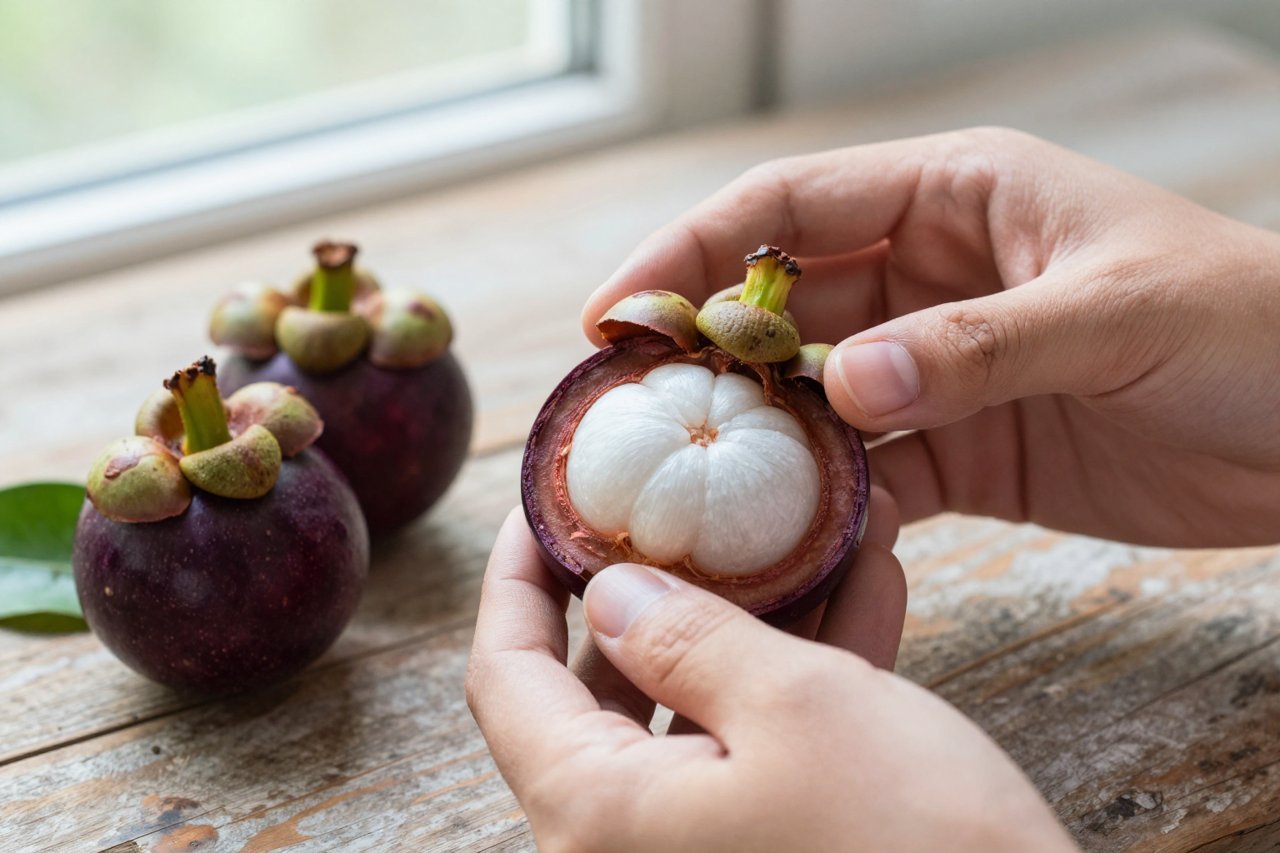
What Mangosteen Actually Is
Mangosteen looks like it was designed by someone showing off. The rind is a deep, matte purple, thick enough to feel like leather, and topped with a little rosette of green leaves. Crack it open and you get four to eight wedges of snowy white flesh, arranged like a peeled garlic bulb. The flavour sits somewhere between lychee, peach, and strawberry, with a tart edge.
It’s the fruit of Garcinia mangostana, a slow-growing tropical tree that thrives in the hot, humid climates of Thailand, Indonesia, Malaysia, Vietnam, and the Philippines. Across Southeast Asia it’s often called the queen of fruits, and it has a short season: in Thailand, roughly May through September. That scarcity, plus the fact that it bruises easily in transit, is part of why it costs so much in Western supermarkets.
People don’t just eat it. In traditional medicine across the region, the bitter purple rind is dried and brewed for stomach complaints, and the bark has been used for infections. That long history is one reason mangosteen benefits get talked about so much in supplement marketing.
The Compounds That Drive Mangosteen Benefits
The interesting chemistry sits mostly in the rind, not the sweet flesh. The rind is packed with xanthones, a class of polyphenols that includes alpha-mangostin and gamma-mangostin, the two compounds behind most of the research you’ll find.
The flesh itself is simpler. It’s mostly water and sugar, with a modest nutritional profile:
- About 60 calories per 100 grams of flesh
- Roughly 1.8 grams of fibre
- Small amounts of vitamin C, folate, and manganese
- Potassium, magnesium, and copper in trace quantities
Worth saying plainly: as a fruit, mangosteen is pleasant but not a nutritional powerhouse. The hype comes from the rind’s xanthones, and those are concentrated in supplements and rind teas rather than in what you eat with a spoon.
Antioxidants and Inflammation
Xanthones behave as antioxidants in the lab, neutralising free radicals and, in cell studies, dialling down inflammatory signalling pathways such as NF-kB. Animal studies have shown reduced markers of inflammation and oxidative stress after mangosteen extract is given.
Human data is much thinner. Some small trials have used mangosteen juice blends and tracked C-reactive protein, an inflammation marker, but those products contained several other fruits too, so it’s hard to credit mangosteen alone. If you’re looking for reliable anti-inflammatory results, the evidence for mangosteen is promising rather than proven.
Blood Sugar and Metabolic Health
This is where mangosteen gets genuinely interesting. Alpha-mangostin appears to inhibit alpha-glucosidase, the enzyme that breaks starches down into glucose. Blocking it slows the rise in blood sugar after a meal. It’s the same mechanism behind the diabetes drug acarbose.
Most of that work has been done in test tubes and in diabetic rats, and the doses used were far higher than you’d get from eating fruit. So don’t treat mangosteen as a treatment. If anything, the practical takeaway is caution: mangosteen juice, especially the sweetened commercial kind, delivers a lot of sugar without the fibre that slows absorption. Whole fruit is the better choice.
Digestion and Traditional Use
Southeast Asian herbalists have used mangosteen rind for diarrhoea and dysentery for centuries, and there’s laboratory support for the idea: xanthone extracts show activity against several gut pathogens. Whether that translates to a benefit for a healthy person eating the fruit is a different question.
Fibre, but not much of it
With under 2 grams of fibre per 100 grams, mangosteen won’t do much for your gut on its own. Compare it with a pear at around 3 grams or a cup of raspberries at 8. Treat it as a pleasant addition to a fibre-rich diet, not the source of it.
Heart Health and Everyday Nutrition
Mangosteen supplies potassium and magnesium, two minerals involved in blood pressure regulation, along with polyphenols that in animal studies have been linked to lower LDL cholesterol and reduced arterial plaque. Rodent results don’t automatically carry over to people, and no long-term human trial has tested mangosteen against heart outcomes.
What you can reasonably expect from eating the fruit regularly is a small nudge: a bit more potassium, a bit more fluid and fibre, and a sweet thing to eat that isn’t a pastry. That’s not nothing.
Mangosteen Supplements Aren’t the Same Thing
Walk into a health shop and you’ll find mangosteen capsules, powders, and juices claiming to cover everything from immunity to joint pain. Two problems stand out.
First, xanthone content varies enormously between products. Independent testing of mangosteen supplements has found that some contain far less of the active compounds than the label suggests. Second, many so-called mangosteen juices are mostly grape, apple, or pear juice concentrate with a splash of mangosteen, which means you’re paying premium prices for sugar water.
If you do want a supplement, look for one with third-party testing, and don’t expect it to replace anything your doctor has prescribed.
Who Should Be Cautious
Mangosteen flesh is safe for most people. The concentrated rind products are a different story.
- Alpha-mangostin can inhibit certain liver enzymes, CYP3A4 among them, which may alter how your body clears some medications, including blood thinners and chemotherapy drugs.
- Because of the blood-sugar effects, anyone on insulin or diabetes medication should talk to a clinician before using rind extracts.
- Rind tea and juice are strongly astringent and can cause constipation or stomach upset in larger amounts. There are rare case reports of serious metabolic problems after heavy consumption of rind juice.
- Pregnant and breastfeeding women have no reliable safety data for concentrated mangosteen extracts.
Eating a couple of fresh fruits is a very different risk profile from drinking rind extract every day.
How to Pick, Open, and Eat One
Choose a fruit with a deep, uniform purple rind that gives slightly when you press it, like a ripe avocado. Skip anything rock-hard, and skip anything with dried, cracked skin. The green cap and stem should still look fresh.
To open it, hold the fruit in both palms and twist gently until the rind cracks, or score a shallow line around the equator with a knife and pull the halves apart. The wedges inside should be bright white. If they’re translucent or turning yellow-brown, the fruit is old and the flavour will be flat.
Eat the wedges fresh, chilled, or tossed into a fruit salad with lime and a pinch of salt. Some segments contain a small, bitter seed, so spit that out rather than chewing it. One fruit gives you maybe 40 to 50 calories of flesh, which makes two or three a perfectly reasonable snack.
If you can only find mangosteen a few weeks a year, that’s the shape of it. Buy them when the season hits, eat them within a few days of bringing them home, and enjoy them for what they are: a genuinely delicious tropical fruit with some promising science attached, not a cure for anything.
