 1-800-656-4211




Blog
Sea Buckthorn: The Sour Orange Berry That Does More Than Look Pretty

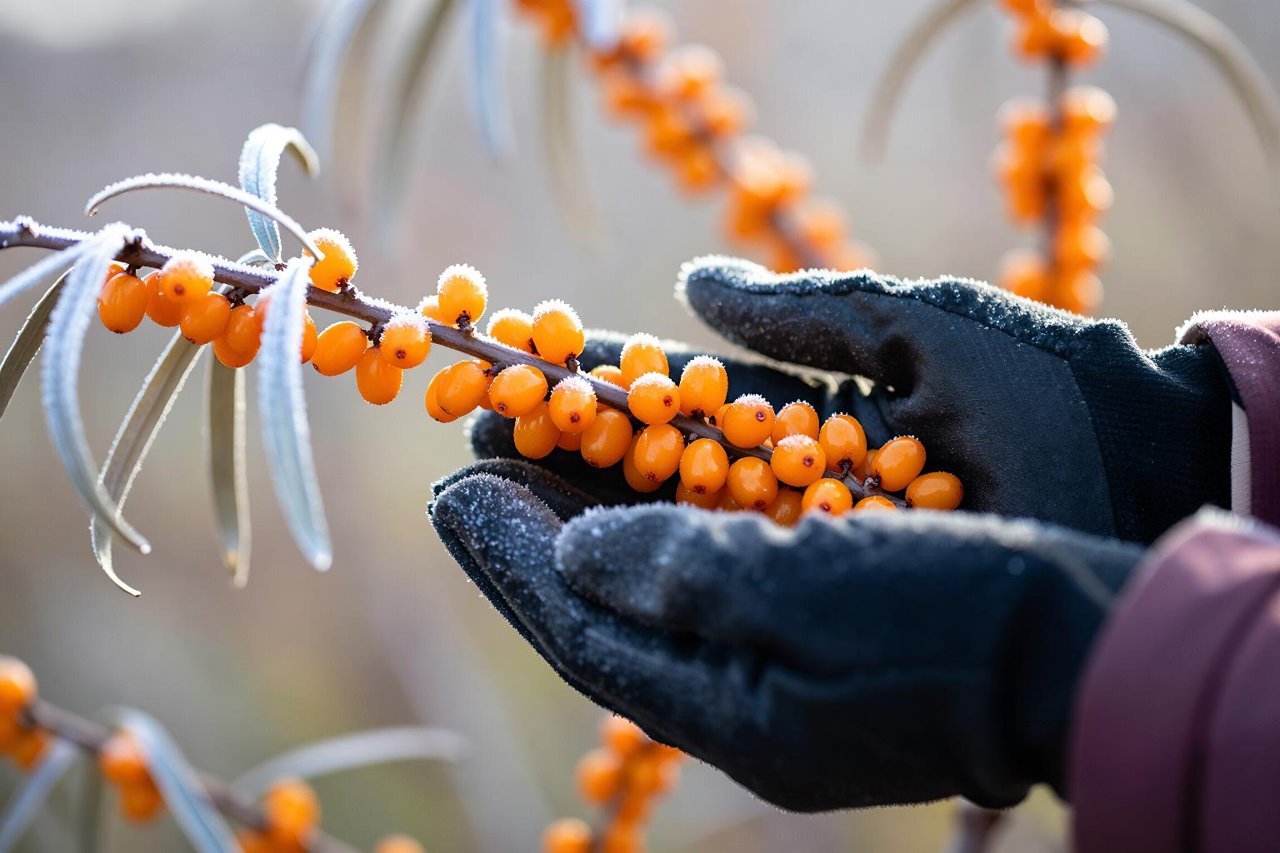
Plant sea buckthorn and you get a shrub that shrugs off salt spray, minus-40 winters and poor sandy soil, then pays you back every autumn with berries so dense in vitamin C that a small handful covers several days’ worth. It also tastes like a lemon that spent the summer in a pine forest: bracing, sour, faintly tropical. That mix of toughness and intensity is why this thorny bush has travelled from coastal windbreaks and Himalayan medicine chests onto skincare shelves and into smoothie bowls.
What Is Sea Buckthorn, Exactly?
Sea buckthorn (Hippophae rhamnoides) is a deciduous shrub in the oleaster family, usually 2 to 4 metres tall, with narrow silvery-green leaves and long thorns. It spreads by underground suckers, which is why you often see it as a dense thicket rather than a single plant. Its roots fix nitrogen, so it happily colonises ground where little else will grow.
The berries are small, roughly 6 to 9 mm across, and range from yellow to deep orange. They grow in tight clusters pressed against the branch and cling on with stubborn determination, which makes picking them a genuine test of patience. Plants are either male or female, so a lone bush will flower beautifully and fruit never.
The name comes from Greek: hippophae, meaning horse, and phao, to shine. Legend has it the berries were fed to Greek warhorses to give them glossy coats. Tibetan, Mongolian, Chinese and Russian medical traditions have used the fruit, leaves and oil for centuries, with written references going back well over a thousand years.
The Nutrition Behind the Hype
A 100 g serving of raw berries can contain anywhere from about 100 to 900 mg of vitamin C, depending on the variety and where it grew. For context, an orange delivers around 50 mg. The same handful brings vitamin E, vitamin K, beta-carotene and other carotenoids, flavonoids such as quercetin and isorhamnetin, plus potassium, calcium, magnesium and iron.
The fatty acid profile is the real headline, though. Seed oil is rich in omega-3 alpha-linolenic acid and omega-6 linoleic acid. The pulp oil is one of very few plant sources of omega-7 palmitoleic acid, accounting for somewhere between a quarter and 40 percent of that oil.
Why Omega-7 Gets So Much Attention
Palmitoleic acid is a normal part of human sebum and the skin’s surface lipids. That biological familiarity is the reason sea buckthorn oil gets used for mucous membranes, including dry eyes and dry mouth. A few small clinical trials have shown genuine symptom improvements in people with dry eye, and one study on Sjögren’s syndrome reported better mouth comfort. Encouraging, but these were short trials with small groups. Treat it as a supportive option rather than a cure.
Sea Buckthorn for Skin
Applied topically or taken orally, the oil shows up in barrier creams, facial oils, lip balms and after-sun products. The fatty acids help replace lipids in a compromised barrier, while vitamin E and carotenoids act as antioxidants. Several small trials have found improvements in skin hydration and elasticity after eight to twelve weeks of oral oil, though the sample sizes were tiny and the results modest.
One practical note: berry or fruit oil is a deep red-orange and will temporarily tint anything it touches, including pale skin and white pillowcases. Seed oil is paler, lighter and far less likely to stain, which is why many products blend the two.
Sea buckthorn does not contain collagen and will not replace it. If you are trying to work out how it fits alongside other products, this breakdown of what collagen supplements for skin actually do is a sensible place to start.
Beyond Skin: Heart, Gut and Everyday Immunity
Sea buckthorn flavonoids and plant sterols have been studied for cardiovascular markers. Trials have reported reduced LDL oxidation and slightly lower platelet aggregation in people with elevated cholesterol, which sounds impressive until you note how few participants were involved and how short the follow-up was. The direction of the evidence is promising; the strength of it is not yet settled.
For digestion, the berries have a long folk history in treating gastritis and ulcers, and their fibre content is decent. Larger doses of the oil are mildly laxative, so start low. On immunity, a handful of trials have shown modest shifts in immune markers, but nothing dramatic enough to base a decision on by itself.
If you want the complete list of traditional and modern uses, with some genuinely good ways to cook with the berries, there is a thorough guide to sea buckthorn benefits and recipes that makes the sourness work in its favour.
How to Actually Use It
Juice and Berries
Straight juice is aggressively sour, sometimes described as somewhere between passionfruit and turpentine. One or two tablespoons stirred into mango, banana or apple juice is far easier going. The berries freeze beautifully: either freeze them on the branch and shake them onto a sheet, or pick and freeze loose. Drop a few frozen berries into sparkling water or a gin and tonic and they slowly bleed colour and tang into the drink.
Oil
Two oils sit on the shelf. Seed oil is pale and high in omega-3 and omega-6; berry oil is deep red and high in omega-7. Many products blend them. A typical daily dose is 500 mg to 2 g taken with food. Never use it for frying, since heat destroys the delicate fatty acids and carotenoids you are paying for.
Powder and Capsules
Whole-berry powder stirs into yoghurt, porridge or a smoothie and adds fibre alongside the sourness. Capsules suit anyone who cannot face the taste but wants a consistent dose.
What to Look For When Buying
- Cold-pressed or CO2-extracted and unrefined. Solvent-extracted oil is cheaper but loses much of the character you are after.
- Dark glass, and refrigerate after opening. Sea buckthorn oil goes rancid faster than olive oil.
- Know which oil you are getting. For omega-7, the label needs to mention fruit or berry oil, not just seed oil.
- A stated palmitoleic acid percentage. Fruit oil in the 25 to 40 percent range is a good signal.
- A press or harvest date. A best-before alone tells you very little about freshness.
- No filler oils. Sunflower, soybean and vague “vegetable oil” blends dilute the active compounds.
Who Should Be Careful
Sea buckthorn has a mild blood-thinning effect. If you take warfarin or another anticoagulant, or you have surgery booked, speak to your doctor first and stop supplements around two weeks beforehand. Large oil doses can loosen the bowels, and there are hints that the berry may nudge blood pressure and blood sugar downwards, so keep an eye on things if you take medication for either. Berries eaten as food are generally fine during pregnancy and breastfeeding, but check before starting concentrated supplements. True allergy is rare, but start with a small amount and see how you get on.
Growing Your Own: Easier Than You’d Think
Give sea buckthorn full sun and well-drained, even poor soil, and it will thrive where almost nothing else does. It fixes its own nitrogen, needs no feeding, and laughs at coastal wind. The one thing you cannot skip is sex: plant one male for every five to eight females, positioned upwind so pollination happens for free. Set them two to three metres apart, and give the suckers somewhere to run or a mowing strip to keep them in check.
Expect to wait. Bushes usually crop properly from year three or four and hit full production by year six, at roughly 5 to 15 kg per plant. Harvesting is where most people give up, because the berries grip the branch tightly and the thorns are unforgiving. Two approaches save your hands: let a hard frost loosen the fruit, then shake the branches over a sheet, or cut whole fruiting branches and freeze them before stripping the berries indoors. Thick gloves are not optional.
The berries colour up from late August but taste best after a frost or two, when some of the astringency drops away. Leave them on the bush as long as the birds allow, and you will be rewarded with fruit that is sharper, brighter and far more interesting than anything you can buy in a punnet.
