 1-800-656-4211




Blog
Graviola Soursop Benefits: What This Spiky Green Fruit Can (and Can’t) Do

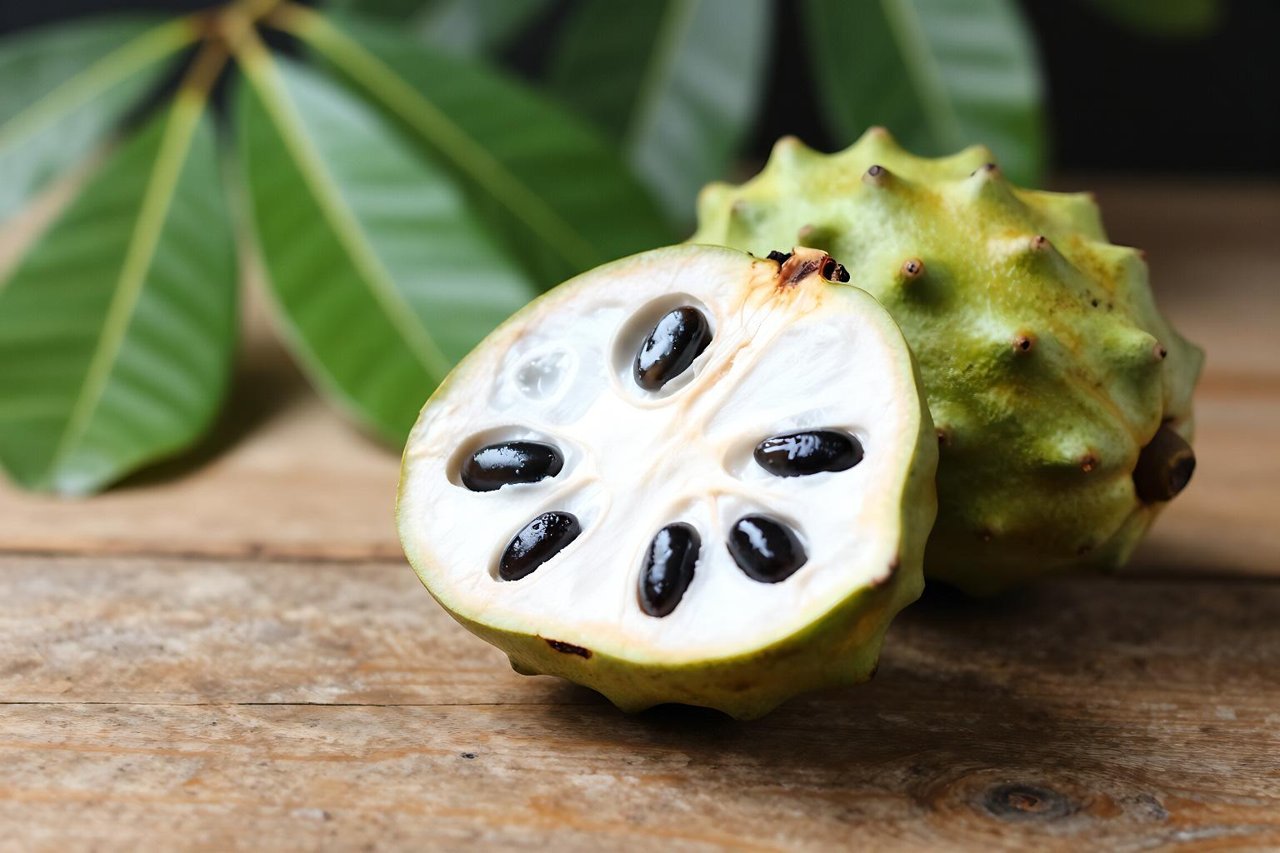
The first time you see a graviola, you might mistake it for a small, prehistoric dinosaur egg. The fruit is heart-shaped, covered in soft, prickly spines, and can weigh up to 6 pounds. Cut it open and you’ll find creamy white flesh with black seeds, smelling like a mix of pineapple and strawberry. In the tropics, it’s known as soursop, guanabana, or graviola. And it’s been used for centuries as both food and medicine.
Search for graviola soursop benefits online and you’ll find bold claims: it fights cancer, treats infections, lowers blood pressure. Some of these have roots in traditional use and early lab research. Others are exaggerated. This article breaks down what we actually know, plus how to eat it and what to watch out for.
What Is Graviola, Exactly?
Graviola goes by many names: soursop in English, guanabana in Spanish, graviola in Brazil, corossol in France. Botanically, it’s Annona muricata, a small evergreen tree native to the Caribbean and Central America. The fruit is heart-shaped, covered in soft green spines, and filled with creamy white flesh and black seeds.
People eat the fruit raw, blend it into drinks, and freeze it for desserts. Traditional healers use the leaves and bark for teas. In Latin America, it’s guanabana, and the health benefits of guanabana are exactly the same as those of soursop.
The Science-Backed Graviola Soursop Benefits
Most research on graviola focuses on its leaves and seeds, not the fruit. That’s an important distinction. The fruit is nutritious, but the concentrated compounds in leaves and seeds are what scientists study for disease treatment. Here’s what the evidence actually supports.
Rich in Antioxidants
Soursop is loaded with vitamin C, phenolic compounds, and flavonoids. One cup of raw pulp provides about 46 mg of vitamin C—roughly half your daily need. Antioxidants neutralize free radicals, unstable molecules that damage cells and contribute to chronic disease. Lab studies show soursop extracts have significant antioxidant activity, though human trials are lacking.
Supports Digestion and Gut Health
A single cup of soursop delivers about 7.4 grams of fiber, a quarter of your daily requirement. Fiber prevents constipation and feeds beneficial gut bacteria. In the Caribbean, soursop is a traditional remedy for digestive complaints. Ripe fruit is gentle, while unripe fruit or leaf tea may have a binding effect. Start with a small portion if you’re not used to much fiber.
May Reduce Inflammation
Chronic inflammation drives many diseases. Soursop contains compounds that calm inflammation in lab and animal studies. A 2016 study in Molecules found that soursop leaf extract reduced inflammatory markers in mice. Human studies are still lacking, so we can’t say for sure that eating the fruit has the same effect.
Could Help Regulate Blood Sugar
Preliminary research suggests soursop leaf extract may lower blood sugar. A small 2017 rat study found improved insulin sensitivity. No large human trials exist. If you have diabetes, the fruit’s natural sugars still count toward your carb intake. Enjoy it in moderation and monitor your levels.
Supports Heart Health
Potassium and magnesium are two minerals your heart needs. A cup of soursop provides about 625 mg of potassium and 50 mg of magnesium. Potassium helps relax blood vessels and counteracts sodium, which can lower blood pressure. The fiber also helps lower LDL cholesterol. Animal studies show leaf extract can improve circulation, but again, these findings don’t yet apply to humans.
Boosts the Immune System
Vitamin C helps stimulate white blood cell production and protects them from oxidative damage. Soursop also contains small amounts of zinc and B vitamins. Drinking soursop juice when you feel a cold coming on is a traditional practice in many tropical countries. It won’t cure a virus, but the nutrients can support your body’s defenses.
What About Cancer?
This is where graviola gets the most attention—and the most hype. Soursop leaves, seeds, and fruit contain acetogenins, compounds that kill cancer cells in test tubes, sometimes selectively. A 2018 review in Anticancer Research highlighted these findings.
But there are no human clinical trials showing that graviola can treat or cure cancer. Some websites claim it’s “10,000 times stronger than chemotherapy”—that claim is false. If you’re considering graviola as a cancer treatment, talk to your oncologist first. It should never replace standard care.
For a deeper look at how soursop fruit benefits your body, including nutrient breakdowns, that guide covers it in detail.
How to Eat Graviola (Soursop)
Choose fruit that gives slightly when pressed, with skin that’s green but not rock-hard. Let it ripen on the counter for a day or two, then refrigerate and eat within three days. Cut it in half lengthwise, scoop out the flesh, and remove the black seeds—they’re toxic and should never be eaten or blended.
The flavor is often described as a mix of pineapple, strawberry, and coconut. Here are a few ways to enjoy it:
- Eat fresh with a spoon, chilled for the best texture.
- Blend the pulp with coconut water and lime for a refreshing juice.
- Mix into smoothies with banana and yogurt.
- Freeze the pulp for sorbet or ice cream.
- Stir into fruit salads or top with granola.
If you’re using leaves for tea, steep one or two leaves in hot water for 5–10 minutes. Don’t overdo it—more on that below.
Safety, Side Effects, and Dosage
Graviola fruit is generally safe in normal food amounts. The leaves and seeds require more caution. They contain annonacin, a neurotoxin linked to atypical Parkinsonism in Guadeloupe and other Caribbean islands where consumption is high.
A 2020 study in Movement Disorders found that regular consumption of soursop leaves and fruit was associated with a higher risk of atypical Parkinsonism. The risk appears tied to long-term, high-dose exposure, especially from leaf tea. If you have Parkinson’s disease or a family history of it, avoid graviola supplements and leaf tea entirely.
Other precautions:
- Pregnancy and breastfeeding: Avoid. Graviola may stimulate uterine contractions and hasn’t been studied for safety.
- Medication interactions: Graviola may lower blood pressure and blood sugar, amplifying the effects of diabetes or blood pressure drugs. It may also interact with antidepressants and blood thinners.
- Digestive issues: Some people experience nausea, vomiting, or diarrhea from concentrated supplements.
- Seed toxicity: Never eat the seeds.
There’s no standard dosage for graviola supplements, and products vary widely. Talk to your doctor before trying one, especially if you take prescription medication.
Choosing and Storing Soursop
Fresh soursop is seasonal and perishable. In the U.S., you’ll often find it frozen or as pulp in Latin American markets. Frozen pulp is a good option—it’s picked at peak ripeness and retains most nutrients. Look for brands with no added sugar.
If you buy fresh, store it at room temperature until ripe, then move it to the fridge. Cut fruit should be wrapped tightly and eaten within two days. For longer storage, scoop the pulp, remove seeds, and freeze in an airtight container for up to six months.
You can also find soursop in capsule, powder, and tea form. Quality varies, so choose reputable brands that test for contaminants. For a broader overview of what soursop actually does for your body, that article dives into the research.
Making Graviola Part of Your Routine
If you live near a tropical market, enjoy fresh soursop when it’s in season. A half-cup of pulp a few times a week is reasonable for most healthy adults. Blend it into smoothies, freeze it into popsicles, or eat it with a spoon over the sink—it’s messy but worth it.
For anyone considering graviola for a specific health condition, remember that food and medicine are not the same. The fruit is nutritious and delicious. The leaves and seeds are potent and potentially risky. Use them with care, and don’t skip conventional medical treatment in favor of a tropical fruit.
If you want to explore more about what this spiky green fruit can really do, including its history and traditional uses, that’s a solid place to start. But keep your expectations grounded. Graviola soursop benefits are real—just not magical.
