 1-800-656-4211




Blog
Maqui Berry Benefits: The Patagonian Berry With More Anthocyanins Than Blueberries

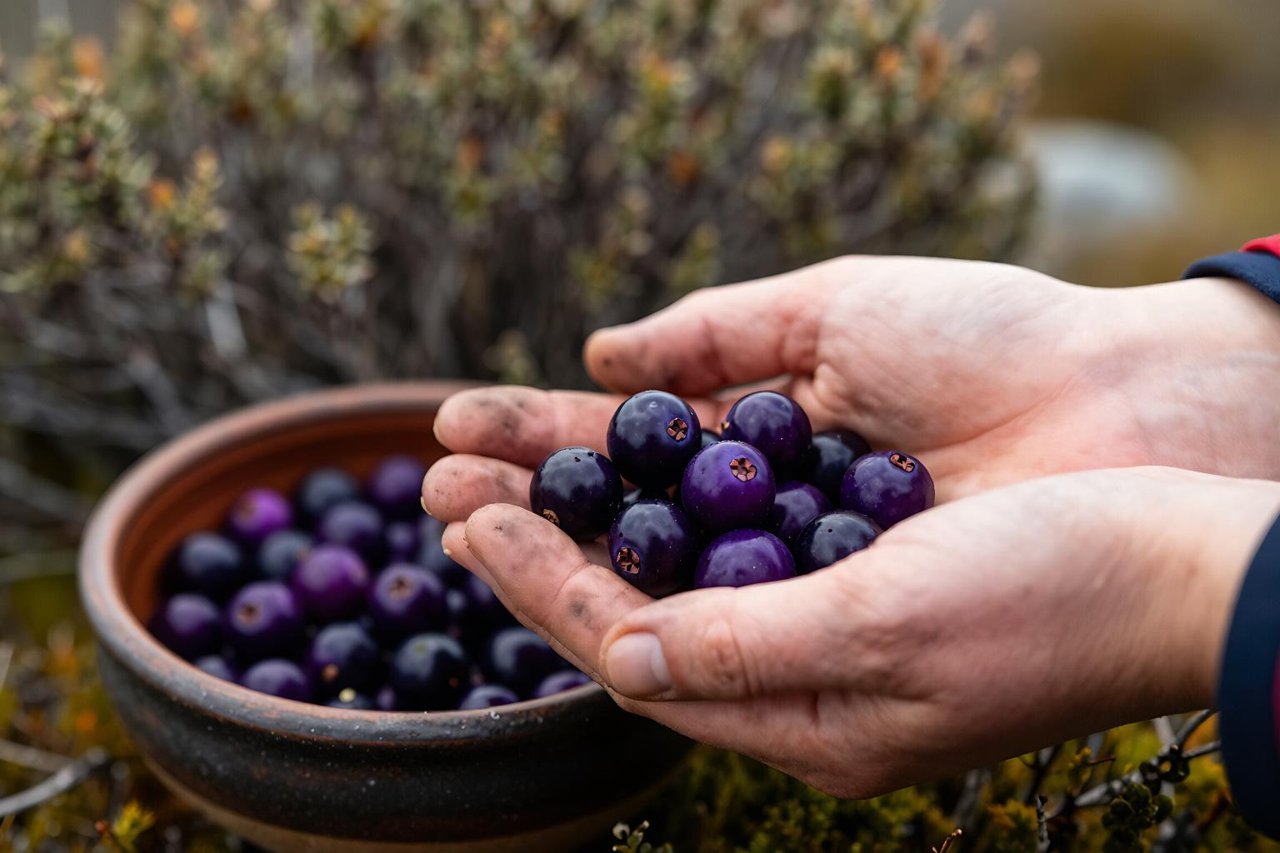
Walk into any health food shop and you will find maqui powder on the shelf next to the acai and the spirulina, usually with a price tag that makes you pause. The pitch is familiar: a wild Patagonian berry with more antioxidants than anything you have tried before.
That pitch is not entirely marketing. Maqui is genuinely rich in the pigments that give dark berries their colour, and those pigments do have biological activity. But “rich in antioxidants” is a long way from “will change your health”. Here is what the research supports, what it doesn’t, and how to use the stuff sensibly.
What Is a Maqui Berry, Exactly?
Maqui comes from Aristotelia chilensis, an evergreen shrub that grows wild across central and southern Chile and over the Andes into Argentina. It is barely cultivated at scale, so almost all commercial maqui is wild-harvested, which is one reason supply is inconsistent and prices swing around.
The berries themselves are tiny, about the size of a peppercorn, ripening to a near-black purple. The Mapuche people of Patagonia have eaten and fermented them for centuries. That long history of use gets cited as proof of safety, though it is more accurately proof that eating a handful of berries has never been obviously harmful.
Why the Deep Purple Colour Matters
The colour comes from anthocyanins, the same family of pigments that put blue in blueberries and red in cherries. Maqui’s are dominated by delphinidin compounds, particularly delphinidin 3,5-diglucoside and delphinidin 3-sambubioside-5-glucoside. Delphinidin is the one researchers care about, because it shows strong activity in lab models of oxidative stress and inflammation.
Gram for gram, maqui carries several times the anthocyanin load of cultivated blueberries. You will also see ORAC figures quoted, usually 25,000 to 30,000 for freeze-dried powder against roughly 4,700 for blueberries. Worth knowing: the USDA retired its ORAC database in 2012 because test-tube antioxidant capacity does not predict what happens inside a human body.
Blood Sugar and Insulin Response
This is where the most interesting human data sits. In a small crossover trial, volunteers who drank maqui juice with a high-carbohydrate meal had a lower glucose and insulin spike over the next two hours than when they drank a matched placebo. The proposed mechanism is anthocyanins slowing carbohydrate digestion and improving insulin signalling in muscle.
Encouraging, but a trial with a few dozen people is a signal, not a prescription. If you take blood sugar medication, maqui is not a substitute, and you should monitor your readings if you add it.
Eyes, Including Screen Strain
Anthocyanins have been studied for eye fatigue since the 1980s, mostly in Japanese work on bilberry. Maqui’s delphinidin content makes it a candidate for the same research. In cell and animal models, delphinidin protects retinal pigment epithelial cells from oxidative damage, and there is early interest in dry eye and glare recovery.
Human evidence stays thin and is often funded by the companies selling the extract. A scoop of powder in your smoothie is unlikely to hurt your eyes. Whether it helps after eight hours at a monitor is unproven.
Inflammation and Joint Comfort
Delphinidin and its metabolites interfere with NF-kB, a master switch for inflammatory signalling. Mice given maqui extract show lower inflammatory markers and less cartilage breakdown in induced arthritis models. That is a reasonable foundation for more study and nowhere near proof it will fix your knee.
If you have joint pain, treat maqui as a possible small contributor alongside movement, sleep and weight, not as the answer.
Cholesterol and Blood Vessel Health
Animal studies consistently show maqui extract lowering LDL cholesterol and reducing oxidised LDL, the modified form that drives plaque formation. Anthocyanins also seem to improve endothelial function, the ability of blood vessels to relax and widen.
Translation to humans is incomplete, but the pattern across berry research generally, blueberries and blackcurrants included, is a modest improvement in vascular markers over weeks to months. Maqui probably behaves the same way.
Skin and UV Damage
There is a plausible story here. Anthocyanins accumulate in skin tissue and can reduce oxidative damage from UV exposure, and some preliminary work suggests they help preserve collagen by inhibiting matrix metalloproteinases, the enzymes that break it down.
Keep expectations level. No berry replaces sunscreen, and no oral antioxidant has been shown to reverse existing photoageing. Think of it as one input among many.
Exercise Recovery
Polyphenol-rich berries get tested on athletes because soreness and inflammation are easy to measure. Small trials using maqui and similar extracts have looked at markers like creatine kinase and self-reported soreness after hard exercise, with mixed results. Some show a modest reduction over the following days, others find nothing at all.
If you train hard, a scoop in a post-workout shake is cheap insurance at worst. Do not expect it to replace protein, sleep or an actual rest day.
Where the Evidence Is Still Thin
Be realistic about the state of the field:
- Most published maqui research is in cell cultures or rodents, not people.
- Human trials are small, short, and frequently funded by supplement companies.
- Doses and preparations vary wildly, so results do not stack up neatly.
- Long-term safety data beyond a few months is basically absent.
None of that makes maqui useless. It means the marketing has run ahead of the science, which is the usual order of things in the supplement aisle.
How People Actually Take It
Freeze-dried powder is the most common form and the easiest to work with. Juice concentrate and capsules exist too. A few ways to use the powder that do not taste like punishment:
- Stirred into yogurt or overnight oats, where the tartness cuts through the creaminess.
- Blended into a smoothie with banana or mango to balance the astringency.
- Whisked into sparkling water with a squeeze of lime for a cheap natural soda.
- Added to a cacao drink, since the flavours sit together well.
- Sprinkled into a vinaigrette for dark leafy greens.
Fresh or frozen berries are nearly impossible to find outside Chile, so powder is the practical route for most people.
Dosing, Side Effects, and Who Should Be Careful
Typical servings run from about half a teaspoon to a full tablespoon of powder a day, roughly 2 to 10 grams. Capsules are usually standardised to a set anthocyanin content, often 300 to 500 mg per dose.
Maqui is generally well tolerated. Large doses can cause loose stools or stomach upset, usually from the fibre and sugar alcohols in some powders. A few caveats worth taking seriously:
- If you take diabetes medication, watch your blood sugar, since glucose response is the most plausible interaction.
- If you take blood thinners such as warfarin, talk to your doctor first. Polyphenols can affect clotting.
- Skip it if you are pregnant or breastfeeding. There is no safety data.
- Stop if you notice any allergic reaction, especially if you react to other berries.
Reading a Maqui Label Without Getting Fooled
Powder is easy to water down. Maltodextrin, rice flour and juice blends that are mostly carrier are common. Three checks cut through most of it. Look for a stated anthocyanin content rather than a vague ORAC number. Look for third-party testing from a lab you can look up. And be sceptical of “proprietary blend” labels, which let a manufacturer list a total weight without revealing how much of each ingredient is inside.
What Maqui Won’t Do
It will not offset a diet built on takeaway and fizzy drinks. It will not replace statins, insulin or sunscreen. It will not make you visibly younger in a fortnight, whatever a before-and-after photo implies.
What it can be is a pleasant, pigment-dense addition to an already decent diet. A teaspoon in your yogurt costs very little, tastes good, and delivers a dose of anthocyanins most people get nowhere near from food alone. If your baseline is solid, that is a small upgrade. If your baseline is not, start there instead.
