 1-800-656-4211




Blog
Papaya Benefits: What This Tropical Fruit Really Does for Your Body

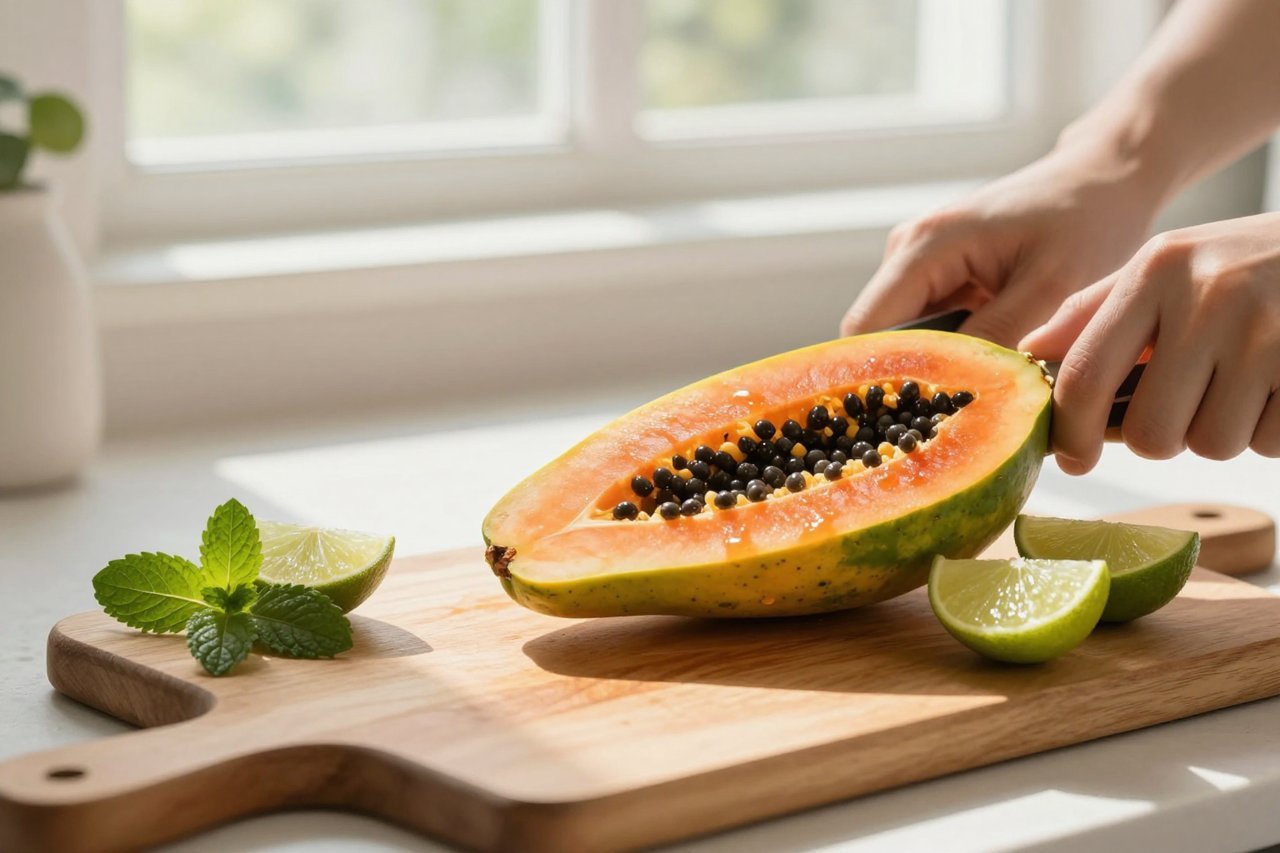
Cut a ripe papaya in half and the smell arrives before anything else: sweet, faintly musky, somewhere between melon and mango. Scoop out the black seeds, squeeze over a lime, and you have one of the most nutrient-dense breakfasts in the produce aisle for about 120 calories.
Papaya fruits almost year-round in the tropics, which is why it turns up in kitchens from Bangkok to São Paulo. What’s less obvious is how much the fruit actually does: an enzyme that breaks down protein, more vitamin C than an orange gram for gram, and carotenoids that quietly protect your eyes. Here’s what holds up, and what doesn’t.
What’s Actually Inside One Papaya
A medium fruit gives you roughly 275 grams of flesh. That’s a generous serving, not a thimbleful, and it lands in this range:
- Calories: about 120, with almost no fat and only trace sodium
- Vitamin C: around 165 mg, close to double the daily adult target
- Fiber: 5 to 6 grams, roughly a fifth of what most adults manage in a whole day
- Potassium: near 500 mg, about the same as a medium banana
- Folate: around 100 micrograms
- Carotenoids: beta-carotene for vitamin A, plus lycopene and the eye pigments lutein and zeaxanthin
- Papain and chymopapain: protein-splitting enzymes concentrated in unripe fruit and just under the skin
That mix is why papaya keeps showing up in round-ups of papaya benefits for health and beauty. Each nutrient does something specific, and a few are more interesting than the usual “rich in antioxidants” line.
Papain: The Enzyme That Earns Its Reputation
Papain is a protease. It chops protein chains into shorter peptides, and you can test that in your own kitchen: wrap a pork shoulder in mashed green papaya for four hours and it comes out noticeably more tender. Cooks across Southeast Asia, the Caribbean and Polynesia have used the trick for centuries, which is why papaya salad so often sits beside grilled meat on the same plate.
Something similar happens in your stomach after you eat papaya. Whether it meaningfully relieves bloating is a different question, and the evidence for papaya enzyme tablets is thin and mostly anecdotal. The fruit itself carries about 88% water plus soluble and insoluble fibre, so it keeps digestion moving without the cramping a sudden fibre supplement can cause.
Ripe or green?
Green papaya has more papain but a neutral, almost courgette-like flavour. It behaves like a vegetable: shred it into slaw, simmer it in curry. Ripe papaya is sweeter, softer and higher in carotenoids. If your stomach is already unhappy, go ripe.
Vitamin C, Collagen and Skin That Recovers Well
Vitamin C isn’t optional for skin. It’s a required cofactor for collagen synthesis, meaning your body cannot build or repair connective tissue without it, and it also recycles vitamin E, another antioxidant that guards cell membranes. One cup of papaya chunks covers a full day’s requirement.
If the supplement aisle has tempted you instead, it’s worth checking what vitamin C supplements actually deliver, because the marketing on those bottles runs well ahead of the evidence. Whole fruit arrives with fibre, water and hundreds of phytonutrients that don’t survive manufacturing.
There’s a topical side too. Papain shows up in enzyme face masks and cleansers because it loosens dead skin cells gently, no grit required. Outside the beauty aisle, papain is the active ingredient in prescription ointments used to clear dead tissue from burns and chronic wounds. That’s a genuine medical use for the same enzyme you get from the fruit.
A Quiet Win for Heart Health
Potassium is the strongest card here. Roughly 500 mg per fruit helps offset the sodium load in a typical diet, taking some pressure off blood vessel walls, while fibre binds cholesterol in the gut before it’s absorbed. Folate helps regulate homocysteine, an amino acid linked to cardiovascular risk when levels climb.
Red-fleshed papaya also carries about 1.8 mg of lycopene per 100 grams, comparable to raw tomato, and lycopene intake is consistently associated with lower LDL oxidation in population studies. No single fruit changes your heart health. Swapping a sugary pastry for papaya three mornings a week might.
Eyes, Antioxidants and Where the Cancer Research Stands
Lutein and zeaxanthin collect in the macula, where they filter blue light and limit oxidative damage. Papaya supplies both along with beta-carotene, and diets high in these carotenoids track with lower rates of age-related macular degeneration.
The cancer angle is more preliminary, and worth stating plainly. Laboratory studies have found papaya leaf extract slows the growth of several tumour cell lines, and papaya’s lycopene and isothiocyanates get attention in prostate and colon research. Cell studies are not human outcomes, and no fruit treats cancer. What papaya offers is steady support for normal cell function, which is what a decent diet is supposed to do.
Papaya Seeds: Worth Trying, With Caveats
The peppery black seeds are edible, and traditional medicine has used them against intestinal parasites for generations. A 2007 study in Nigeria found a papaya seed extract reduced parasite loads in children, which gave the folk practice some scientific footing. The seeds also contain benzyl isothiocyanate, a compound studied for antimicrobial effects.
All the same, a small spoonful ground into a dressing is a sensible amount. Handfuls are not. The seeds carry the same latex compounds as the rest of the plant, though they still appear in most rundowns of papaya’s health benefits.
Who Should Go Easy on Papaya
Most people can eat ripe papaya daily without a second thought. A few situations call for care:
- Pregnancy: unripe papaya and the seeds contain latex and high levels of papain, associated in traditional practice and some research with uterine contractions. Ripe papaya in normal food amounts is generally considered fine, but skip the green salad and the seed dressing.
- Latex allergy: papaya contains chymopapain, which cross-reacts with natural rubber latex. If you react to latex, try a small piece before committing to a whole fruit.
- Blood sugar: papaya is sweeter than berries and sits mid-range on the glycemic index. Portion size matters more than avoidance if you manage diabetes.
- Blood thinners: vitamin C from food is fine, but sudden high doses from vitamin C supplements can interact with warfarin. Mention it to whoever manages your prescription.
One thing papaya won’t do is fix a platelet count. Papaya leaf extract has been studied for dengue-related thrombocytopenia, and results are mixed enough that hospitals still rely on standard care.
How to Pick a Good One
Look for skin that’s two-thirds yellow-orange with a little green near the stem. Press the base gently; it should give slightly, like a ripe avocado. A fruit that smells floral is ready. Ripen it on the counter, then move it to the fridge once soft, and cut chunks keep about four days in a sealed container.
A squeeze of lime does more than add acidity. It cuts the musky edge some people dislike. If your papaya tastes flat, it was probably picked too early rather than being a bad fruit.
Easy Ways to Eat More of It
- Cube it over yoghurt with lime zest and toasted coconut for a five-minute breakfast
- Shred green papaya with carrot, rice vinegar and a splash of fish sauce for a slaw that holds up for days
- Blend ripe chunks with mango, ginger and ice for a smoothie that needs no added sugar
- Grill thick wedges two minutes a side and finish with chilli and salt
- Fold diced papaya into a salsa with red onion, coriander and jalapeño to serve with fish
- Freeze leftover chunks and blitz them into sorbet with a squeeze of lime
None of these takes more than ten minutes, and each one gets you the fibre, water and carotenoids a capsule can’t replicate. A papaya on the counter is a cheaper, better-tasting way to cover most of what people buy in pill form.
