 1-800-656-4211




Blog
Cabbage Benefits: What This Cheap Vegetable Really Does for Your Body

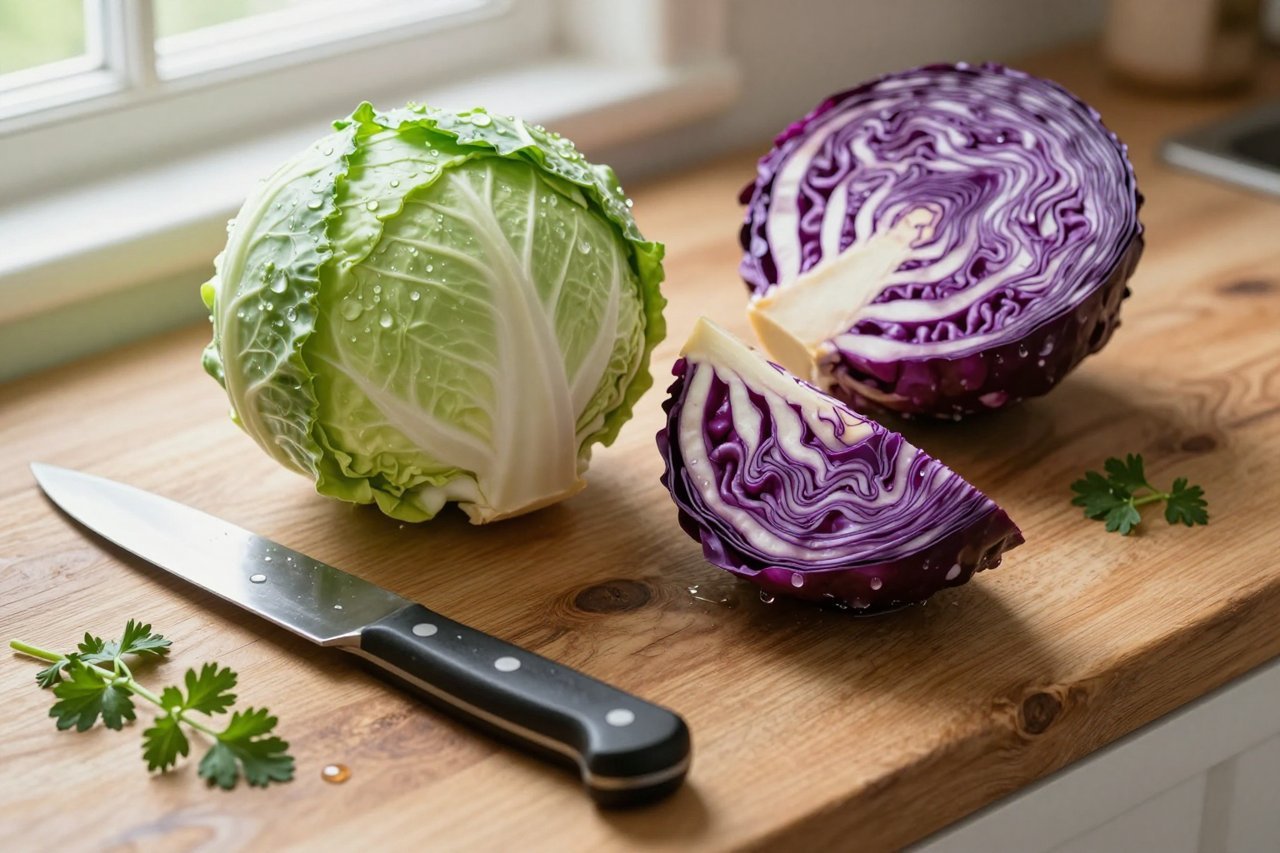
Why this cheap vegetable earns its place
A single green cabbage costs about a pound, weighs as much as a small bowling ball, and will sit in your fridge drawer for a fortnight without complaint. It gets sliced into coleslaw, thrown into a stir-fry, fermented into sauerkraut, and yet it rarely gets the attention kale or spinach commands. That’s a shame, because the list of cabbage benefits is long and backed by genuine nutrition research.
Here’s what’s actually going on inside those tightly packed leaves.
The nutrition behind cabbage benefits
Cabbage is mostly water, roughly 92% of it, which explains why 100g of raw green cabbage delivers just 25 calories. What’s left is dense with nutrients you’d normally associate with more fashionable vegetables.
- Vitamin C: about 36mg per 100g, close to 40% of an adult’s daily requirement
- Vitamin K1: around 76µg per 100g, more than half the daily target
- Folate: 43µg, useful for anyone planning a pregnancy
- Fibre: 2.5g per 100g, mostly the insoluble kind
- Potassium: roughly 170mg
- Smaller amounts of: calcium, manganese, vitamin B6, magnesium and polyphenols
Red cabbage pulls ahead in a couple of areas. Its anthocyanins, the pigments that turn it purple, are potent antioxidants, and it carries several times more beta-carotene than the green sort. Savoy and napa varieties are milder and softer but broadly similar in nutrition.
Vitamin C: a genuine immune and skin player
Most people don’t think of cabbage as a citrus rival, but a 150g bowl of raw slaw gives you more vitamin C than a small orange. Vitamin C matters for collagen production, which affects skin elasticity, wound healing and the strength of blood vessel walls. It also helps you absorb iron from plant foods, so pairing cabbage with lentils or chickpeas is smarter than eating either alone.
Boiling leaches a lot of it into the water, up to half depending on how long it cooks. Steam, stir-fry or roast instead, or use that cooking liquid in a soup.
Gut health and digestion
The fibre in cabbage adds bulk to stool and feeds the bacteria in your colon. It’s particularly rich in insoluble fibre, the kind that helps things move along, which is why a big serving can be a mixed blessing if you’re not used to it. Build up gradually over a week or two and your gut will adapt.
Fermented cabbage works differently
Sauerkraut and kimchi take cabbage somewhere else entirely. Natural fermentation with salt produces live lactic acid bacteria, and unpasteurised versions contain billions of them per spoonful. These bacteria can survive the trip through your stomach and turn up in the colon, where they compete with less friendly microbes and produce short-chain fatty acids that nourish the gut lining.
One caveat: pasteurised sauerkraut from a jar on a warm shelf has no live cultures left. Look for the refrigerated kind, or make your own for the price of a cabbage and some salt.
Glucosinolates and cancer research
Cabbage belongs to the brassica family, along with broccoli, Brussels sprouts and kale. These plants make sulfur-containing compounds called glucosinolates as a defence against insects. When you chop, chew or crush the leaves, an enzyme called myrosinase converts them into isothiocyanates: the sharp, mustardy compounds responsible for cabbage’s slightly bitter edge.
Lab studies show these compounds can trigger apoptosis, or programmed cell death, in abnormal cells and interfere with tumour blood supply. Human evidence is more modest and mostly observational. Reviews of population studies have linked higher cruciferous vegetable intake with lower rates of lung and colorectal cancers, but people who eat a lot of cabbage also tend to differ in other ways. Treat this as a good reason to eat cabbage, not a guarantee of anything.
Raw or lightly cooked cabbage preserves myrosinase activity. Boil it hard and you lose some of the enzyme, though gut bacteria can still do part of the conversion work for you.
Bones need vitamin K, and cabbage supplies it
Vitamin K1 activates osteocalcin, a protein that binds calcium into bone. Low vitamin K intake is associated with higher fracture risk in older adults. A cup of cooked cabbage covers a solid chunk of your daily need, and the calcium and manganese in the leaves add a little more support. Vitamin K is fat-soluble, so a drizzle of olive oil or a knob of butter helps absorption.
Heart health and cholesterol
Three things in cabbage work in your favour here. Potassium helps counter the blood-pressure-raising effects of sodium. Soluble fibre binds bile acids in the gut, forcing the liver to use up cholesterol to make more. And the anthocyanins in red cabbage have improved markers of vascular function in small trials.
Fermented cabbage gets a specific mention in cardiovascular research, partly because it’s a staple in diets with strong heart-health records. A cabbage alone won’t fix a bad diet, but it’s an easy swap for less useful side dishes.
Weight management without going hungry
Twenty-five calories per 100g is hard to beat. Cabbage is 92% water and carries enough fibre to make you feel full, which is the whole logic behind eating a large-volume, low-calorie salad before your main course. Studies on soup and salad starters consistently show people eat fewer total calories at the meal. A cabbage-based slaw or soup does the same job for a fraction of the cost.
Eyes, skin and inflammation
Cabbage contains lutein and zeaxanthin, two carotenoids that concentrate in the macula and help filter blue light. Red cabbage adds beta-carotene and anthocyanins, both of which have anti-inflammatory effects in the body. Vitamin C contributes to collagen, and the sulfur compounds carry mild antioxidant activity. None of this is dramatic on its own, but it’s cheap, daily, cumulative support.
A word on thyroid and blood thinners
Cabbage contains goitrogens, compounds that can interfere with iodine uptake by the thyroid. In practice this only matters if you have an iodine deficiency and eat enormous amounts of raw cabbage every day. Normal servings are fine, and cooking reduces the effect.
More relevant for some people: the vitamin K in cabbage interacts with warfarin and similar anticoagulants. If you take one, keep your intake steady rather than swinging between none and a lot. Your INR reading will be far more stable.
Buying, storing and cooking it well
Pick a head that feels heavy for its size with tight, crisp outer leaves and no soft brown patches. Whole cabbage keeps for two weeks in the fridge, longer for green varieties, and up to a month in a loosely tied bag. Once cut, wrap the wedge tightly and use it within about a week.
Roasting is the most underrated method. Cut a head into thick wedges, rub with oil, salt and caraway seeds, and roast at 220°C for 25 minutes until the edges char. The sugars caramelise and the bitterness fades. Quick stir-frying over high heat keeps both texture and nutrients. If you do boil it, keep the time short and save the water for soup or stock.
Simple ways to eat more of it
- Shred raw cabbage into tacos, burgers or grain bowls for crunch
- Swap half the lettuce in a salad for finely sliced red cabbage
- Add a handful to a noodle stir-fry in the last two minutes of cooking
- Roast wedges alongside sausages or chicken thighs on one tray
- Make a quick vinegar pickle that’s ready in an hour
- Blitz it into a soup with potato, onion and a little cream
- Top fish tacos or pulled pork with a lime and coriander slaw
Start with one head a week and see how far it stretches. Between a bowl of slaw, a midweek stir-fry and a tray of roasted wedges, that single cabbage will cover four meals, and it will probably cost less than one bag of kale.
