 1-800-656-4211




Blog
Carrot Juice Benefits: What a Daily Glass Really Does for Your Body

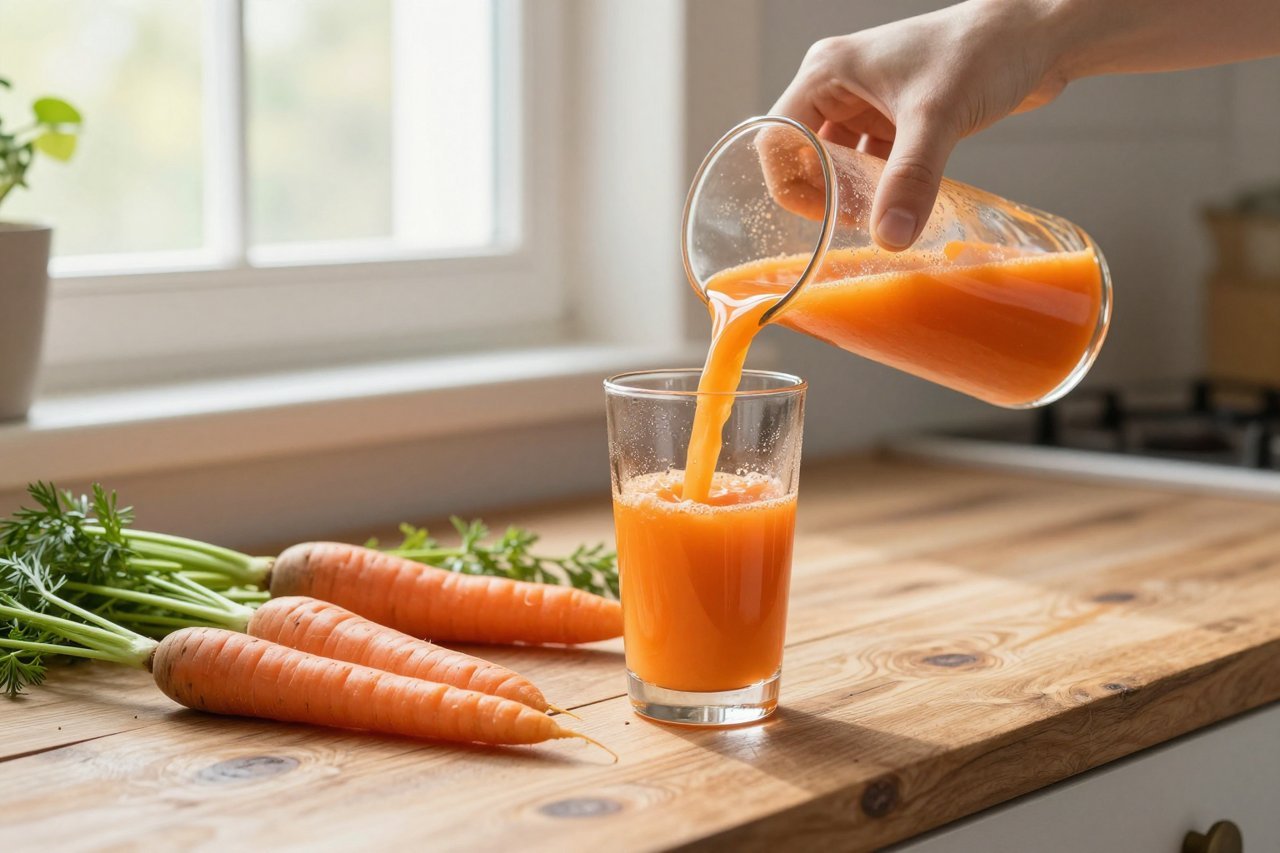
A glass of carrot juice earns its reputation. It costs pennies, takes four minutes to make, and a single cup delivers more vitamin A than most adults need across a full day. There is also vitamin C, potassium, vitamin K and a crowd of carotenoid antioxidants behind that deep orange colour.
Juicing does change the maths, though. You strip out most of the fibre, concentrate the sugars slightly, and drink the better part of a pound of carrots in under a minute. That is not automatically a bad thing. It just means both the benefits and the caveats get turned up at the same time.
What is actually in a glass of carrot juice
A cup of raw carrot juice (about 240 ml) lands at roughly 95 calories, 22 grams of carbohydrate and 2 grams of protein. The micronutrient side is where it gets interesting:
- Vitamin A: around 2,200 micrograms RAE, mostly as beta-carotene, which is more than twice the daily requirement for an adult
- Potassium: roughly 690 mg, about 15% of the daily target and more than a medium banana
- Vitamin C: about 20 mg
- Vitamin K: around 36 micrograms
- Carotenoids: beta-carotene, alpha-carotene, lutein, zeaxanthin and traces of lycopene
That vitamin A number is the headline. Beta-carotene is a provitamin, which means your body converts it to retinol only as needed. You cannot easily overdose on vitamin A from carrots the way you can from a liver-heavy diet or high-dose pills. If you want the whole-vegetable version of this picture, there is a useful breakdown of what one carrot a day actually does for your body.
Carrot juice benefits for your eyes
This is the claim everyone has heard since childhood, and it holds up better than most folk wisdom. Your retina uses retinol to build rhodopsin, the pigment that lets you see in dim light. The classic symptom of vitamin A deficiency is night blindness, documented wherever the deficiency is common. One cup of carrot juice covers that requirement several times over.
Lutein and zeaxanthin do the long-game work
Carrots also supply lutein and zeaxanthin, two carotenoids that concentrate in the macula at the back of the eye. Higher intakes are linked in observational studies to a lower risk of age-related macular degeneration, the leading cause of vision loss in older adults. What carrot juice will not do is fix short-sightedness, undo years of screen time, or replace a proper eye test. It is a nutrient insurance policy, not a repair kit.
Skin, sun and the famous orange glow
Carotenoids travel through the bloodstream and settle in the skin, and they do two useful things once they arrive. Vitamin C supports collagen production, and the carotenoids themselves act as mild internal sunscreens. Trials where people ate carotenoid-rich diets for 10 to 12 weeks found measurable increases in the amount of UV exposure needed before skin turned pink. The effect is modest, not a substitute for SPF, but it is real.
Drink enough and you will also notice a change in colour. Palms, soles, the nose and the ears are usually first, turning a yellow-orange shade after weeks of heavy intake, somewhere around 20 to 30 mg of beta-carotene a day. It is called carotenemia, it is harmless, and it fades within a few weeks of cutting back. If beauty benefits are what drew you here, there is a longer list of carrot benefits for your health and beauty worth working through.
Blood pressure and heart health
That 690 mg of potassium is doing quiet, useful work. Potassium helps counterbalance sodium and eases tension in blood vessel walls, which is one reason diets rich in it are associated with lower blood pressure.
Carrots also contain dietary nitrates, which the body converts into nitric oxide, the same mechanism that made beetroot juice a favourite among endurance athletes. Then there is the antioxidant side. In a 2011 trial published in Nutrition Journal, adults who drank 16 ounces of carrot juice daily for three months saw their total antioxidant status rise and markers of lipid peroxidation fall. Small study, but a sensible result.
Digestion and gut health
Here is where juicing gives something back. A cup of chopped raw carrot carries about 3.6 grams of fibre; the same volume of juice carries roughly 1.8 grams, and most of what is lost is the insoluble bulk that keeps things moving.
So if you are drinking carrot juice hoping it will sort out irregularity, a glass on its own will not do much. If constipation is the actual problem, it is worth reading up on fiber supplements that genuinely help with constipation rather than drinking more juice. What carrot juice is good for is an unsettled stomach: it is low in FODMAPs in small servings, easy to digest, and often tolerated on bland diets when little else appeals.
Immunity and inflammation
Vitamin A maintains the mucous membranes lining your gut and airways, which are the body’s first physical barrier against pathogens. Get too little and that barrier weakens. Vitamin C adds a further 20 mg per cup, though that is well short of an orange.
If you are comparing juices, carrot is the workhorse while others are the specialists. Goji juice brings its own antioxidant profile, and honestly, the two mix well with a squeeze of lime.
How much carrot juice should you drink?
One cup, four or five days a week, is a sensible ceiling for most healthy adults. A cup of juice takes about five or six medium carrots, so that is already a serious vegetable delivery. More is not better; the nutrients are fat-soluble and store in the body, so the surplus simply waits.
The sugar question
Carrot juice has a glycemic index around 43, which is low, and about 9 grams of sugar per cup. For context, orange juice carries more than twice that. The catch is speed. Without fibre to slow it down, and especially on an empty stomach, that sugar reaches the bloodstream faster than it would from a whole carrot. Drink it with a meal or alongside protein and fat rather than sipping it through the afternoon.
Who should be cautious
Vitamin K interacts with warfarin, so if you take a blood thinner, keep your carrot juice intake consistent week to week and mention it to your doctor. Smokers should know that high-dose beta-carotene supplements were linked to increased lung cancer risk in the ATBC and CARET trials. Food sources do not show that pattern, but it is a good reason to get your carotenoids from a glass of juice rather than a capsule. Anyone managing diabetes should count the carbohydrate like any other drink.
Getting more out of every glass
Beta-carotene is fat-soluble, so a little fat in the glass noticeably improves absorption. A teaspoon of olive oil, half an avocado, a spoon of full-fat yoghurt or a splash of coconut milk all do the job.
For flavour, fresh ginger and green apple cut the sweetness, orange and lemon brighten it, and a pinch of black pepper with turmeric makes a decent savoury-leaning version. Carrot also blends beautifully with tropical fruit; a cup of papaya blended into carrot juice with lime is one of the easiest ways to get two nutrient-dense fruits into a single glass.
Drink it within 20 minutes if you can. Carrot juice oxidises quickly, so if you are making it ahead, fill a glass jar to the very brim, seal it, refrigerate, and use it within a day. Shake before pouring, since the solids settle.
Carrot juice versus eating carrots
Both deserve a place, and they are good at different things. Juice wins on volume and convenience. Very few people would sit and chew through six carrots, but almost anyone will drink them. It is also gentler on a sensitive stomach and easier when appetite is poor.
Whole carrots win on fibre, satiety and blood sugar control. The chewing takes time, the fibre feeds your gut bacteria, and the sugar arrives slowly. A cup of chopped carrots gives you twice the fibre of the juice for the same vegetable.
The week that actually works looks like this: carrot juice on three mornings, with a bit of fat alongside it, and raw carrots the rest of the time, dunked in hummus or grated into a salad. You get the concentrated carotenoids without losing the fibre, and it stays cheap enough to keep doing past January.
