 1-800-656-4211




Blog
Cold Pressed Black Seed Oil: What the Label Won’t Tell You

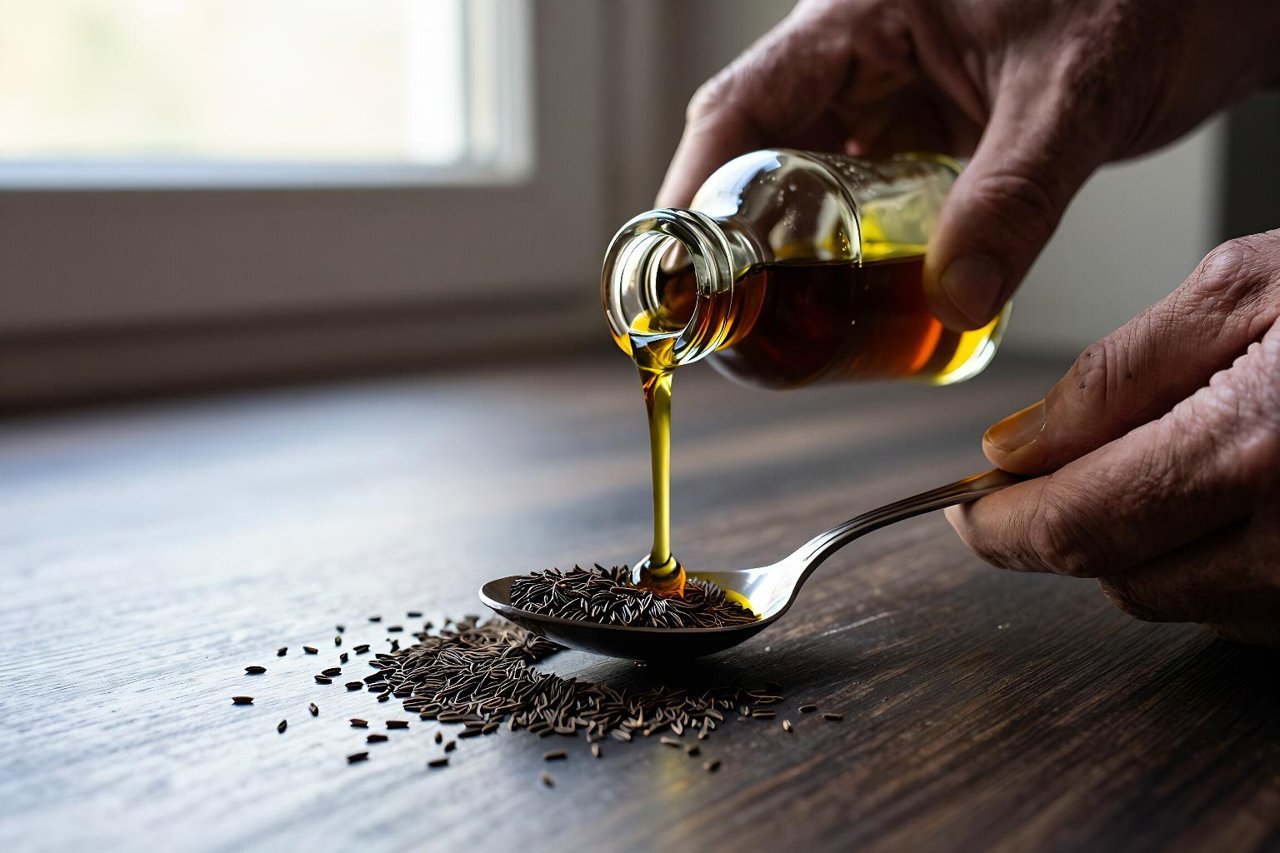
Walk into any health food shop and you’ll see the same phrase on a dozen bottles: cold pressed black seed oil. It usually sits next to a cheaper version, costs a few pounds more, and offers almost no explanation of why. The answer isn’t marketing spin. How black cumin seed oil is extracted decides how much of the plant’s most interesting compounds actually survive the journey from seed to spoon.
Here’s what the label really means, how to tell a good bottle from an average one, and how to get the most out of the oil you buy.
What Cold Pressing Really Involves
Cold pressing is mechanical extraction with no added heat. Whole seeds go into a screw or hydraulic press, get crushed, and the oil drains out. The only warmth comes from friction, and careful producers control that by running the press slowly and sometimes cooling the barrel.
The accepted ceiling for a cold-pressed claim sits at roughly 49°C (120°F). Stay under it and the oil keeps more of its natural colour, aroma and fat-soluble compounds. Push past it and you get more oil per kilo of seed, faster, which is exactly why industrial producers do it.
One thing worth knowing: the term isn’t tightly regulated in every market. Olive oil has strict rules around virgin and cold-pressed claims. Black seed oil does not. A producer can technically press at a temperature that would make an olive oil chemist wince and still print the words on the front of the bottle.
Why Temperature Matters for This Particular Oil
Most cooking oils are judged on fatty acid profile alone. Black seed oil is different, because its reputation rests largely on thymoquinone, a volatile quinone that gives the oil much of its bite and its amber-brown tint.
Thymoquinone is sensitive. Heat drives it off, and it oxidises once exposed to light and air. Comparisons of extraction methods have repeatedly found that cold pressed and supercritical CO2 oils hold more of it than solvent-extracted or hot-pressed versions. If thymoquinone is the reason you’re buying the bottle, that gap is worth paying attention to.
The yield trade-off
There’s a catch. Cold pressing doesn’t squeeze out every last drop, so yields are lower and prices are higher. Some brands get around this by blending cold pressed oil with cheaper refined oil and still putting the phrase on the front. If the ingredient list runs to more than one item, you’re probably holding a blend.
Cold Pressed vs. Other Extraction Methods
- Cold pressed: Mechanical, kept below roughly 49°C. Best retention of thymoquinone, aroma and colour. Lower yield, highest cost.
- Hot pressed: Same machinery, more heat. More oil out, fewer delicate compounds in. Common for bulk oil destined for capsules.
- Solvent extracted: Hexane and similar solvents pull almost everything from the seed. Efficient and cheap, but residues are a concern and the result is closer to refined than virgin.
- Supercritical CO2: Pressurised CO2 acts as the solvent. Excellent compound retention, but the equipment costs rule it out for most small producers.
For everyday use, cold pressed is the sensible middle ground. You get the compounds you’re paying for without industrial processing.
Reading the Bottle Before You Buy
Packaging tells you a lot. Look for dark glass, ideally amber or violet, because light breaks this oil down faster than almost anything else. A clear plastic bottle sitting on a bright shelf is a warning sign, not a bargain.
Then check three things on the label:
- The botanical name, Nigella sativa, spelled out. “Black seed” on its own is vague.
- A single ingredient. No sunflower, no olive, no natural flavouring.
- Some indication of where and when it was pressed. Small-batch producers usually include it; mass-market ones rarely do.
If you want a longer checklist, this guide to how to choose a quality black seed oil bottle digs into the labelling tricks in more detail.
What Good Oil Looks, Smells and Tastes Like
Fresh cold pressed black seed oil is deep amber heading towards reddish-brown, and it should be slightly thick on the spoon. Hold it to the light and it stays murky rather than running clear like sunflower oil.
The smell is herbal and peppery, faintly like oregano or thyme. The taste is bitter and sharp, and it lingers at the back of the throat. That bitterness is a rough indicator of thymoquinone content, though it’s no substitute for a lab test.
If your oil smells flat, tastes mildly nutty and has no bite at all, it’s either old, heavily refined, or both.
How Much to Take, and How
Traditional use sits between half a teaspoon and one teaspoon (roughly 2.5 to 5 ml) once or twice daily. Start at the lower end for the first week. Black seed oil can unsettle a sensitive stomach if you jump straight to a full spoon.
Straight off the spoon is the classic method. If you can’t face it, stir it into yogurt, drizzle it over salad, or mix it with honey. Add it to food after cooking rather than during. Heat undoes much of what you paid for.
The evidence base deserves a proper look before you build a routine around it. This breakdown of what the research on black seed oil actually shows is a fair-minded assessment of which claims hold up and which are marketing.
Two practical cautions. Black seed oil can interact with blood thinners, diabetes medication and immunosuppressants, so speak to a pharmacist if you take any of those. It also isn’t suitable at therapeutic doses during pregnancy.
Storing It So It Lasts
Cool, dark and tightly capped. A cupboard away from the hob is fine. A windowsill is not. Once opened, a bottle is usually good for 12 to 18 months, though quality fades well before it turns rancid.
Refrigeration slows oxidation but makes the oil cloudy and thick. That’s harmless, and it clears up at room temperature. Some people decant a week’s worth into a small amber bottle and keep the main one cold.
Deciding Whether the Premium Is Worth It
Expect cold pressed oil to cost 30 to 50 per cent more than refined versions, sometimes more for single-origin bottles from small presses. That gap reflects yield, not marketing. Roughly a third less oil comes out of the same weight of seed.
If you’re taking it daily for general wellbeing and want the delicate compounds intact, pay the extra. If you only want a flavouring oil for dressings, or you’re filling capsules on a budget, a cheaper refined version will do the same job for less.
What cold pressed oil won’t do is replace a balanced diet or work overnight. Traditional uses for Nigella sativa stretch back centuries, while the modern trials tend to be small and short. Expect modest, gradual changes at best, and give it a fair few weeks before you decide either way.
Where the cold pressed process genuinely earns its price is in what stays in the bottle. You’re paying for a mechanical method that leaves the seed’s delicate compounds alone instead of cooking them off for efficiency. For the full picture of what this seed does and where it falls short, this guide to Nigella sativa black seed oil is a good place to keep reading.
