 1-800-656-4211




Blog
Vitamin K2 Supplement: The Missing Nutrient for Strong Bones and a Healthy Heart?

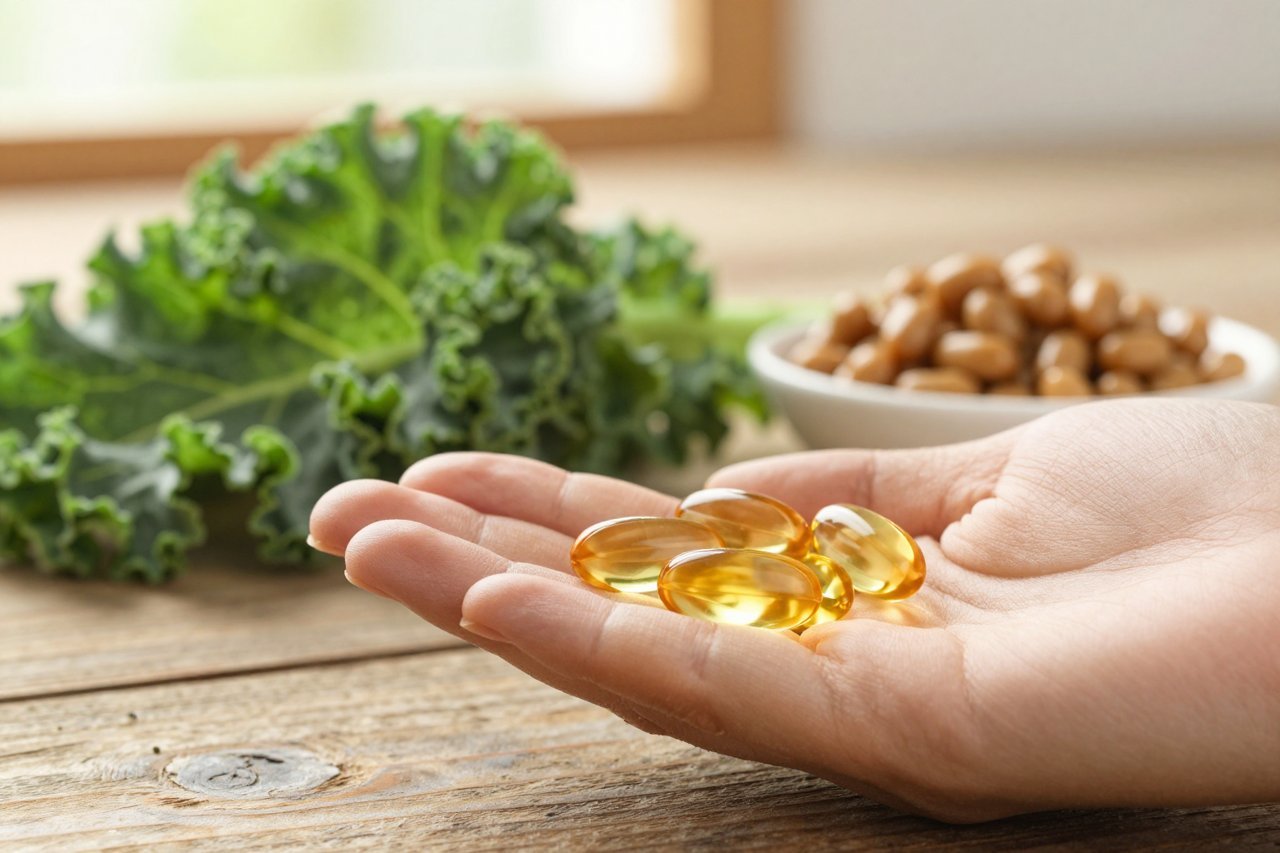
Vitamin D gets all the headlines. Calcium gets the commercials. But vitamin K2? It’s lucky if it gets a footnote. In recent years, researchers have started to untangle how this fat-soluble nutrient keeps calcium flowing to the right places. For anyone taking a vitamin D supplement or worrying about their heart, vitamin K2 might be the missing piece.
What Exactly Is Vitamin K2?
You’ve probably heard of vitamin K1, the form found in leafy greens that helps your blood clot. K2 is an entirely different animal. It comes in several subtypes, the two most common being MK-4 and MK-7. MK-4 is short-acting, while MK-7 stays in your bloodstream much longer, making it a favorite in most vitamin K2 supplements.
Your body doesn’t produce K2 in large amounts. You get a little from fermented foods like natto, sauerkraut, and certain cheeses, but the average Western diet delivers far less than researchers think we need.
The Heart Link: Keeping Calcium Out of Your Arteries
There’s a reason K2 is often called the ‘heart vitamin’ in Japan. It activates a protein called matrix GLA protein, which acts like a bouncer, escorting calcium out of your blood vessels and back into circulation. Without enough K2, that calcium can deposit in your artery walls. Over time, those deposits harden into plaque, stiffen the arteries, and make your heart work harder.
A well-known study in the Netherlands followed more than 4,800 older adults for years. Those who consumed the most vitamin K2 had a 57% lower risk of dying from heart disease compared to those with the lowest intake. That’s not proof of causation, but it’s a solid reason to take K2 seriously.
Stronger Bones by Putting Calcium Where It Belongs
The other protein K2 activates is osteocalcin, a hormone-like compound that anchors calcium into the bone matrix. In other words, K2 acts as a traffic cop for calcium: when you get enough of it, calcium gets directed into your bones. When you don’t, it floats around and ends up in soft tissues like your arteries.
A landmark clinical trial in Japan gave postmenopausal women K2 supplements and tracked their bone density over three years. The women taking K2 lost significantly less bone mass than the placebo group. Some even gained density. Results like these have made vitamin K2 supplements popular in Japan and Europe for osteoporosis care.
Why Vitamin K2 Works Hand-in-Hand with Vitamin D
You’ve probably been told to take vitamin D for immunity and bone health. But here’s the problem: vitamin D increases calcium absorption from your gut, which raises the level of calcium in your bloodstream. Without K2, there’s no guaranteed path for that calcium to enter your bones. Instead, it can pile up in your arteries and kidneys.
This is why many nutrition experts now say that taking vitamin D without vitamin K2 is like hiring more workers (calcium) but forgetting to give them a job site (your bones). A number of people who take high doses of vitamin D but still struggle with bone density may actually be missing K2. The two vitamins have complementary roles, and a growing number of supplement companies now pair them in a single capsule. If you’re considering a vitamin D supplement, it’s worth checking whether you’re getting enough K2 to direct the extra calcium that D brings in.
The form of D you take can also affect how well K2 works. Most research uses vitamin D3, which is more effective at maintaining blood levels. For a closer look at dosages and performance, this guide on vitamin D3 supplements is a solid reference.
How Much K2 Should You Take?
The trick with K2 is that there’s no official Recommended Dietary Allowance yet. But research most often uses dosages between 90 and 200 micrograms of MK-7 per day. If you’re taking it to support your bones, doses around 100 mcg are common. Some doctors recommend up to 200 mcg daily for people with existing calcification issues.
A few practical pointers when choosing a vitamin K2 supplement:
- Look for MK-7, not MK-4. MK-7 stays active in the body longer, so you need a smaller dose.
- Take it with a meal that contains fat, since K2 is fat-soluble.
- If you’re also taking high-dose vitamin D, consider a combined D3 + K2 product to keep things simple.
- Avoid buying from unverified brands; K2 is expensive to synthesize, and cheap products often contain little or none of the active ingredient.
Who Might Benefit Most?
While almost anyone can use more K2, certain groups stand to gain more than others.
- Older adults: Bone density and arterial flexibility naturally decline with age. K2 helps on both fronts.
- People on statin medications: Statins can interfere with the body’s own K2 production, making supplementation more relevant.
- Those with osteoporosis or osteopenia: Multiple studies show K2 combined with D and calcium slows bone loss.
- People with type 2 diabetes: Some research suggests K2 helps protect blood vessels from glucose-induced calcification.
Are There Any Risks or Side Effects?
Vitamin K2 is remarkably safe. Unlike vitamin K1, which can interact dangerously with blood thinners like warfarin (Coumadin), K2 has less effect on clotting factors. That said, if you are on warfarin, you should talk to your doctor before adding any form of vitamin K to your routine, because K2 can make the medication less effective.
For most people, daily doses of up to 200 mcg produce no known side effects. It’s a water-soluble-like safety profile, because the body deactivates excess K2 quickly. Still, since K2 works with D, it’s wise to start with a lower dose and let your body adjust.
Is a Vitamin K2 Supplement Right for You?
If you’re getting plenty of sunlight and eating a diet rich in dark leafy greens, fermented foods, and good-quality fats, you may already have decent K2 levels. But for the rest of us, especially those who spend most of the day indoors or stick to a low-fat diet, a vitamin K2 supplement is a reasonable and low-cost insurance policy.
The research is still young, and not every outcome is settled. But the evidence connecting K2 with arterial health and bone strength is strong enough that many cardiologists and orthopedists recommend it. Pair it with vitamin D, take it with a meal, and give your body the calcium traffic cop it never knew it needed.
