 1-800-656-4211




Blog
Vitamin E Supplements for Skin: The Side Effects Most People Never Hear About

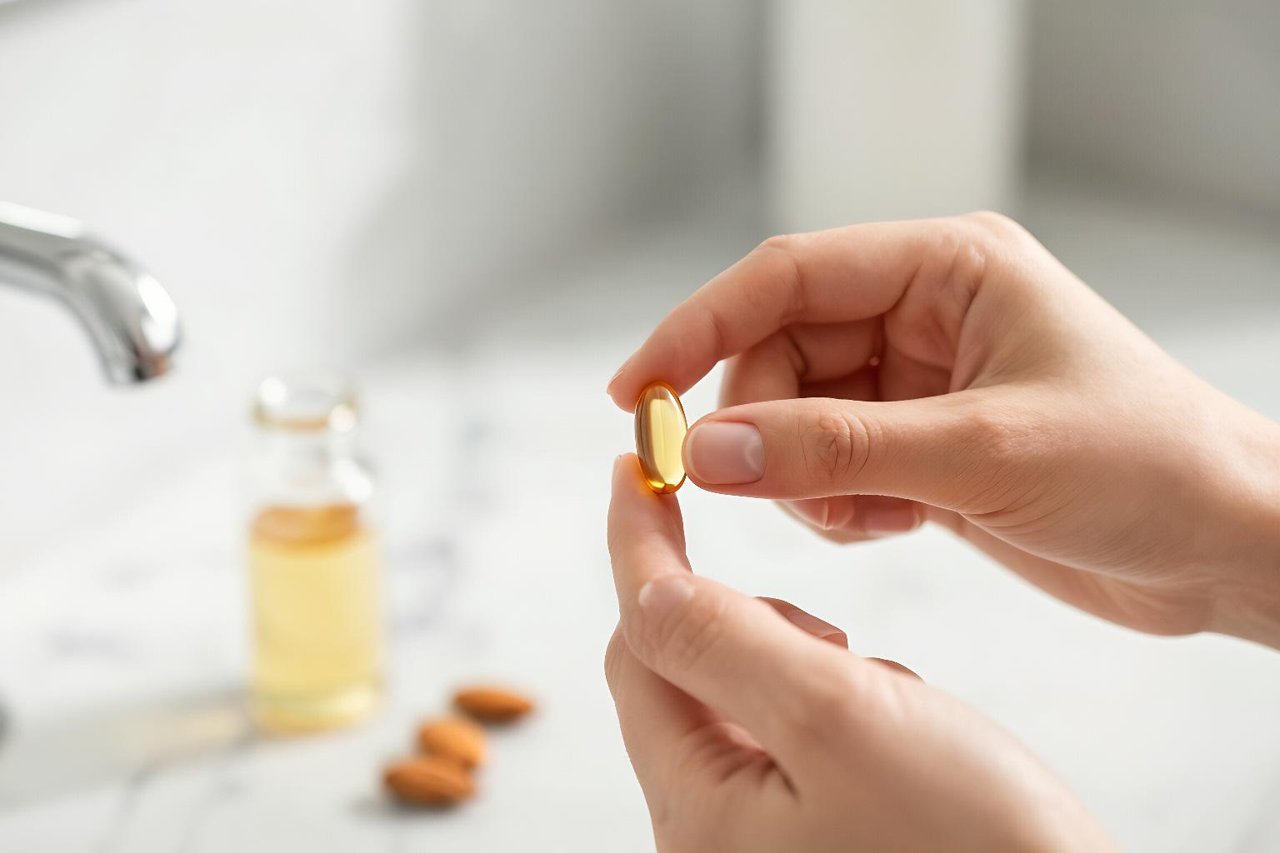
Prick open a vitamin E capsule and the oil inside feels like the answer to a scar, a dry patch, a flaky cheekbone in February. That ritual has been passed around for at least forty years. The supplement version, usually a 400 IU softgel bought in a three-for-two deal, is the same idea in a more concentrated form. It’s also where the story gets less comfortable.
Vitamin E is genuinely useful. It’s also one of the few supplements whose side effects are well documented, dose-dependent, and occasionally serious. If you’re taking it for your skin, it helps to know what 400 IU a day is actually doing inside your body, and where the evidence for glowing skin quietly runs out.
What vitamin E does in skin, briefly
Alpha-tocopherol is the form your body preferentially uses. It’s fat-soluble, so it settles into cell membranes and into the sebum on your skin surface. Its main job is intercepting free radicals, the unstable molecules generated by UV light, pollution and ordinary metabolism, before they can oxidise the lipids that hold your skin barrier together.
Applied topically alongside vitamin C, it has reasonable evidence for reducing UV-induced damage. Swallowed as a capsule, the picture is murkier. Blood levels rise, skin levels rise far less than most people assume, and there’s no strong trial showing that oral vitamin E improves wrinkles, scarring or tone in any measurable way. The supplement industry has been content to let people believe otherwise.
The side effects worth knowing about
Bruising and bleeding
This is the one that matters most. Vitamin E interferes with vitamin K, which your liver needs to build clotting factors, and at supplemental doses alpha-tocopherol reduces platelet aggregation. The practical signs are mundane until they aren’t: bruises on your thighs you can’t account for, a nosebleed that takes twenty minutes to stop, gums that bleed when you floss.
Combine that with warfarin, aspirin, clopidogrel, apixaban or rivaroxaban and you’re stacking two blood-thinning effects. Case reports of serious bleeding in people taking vitamin E alongside anticoagulants go back decades. If you have surgery scheduled, including a simple tooth extraction, most surgeons want you off high-dose vitamin E for around two weeks beforehand.
Stomach trouble
Nausea, cramping and loose stools are common at 400 IU and above, especially when the capsule is swallowed on an empty stomach. Fat-soluble vitamins need fat to absorb properly. Taking your softgel with a meal that contains some oil, eggs, nuts or dairy reduces the odds of feeling queasy an hour later.
The prostate cancer signal
In 2001 researchers launched SELECT, a trial of roughly 35,000 men testing whether vitamin E or selenium prevented prostate cancer. It was stopped early in 2008 for futility. The 2011 follow-up found something worse than futility: men taking 400 IU of vitamin E daily had about a 17% higher incidence of prostate cancer than the placebo group. The absolute numbers were small, and one trial isn’t proof of cause. Still, the finding flattened the assumption that more antioxidants can only help.
Skin reactions, ironically
Topical tocopherol is a recognised contact allergen. Patch-test studies have put allergic contact dermatitis to vitamin E at roughly 1% of people tested, which isn’t huge but is not nothing either. It shows up as itching, redness and small bumps confined to where you applied it, often appearing days after the first use. Oral vitamin E doesn’t usually cause acne, but high doses can bring rash, headache, fatigue and blurred vision.
The base matters too. Plenty of vitamin E oils and creams sit in comedogenic carriers that clog pores on their own. If you started dabbing a capsule on your face and broke out within two weeks, the capsule is a fair suspect.
Where the line sits on dose
Adults need about 15 mg a day, which is 22 IU. The tolerable upper intake level for supplemental vitamin E is 1,000 mg, roughly 1,100 to 1,500 IU depending on whether you’re taking the natural or synthetic form. That figure is a ceiling, not a goal.
Side effects appear well below it. Bleeding tendency has been documented at 400 to 800 IU. A 2007 meta-analysis in JAMA covering 19 trials found that doses of 400 IU a day or more were associated with a small but statistically significant increase in all-cause mortality.
- 22 IU (15 mg): the daily requirement, easily met from food
- 100 to 200 IU: the range used in most skin-related supplement research
- 400 IU: the standard capsule size, and where bleeding signals start appearing
- 1,000 mg: the upper limit. Crossing it buys you nothing
Who should be more careful than average
Anyone on anticoagulants or antiplatelet drugs, obviously. So should people with vitamin K deficiency, liver disease or fat malabsorption, since they’re already working with a thinner margin. Pregnant women shouldn’t exceed the upper limit without a doctor’s input. Men with a personal or family history of prostate cancer have a specific reason to keep doses modest. And people undergoing chemotherapy or radiation should raise any high-dose antioxidant with their oncologist, because the interaction question there is genuinely unresolved.
One more thing worth checking: your multivitamin. A lot of people take a general multi containing 30 IU, add a 400 IU skin capsule, and then drink a fortified workout shake. Nobody adds those up, and the total creeps toward the range where the evidence gets uncomfortable.
Food gives you a different calculation
Thirty grams of almonds delivers about 7 mg of vitamin E. A tablespoon of wheat germ oil carries roughly 20 mg, which is more than a day’s requirement in one spoon. Sunflower seeds, hazelnuts, avocado and spinach all contribute. Food-form vitamin E doesn’t carry the same bleeding signal at normal intakes, partly because the dose is lower and partly because whole foods deliver a spread of tocopherols and tocotrienols rather than a single isolated form.
Oils pressed from berries and fruit are another route. Sea buckthorn and its effect on skin and mucous membranes is an interesting example, since the oil is naturally rich in tocopherols alongside omega fatty acids, which is closer to how vitamin E turns up in a real diet.
If you’re going to take the capsule anyway
Keep it modest. A 100 to 200 IU softgel taken with a meal containing fat covers the sensible middle ground. Tell your GP or pharmacist about it if you take any blood thinner, even low-dose aspirin. Watch your gums and your bruising for the first month, because those are the earliest signals your body gives you. Store the bottle away from light and heat, since tocopherol oxidises and a rancid capsule is doing nothing for your skin.
Give it eight to twelve weeks and then ask yourself honestly whether anything changed. If the answer is no, you’ve saved yourself a monthly subscription.
Supplements with better skin evidence
Vitamin E’s reputation for skin is largely inherited from topical formulations and from its role as a supporting actor in other nutrients’ studies. On its own, taken orally, the case is thin. If your actual goal is firmer, better-hydrated skin, the research sits elsewhere.
Collagen supplementation for skin has substantially more human trial data behind it, though the quality varies wildly between products and you need to know what to look for on a label. Marine collagen specifically has its own evidence base for skin elasticity and nail strength. Oral hyaluronic acid is another option with measurable outcomes: what 120 mg of hyaluronic acid a day does for skin and joints is a useful reality check on what that supplement can and can’t deliver.
None of these is a miracle either. Skin responds to sleep, sun protection and consistent topical retinoids faster than to any capsule. Vitamin E’s real value is as a small piece of a diet that already contains nuts, seeds and leafy greens, where it works alongside vitamin C to protect the lipids in your barrier. That’s a less marketable story than a 400 IU softgel promising a glow, but it’s the one the evidence actually supports, and it won’t make you bruise.
