 1-800-656-4211




Blog
Probiotics After Antibiotics: Side Effects Nobody Warns You About

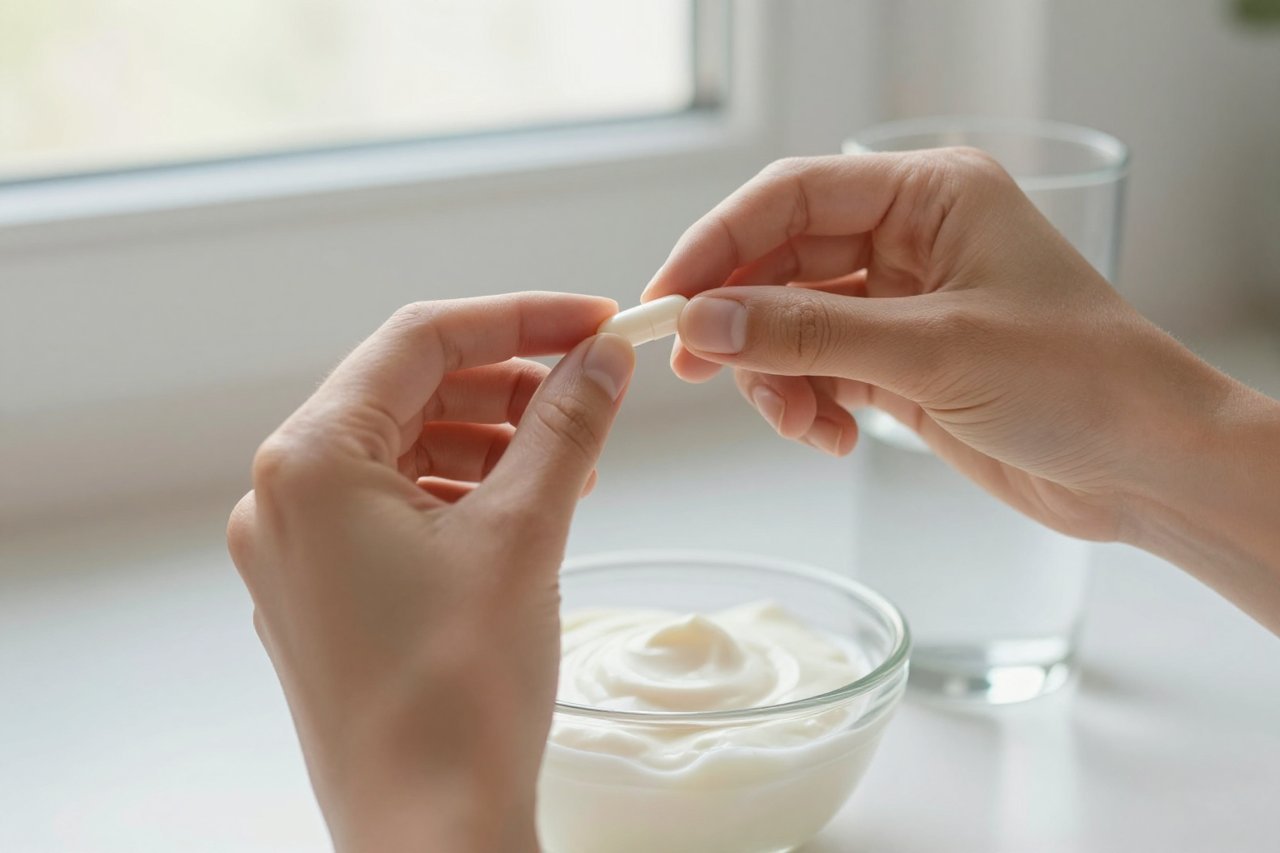
You swallow the last capsule of amoxicillin on a Tuesday. By Friday your gut feels like it’s been through a blender — bloating, loose stools, and a digestive system that seems to have forgotten its job. So you buy a probiotic. Then, two days later, you’re Googling whether the probiotic is making things worse.
It might be. Probiotics are useful tools, not harmless sprinkles, and the weeks after antibiotics are a strange, unsettled moment to introduce a few billion new bacteria into an ecosystem that’s already reeling.
What a course of antibiotics actually does to your gut
Broad-spectrum antibiotics don’t distinguish between the strep in your throat and the roughly 1,000 species living in your colon. A short course can wipe out a meaningful chunk of your gut bacterial diversity, and research tracking people after treatment shows some communities haven’t fully recovered six months later.
Bifidobacterium and Lactobacillus populations tend to crash hardest. Meanwhile, a few opportunists survive and multiply into the vacated space. That reshuffling explains why around 1 in 5 people on antibiotics develops loose stools, and why Clostridioides difficile — a bacterium that thrives when the competition disappears — causes close to half a million infections in the United States each year.
Hold onto that context. It shapes both what a probiotic can realistically do for you and which side effects are worth tolerating.
Side effects people actually report when starting probiotics after antibiotics
Most complaints are mild and settle within a week or two. A minority are more serious and deserve attention.
Gas, bloating and a gurgling gut
Your colon is temporarily under-populated, and the arriving bacteria start fermenting whatever fibre reaches them. The result is carbon dioxide, hydrogen and, in some people, methane — felt as distension, flatulence and audible rumbling. This usually peaks in the first three to ten days and fades as the community stabilises. Starting at 1–5 billion CFU instead of 50 billion makes a real difference here.
Loose stools that get worse before they get better
Some strains loosen things up. High-dose Lactobacillus blends are a common culprit, and anyone with a sensitive gut may find that a product marketed for regularity overshoots the mark. If diarrhoea is still going after three or four days, it’s usually the supplement rather than the antibiotic aftermath — worth pausing to see what changes.
It’s also worth checking what else is in the capsule. Fillers, prebiotic fibres like inulin, and enzyme blends all behave differently in a recovering gut. If you’ve been comparing product types, this breakdown of probiotics versus digestive enzymes and their side effect profiles is a useful reality check before you blame the bacteria.
Histamine reactions and skin flares
Certain strains — L. casei, L. bulgaricus, Streptococcus thermophilus — produce histamine as a byproduct. People with histamine intolerance often notice headaches, facial flushing, itching or an eczema flare within a few days. Switching to low-histamine strains such as L. rhamnosus GG or Bifidobacterium infantis usually resolves it.
Rare but serious: bloodstream infection
Probiotic strains have, on rare occasions, been cultured from blood in people who were severely unwell. These cases cluster in specific groups: intensive care patients, people with central venous catheters, premature infants, and those with severely compromised immunity or short bowel syndrome. The absolute risk is tiny. The point is that it isn’t zero, and it isn’t evenly distributed.
How soon after your last dose should you start?
If you’re taking a probiotic during the antibiotic course, separate them by at least two to three hours — otherwise the drug simply kills the capsule you just swallowed. Once the course ends, there’s no strong evidence that waiting a week is better than starting the next day.
A 48-to-72-hour gap is a reasonable middle ground for people with a sensitive gut, simply because it lets the worst of the antibiotic disruption settle before you add anything new.
Saccharomyces boulardii is the exception worth knowing. It’s a yeast, not a bacterium, so antibiotics don’t touch it. You can take it alongside the course rather than after it.
Strains with the strongest evidence for antibiotic recovery
Not all probiotics are interchangeable, and the research is strain-specific:
- Saccharomyces boulardii — the best-studied option for antibiotic-associated diarrhoea, with several trials showing roughly a halving of risk at 250–500 mg twice daily.
- Lactobacillus rhamnosus GG — solid evidence in preventing antibiotic-related loose stools, particularly in children.
- L. acidophilus CL1285 with L. casei LBC80R — a combination that has performed well in adult trials.
A single well-evidenced strain usually beats a 20-strain kitchen-sink formula, at least while your gut is still fragile.
Who should ask a doctor before self-prescribing
- Anyone currently in hospital or recently discharged after critical illness
- People with a central line, port, or any indwelling medical device
- Those on immunosuppressants, chemotherapy, or biologic therapy
- Premature infants and anyone with short bowel syndrome
- People with known small intestinal bacterial overgrowth or severe histamine intolerance
For everyone else, a standard commercial probiotic is generally low-risk — but “low-risk” still means paying attention to what your body tells you in the first fortnight.
Practical ways to make the first week easier
Start with a single strain at a modest dose, somewhere between 1 and 10 billion CFU, and build up over two weeks. Take capsules with or just before a meal, when stomach acid is buffered by food — except S. boulardii, which tolerates acid well and can be taken any time.
Keep the product cool and check the expiry date; viable counts drop fast in a warm kitchen cupboard. Feed the newcomers with fibre rather than more capsules: aim for 25–30 grams a day from oats, legumes, cooked-and-cooled potatoes, berries and leafy greens. Drink enough water, and add electrolytes if stools stay loose. If you want fermented foods in the mix, introduce them one at a time — a spoonful of kefir on day one, not a pint.
Red flags that mean stop and call someone
Mild gas is not a reason to panic. These are: a fever above 38°C, blood or mucus in your stool, severe abdominal cramping, diarrhoea more than six to eight times a day, signs of dehydration, or symptoms that are still getting worse after two weeks. Persistent watery diarrhoea after antibiotics needs a stool test for C. difficile — not another supplement.
If probiotics make things worse, change the plan
Plenty of people find probiotics unhelpful after antibiotics, and that’s useful information rather than a failure. Stop the capsules for a week and watch what happens. Then shift the focus to food: variety of plants across the week, adequate protein, cooked vegetables if raw ones bloat you, and a gradual return to whatever you ate before you got sick.
The gut doesn’t rebuild overnight. Diversity typically recovers over four to eight weeks, sometimes longer after repeated courses. If you want to try a probiotic again later, come back to a single well-studied strain at a low dose and give it a fortnight. And if you’re on your third antibiotic course in a year, that pattern is worth raising with your doctor — the conversation about why you keep needing them may matter more than anything you buy in the supplement aisle.
