 1-800-656-4211




Blog
Lion’s Mane Mushroom Supplement: How to Tell a Real One From a Dud

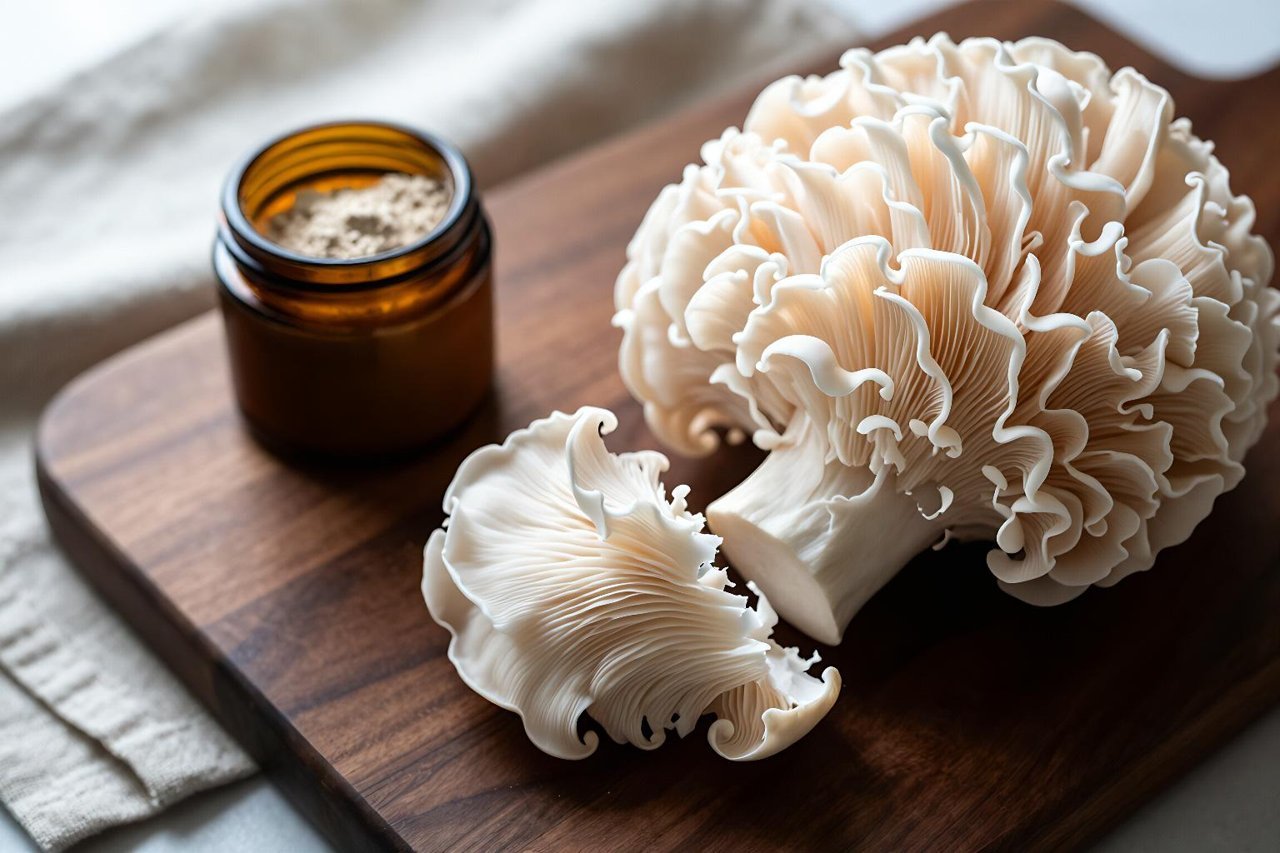
Two bottles sit side by side on the same shelf. Both say “lion’s mane mushroom supplement” in the same rounded font. One holds ground mycelium grown on grain with barely any beta-glucans. The other contains a concentrated fruiting body extract standardised to 30% beta-glucans. The price is nearly identical. Only one of them is likely to do much of anything.
That gap between the front of the label and what’s inside the capsule is the whole story with lion’s mane (Hericium erinaceus). The mushroom itself has a genuinely interesting research file. The supplement market built around it is far messier, and most buyers never find out which category they’ve landed in.
What a Lion’s Mane Mushroom Supplement Is Actually Made From
Lion’s mane is a pom-pom-shaped fungus that grows on hardwood, mostly oak and beech, across Asia, Europe and North America. Cooked, it shreds like crab meat and browns beautifully in butter. In supplement form it turns up as a powder, capsule, tincture or gummy, and the raw material behind those formats varies enormously.
Nearly everything on the market falls into one of three buckets:
- Fruiting body — the actual mushroom, and the richest natural source of beta-glucans and hericenones.
- Mycelium — the root-like network, usually grown on sterilised grain. Cheap to produce, and frequently sold with the grain still mixed in, which pads the weight with starch.
- Extracts — either type concentrated with hot water, alcohol, or both, then labelled with a ratio like 8:1 or a figure like 25% beta-glucans.
Where the Evidence Is Strongest, and Where It Stops
Here’s the honest version. Lion’s mane has been studied in humans, but not nearly as much as the marketing implies. A handful of small trials and a much larger body of animal and cell research point in similar directions. Promising is the right word. Proven is not.
Memory, focus and nerve growth
The headline finding is that compounds in lion’s mane can stimulate nerve growth factor (NGF) in laboratory studies. Hericenones live in the fruiting body, erinacines in the mycelium, and both have shown activity. NGF matters for the maintenance and repair of neurons, which is why the mushroom gets talked about alongside brain health.
In a small 2009 Japanese trial, adults with mild cognitive impairment took 3 grams of lion’s mane powder daily for 16 weeks and scored higher on a cognitive scale. Their scores dropped back after they stopped taking it. That last detail is worth sitting with. Other trials on healthy adults have found modest improvements in reaction time and processing speed, and modest is doing real work in that sentence.
If you’d rather read the trial-by-trial breakdown than the summary, this no-nonsense guide to lion’s mane benefits, dosage and real results digs into what each study actually measured.
Mood, stress and sleep
Several small studies on people with anxiety, depression or sleep complaints reported reduced irritability and better sleep quality over four to eight weeks. Sample sizes were tiny, often under 40 people, so treat these as signals rather than verdicts. A 2019 open-label trial in women with menopausal symptoms found improvements in mood and sleep at 1 gram daily, though there was no placebo group to compare against.
Digestion and immune support
Lion’s mane is a decent prebiotic fibre source, and early research suggests it may support gut bacteria and dampen mild inflammation. There’s also a small body of work on stomach ulcers and nerve-related digestive discomfort. Nothing dramatic, but the mechanism is plausible enough that people with sensitive guts often notice changes first.
The Extract Ratio Trick That Hides Weak Products
“1000 mg per serving” sounds like a lot. It can mean almost nothing.
If a label says 1000 mg of mycelium biomass, a meaningful share of that may be grain starch left over from the growing substrate. Independent lab tests have found products where under 5% of the powder was genuinely fungal material. You’re paying for oat flour.
Beta-glucan content is the number worth chasing. A decent extract runs 20–30% beta-glucans, verified by a third-party lab. Some premium fruiting body extracts reach 40% or higher. If a brand never publishes a lab result or states the beta-glucan figure anywhere, that silence tells you something.
Extract ratios like 10:1 mean roughly ten units of raw mushroom went in to produce one unit of extract. Higher ratios suggest concentration, but they’re easy to manipulate and mean little without context. Beta-glucan percentage plus a stated extraction method (hot water, or dual water-and-alcohol) is the more reliable pairing. Water alone pulls out beta-glucans; alcohol is what captures the hericenones.
How to Choose a Lion’s Mane Mushroom Supplement
- Look for the words “fruiting body” printed under the ingredient name, not just on the back panel in small grey type.
- Check for a beta-glucan percentage. 20% or above is a reasonable floor.
- Skip blends hiding behind “mushroom complex” with no per-species amounts listed.
- Prefer dual extraction over water-only, so you get both beta-glucans and hericenones.
- Look for third-party heavy metal testing. Mushrooms absorb whatever sits in their substrate.
- Be wary of gummies. They usually carry a token dose dressed up with sugar and flavour.
Dosing and Timing Most People Settle On
Clinical studies tend to use 1 to 3 grams of dried fruiting body daily, split into two or three doses. Most supplement users land somewhere between 500 mg and 3 g. Starting low and working up over a week or two is sensible if your digestion is on the delicate side. This breakdown of lion’s mane dosage and what people report covers the range in more detail.
Timing is flexible. Some people take it in the morning for focus; others take it before bed because they find it calming. Both camps describe the same slow, cumulative effect rather than a sharp jolt, which suggests the timing matters far less than consistency. Taking it with food softens any stomach discomfort.
What It Won’t Do
Lion’s mane is not a stimulant. It won’t replace sleep and it won’t rescue a poor diet. It isn’t a treatment for dementia, neuropathy or depression, and no serious researcher claims otherwise. If you take blood thinners, immunosuppressants, or you’re managing a diagnosed neurological condition, talk to a clinician first. Mild blood-thinning and immune-modulating effects have been reported.
Expectations matter here too. Most people who notice something describe it building gradually across four to eight weeks. That’s slow enough that a two-week experiment tells you almost nothing, and quick enough that a three-month run is a fair test.
Running a Fair Test on Yourself
Buy one bottle from a brand that publishes lab results, pick a dose, and hold it steady for eight to twelve weeks. Track three things people mention most often: sleep quality, how quickly words come to you, and how you feel around 3 p.m. Keep your caffeine, exercise and meal patterns unchanged so you aren’t confusing variables.
Then decide whether the second bottle earns its place. That beats another month of guessing, and it costs about the same.
