 1-800-656-4211




Blog
Dragon Fruit Benefits: What a Cup Really Does for Your Body

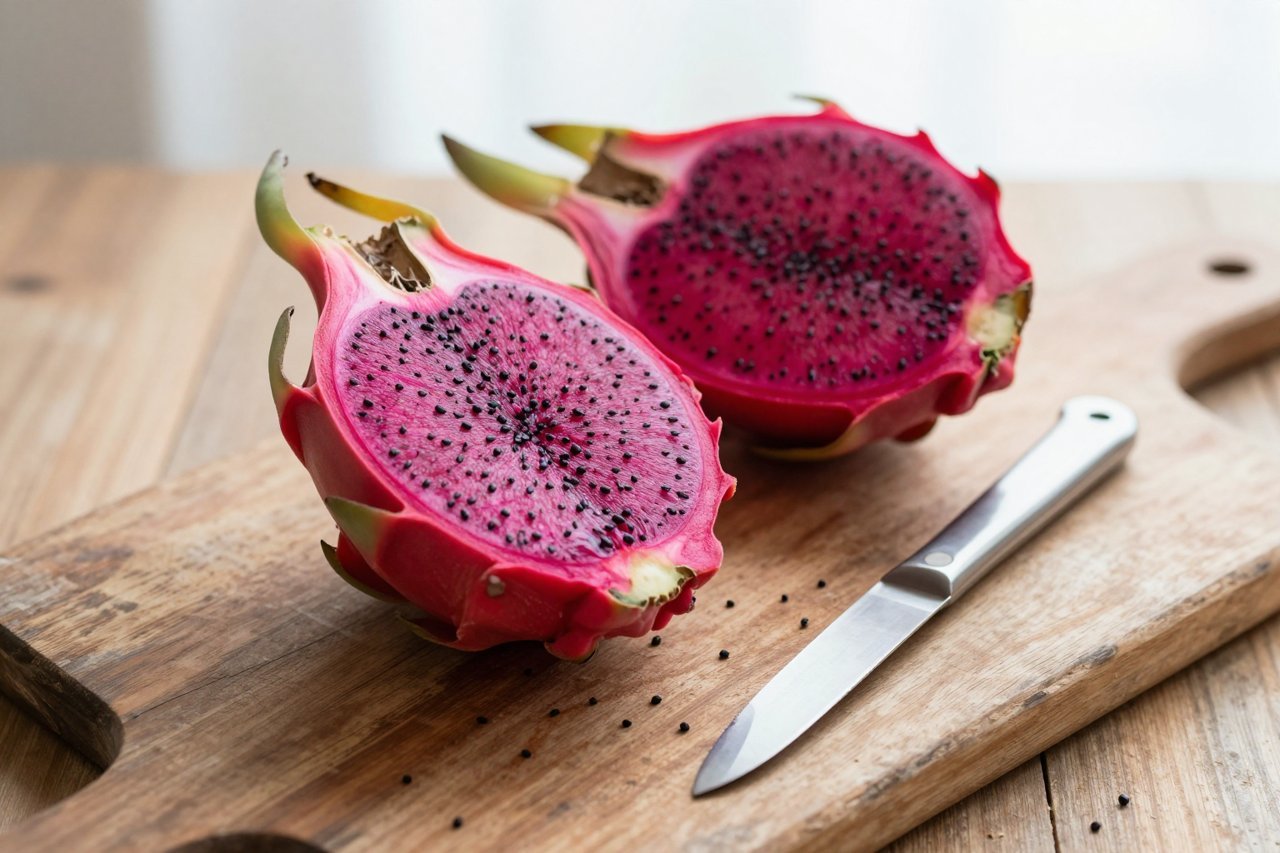
Cut a dragon fruit open and it looks less like food and more like interior design: white or magenta flesh speckled with hundreds of tiny black seeds. It is also one of the few fruits that manages to be genuinely refreshing without being especially sweet, which is exactly why it has ended up in smoothie bowls, hotel fruit platters, and $9 juice bar blends.
The interesting part is what sits under the skin. Dragon fruit benefits show up in some fairly ordinary places, like fiber and hydration, and a few less obvious ones, like gut bacteria, blood sugar and antioxidant pigments. Here is what a cup of it actually does.
What Is Actually in a Dragon Fruit
Most dragon fruit sold worldwide is Hylocereus undatus, the white-fleshed type with pink skin. The red and magenta ones are different species and cultivars, and they differ slightly in what they deliver.
Per 100 grams of raw white-fleshed dragon fruit, you get roughly:
- Calories: 60
- Carbohydrate: 13 g
- Fiber: 3 g
- Protein: 1.1 g
- Fat: 0.4 g
- Water: about 87%
- Iron: 0.65 mg
- Magnesium: 40 mg
- Vitamin C: 3 mg
That vitamin C figure is worth flagging early, because it is where a lot of dragon fruit marketing quietly overreaches. This is not a citrus replacement. The real story is water, fiber and pigment.
Fiber, Gut Bacteria and Regularity
A cup of diced flesh gives you around 6 grams of fiber, most of it soluble. That matters for two reasons. Soluble fiber slows the emptying of your stomach, which keeps you full longer and softens the glucose spike after a meal. It also feeds the bacteria in your colon, which ferment it into short-chain fatty acids such as butyrate.
Dragon fruit goes a step further than most fruit. It contains oligosaccharides, short chains of sugars your small intestine cannot digest, so they arrive in the colon intact and act as a prebiotic. A study out of Thailand found that people eating red dragon fruit daily had measurably different gut bacteria populations after a few weeks, with more of the beneficial Lactobacillus and Bifidobacterium strains.
If you are trying to raise your fiber intake and fruit alone is not cutting it, the same principles apply to choosing a soluble fiber supplement: start low, drink plenty of water, and give your gut a week or two to adjust before you decide it is not working.
Blood Sugar and Metabolic Health
This is where the fiber quietly pays off. Because dragon fruit is low in sugar for a tropical fruit, with most of its 13 grams of carbs per 100 g coming from fiber and nondigestible oligosaccharides, it does not hit your bloodstream the way mango or lychee does.
Small human trials have looked at red-fleshed pitaya specifically. In one study of people with prediabetes, eating red dragon fruit regularly was linked to lower fasting blood glucose and better insulin sensitivity over several weeks. The studies are small and this is not a substitute for medication, but the direction of the findings lines up with what you would expect from a high-fiber, low-sugar fruit.
White flesh versus red flesh
Red-fleshed varieties carry more betalains and, in several analyses, more polyphenols than the white ones. Flavour follows the colour too. Red and magenta types are noticeably sweeter, while white flesh is crunchier and milder, closer to a kiwi crossed with pear.
Betacyanins: The Pigment Doing the Work
That vivid magenta comes from betacyanins, the same family of pigments found in beetroot and amaranth. They are antioxidants, and they are the main reason red pitaya gets studied more than white. There is also some early evidence that dragon fruit seed oil and peel extracts have antimicrobial and anti-inflammatory activity, though most of that work is still in petri dishes rather than people.
Be realistic about the scale of this. One fruit is not a treatment for anything. If you want the fuller picture of what has actually been researched versus what gets repeated online, there is a roundup of dragon fruit benefits that rarely get mentioned, including several claims that do not hold up under scrutiny.
Iron, Magnesium and the Mid-Afternoon Slump
Per 100 grams you get about 0.65 mg of iron and 40 mg of magnesium. Those are not headline numbers, but dragon fruit is almost always eaten raw, so nothing is lost to cooking. The iron is plant-based and absorbed poorly on its own, which is why a squeeze of lime or a few strawberries alongside it makes a genuine difference.
Magnesium plays a role in muscle contraction and energy metabolism, which is part of why it turns up in so many sports products. If you train regularly, a bowl of dragon fruit after a session is a gentler option than a stimulant-heavy powder, and it is worth knowing which pre-workout ingredients actually work before you spend money on them. Fruit will not replace the sodium you sweat out on a long run, but it is a sensible companion to whatever you are already drinking.
Hydration and Weight Management
About 87% of dragon fruit is water. That sounds like a marketing line until you compare it calorie for calorie: 60 calories per 100 g, with 87 g of that being water and 3 g of fiber, is a very favourable ratio if you like eating volume. It fills you up cheaply.
The black seeds deserve a mention too. They are tiny and crunchy, they carry a little healthy fat and protein, and in quantity they are mildly laxative. Chewing them is rather the point. Swallowed whole, most pass straight through undigested.
Who Should Go Easy on It
- Anyone with IBS or following a low-FODMAP diet. Dragon fruit contains fermentable oligosaccharides. A small serving is usually fine, but half a fruit in one sitting can cause bloating and gas.
- People prone to loose stools. Between the fiber load and the seeds, a large portion can act as a gentle laxative.
- Anyone on blood sugar medication. The glucose effect is mild but real. Check your levels if you start eating it daily.
One harmless quirk worth knowing: eat a red-fleshed variety and your urine or stool may turn pink for a day. That is betaluria, the same thing that happens after a plate of beetroot, and it is not blood.
How to Pick a Good One
Most disappointing dragon fruit experiences come down to selection rather than the fruit itself. The skin should be evenly coloured with no large brown patches, and the leafy tips should still show some green instead of being dried to a crisp. Press it gently with your thumb. It should give slightly, like a ripe kiwi. Rock hard means it was picked early and will taste of almost nothing.
There is more variety than most shops suggest, and the differences in sweetness, texture and seediness are significant. This guide to pitaya varieties and how to tell when one is ripe is a useful reference if you are choosing between the pink, red and yellow-skinned types.
Easy Ways to Actually Eat More of It
Dragon fruit is at its best cold and barely handled, so simple is usually right:
- Chill it, halve it lengthways, and scoop the flesh out with a spoon.
- Cube it and toss with lime juice, a pinch of flaky salt and a little chili powder.
- Freeze cubes on a tray, then blend them into smoothies instead of ice.
- Dice it into a fruit salad with mint and a splash of lime.
- Puree with a little honey and lime for sorbet or ice lollies.
One practical note on texture: dragon fruit does not freeze gracefully if you thaw it. The cell walls break down and it turns to mush, which is fine for smoothies and sorbet and disappointing on a plate. Keep whole fruit in the fridge for up to five days and eat it fresh.
It is not a miracle fruit, and nothing dramatic happens after one bowl. But at 60 calories per 100 g, with roughly 6 grams of fiber in a cup and a pigment profile that is genuinely being researched, it earns a place in the rotation alongside berries, kiwi and whatever else is in season. Buy one that yields to a gentle press, eat it cold, and skip the hype.
