 1-800-656-4211




Blog
Creatine Monohydrate: The Benefits That Hold Up, the Side Effects That Don’t

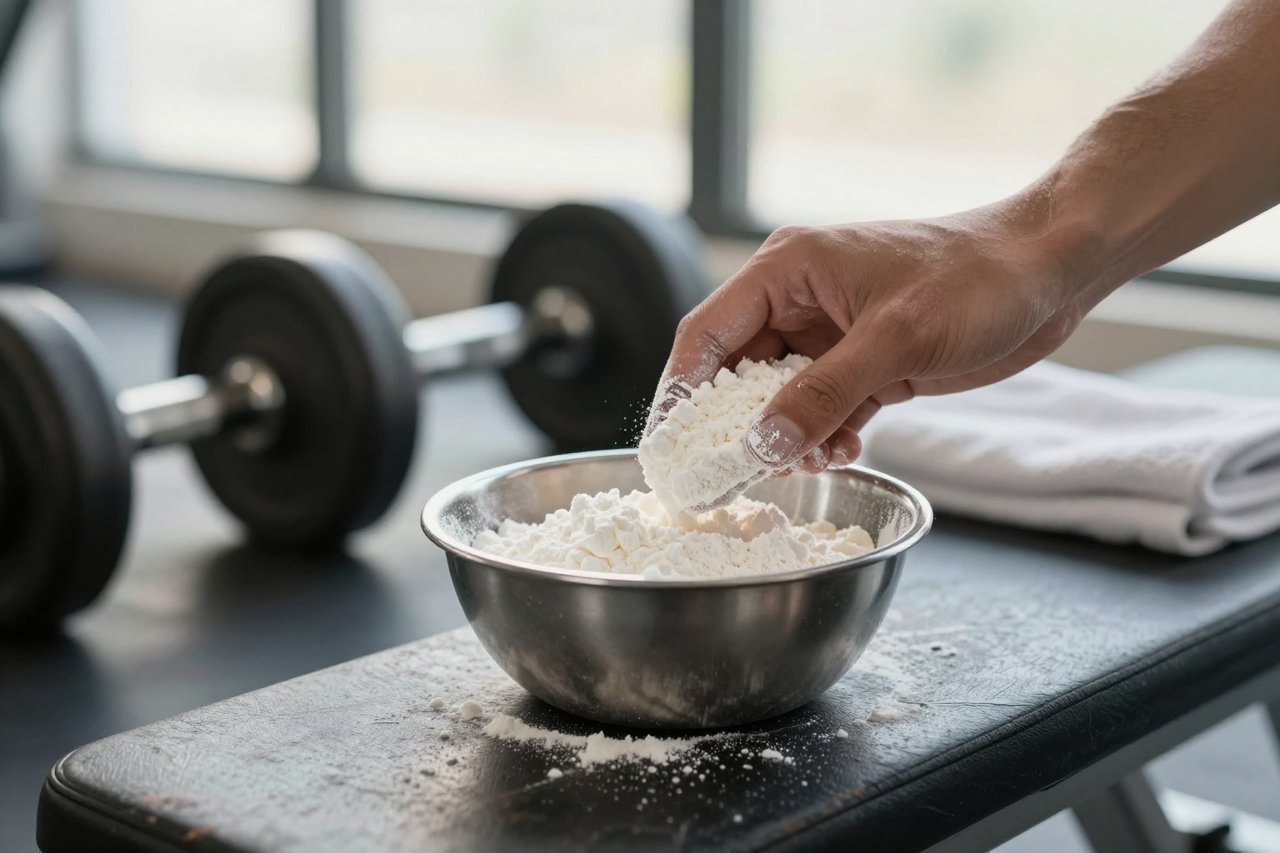
Few supplements carry as much baggage as creatine. Depending on which forum you land on, it is either a miracle powder or a fast track to kidney failure. Neither version survives contact with the evidence. Creatine monohydrate is one of the most heavily researched compounds in sports nutrition, with hundreds of trials going back to the early 1990s, and the picture is reassuringly dull. It works well for a few specific things, does nothing for plenty of others, and the side effects are far milder than the rumour mill claims.
What creatine actually does in your body
You make roughly a gram of creatine a day, and another gram or so arrives via meat and fish. Most of it sits in skeletal muscle as phosphocreatine, which donates a phosphate group to regenerate ATP. That matters during short, brutal efforts: a heavy set of squats, a 100-metre sprint, a max deadlift. ATP runs dry in a matter of seconds, and phosphocreatine is what buys you a few more.
Supplementing tops up those stores, usually by 20 to 40 percent. Where you start matters enormously. A vegetarian with near-empty muscle stores will feel a bigger difference than someone who eats steak four nights a week.
Creatine monohydrate benefits worth paying for
Strength and reps in the gym
This is the headline effect and the most thoroughly replicated. Across dozens of trials, people supplementing with creatine gain roughly 5 to 15 percent more maximal strength than those on placebo over 8 to 12 weeks of training. In practice that often shows up as one or two extra reps on your working sets, which compounds into more total volume and, eventually, more muscle.
It is not a stimulant. You won’t feel wired. The effect is cumulative and quiet, showing up in your training log after three or four weeks rather than in how you feel an hour after taking it.
Lean mass gains
A widely cited meta-analysis put the extra lean mass at around 1kg more than placebo over a typical training block. Some of that is genuine contractile tissue, some is intracellular water drawn into the muscle cell. Either way, your arms will measure bigger and your weight on the scale will move up two to four pounds within the first fortnight.
Effects outside the weight room
The brain uses creatine too, and the research here is younger but interesting:
- Sleep deprivation. Single large doses have partly reversed the cognitive slump measured after 24 hours without sleep in controlled trials.
- Vegetarians and vegans. Small studies show improved memory and processing speed in people with low dietary creatine intake.
- Older adults. Combined with resistance training, creatine has improved leg strength and bone mineral density in postmenopausal women.
- Recovery. Some evidence suggests less muscle damage and faster return to performance after hard eccentric work, though this is softer ground.
If you are a well-rested, well-fed omnivore under 40, expect little cognitive change. The brain benefits cluster in people whose stores are depleted to begin with.
How to take it without overcomplicating things
Three to five grams of creatine monohydrate a day, every day, is the whole protocol. Timing is close to irrelevant. With food, without food, morning, night, rest days included. Muscle stores saturate after roughly three to four weeks at that dose and stay saturated as long as you keep taking it.
The old loading protocol of 20g a day split into four doses for a week gets you saturated faster, in about five days. It also sends a fair number of people running for the toilet. If you want to speed things up, take 5g four times daily with meals, but there’s no requirement to bother.
You do not need to cycle it. You do not need to take it with grape juice, though the insulin spike from fast carbs does modestly improve uptake. And no, it isn’t a steroid, a hormone, or a liver stressor at normal doses.
Side effects: what’s real and what’s noise
Water weight
Expect two to four pounds in the first week or two. This is water inside the muscle cell, not bloat under the skin, and it plateaus quickly. If the scale number bothers you, weigh yourself monthly rather than daily for the first few weeks.
The kidney question
Creatine breaks down into creatinine, and creatinine is what kidney blood tests measure. Supplementing raises serum creatinine slightly without any change in actual kidney function, which is why the confusion persists even among some clinicians. If your doctor sees a bumped creatinine and panics, ask about a cystatin C test, which isn’t affected by creatine intake. People with existing kidney disease should still talk to their nephrologist before starting.
Stomach upset
Usually a loading-dose problem. Large single servings of 10g or more can cause cramping or loose stools. Split the dose, take it with food, or use a micronised version, which dissolves more readily.
Hair loss
This one traces back to a single small 2009 study in rugby players showing a rise in DHT, a hormone linked to male pattern baldness. No study has ever shown creatine causes actual hair loss. It’s a plausible-sounding headline built on one underpowered trial, and it gets repeated endlessly.
Cramps and dehydration
Old coaching folklore, largely unsupported. Several trials have found no increase in cramping or injury rates among creatine users, and some suggest improved hydration status. Drink water because you train hard, not because of the powder.
Who should probably skip it
Creatine is safe for most healthy adults, but a few groups should hold off or get medical clearance first: anyone with diagnosed kidney disease, people taking nephrotoxic medications such as certain antibiotics or immunosuppressants, pregnant or breastfeeding women (the data is too thin), and anyone under 18 without a coach or doctor involved. None of this is because creatine is dangerous in a general sense. It’s because the studies simply haven’t been done in those populations.
What to actually buy
Creatine monohydrate. Not HCl, not nitrate, not a fancy blend with a proprietary formula and a 40-pound price tag. Monohydrate is the form used in the overwhelming majority of the research, and it costs somewhere between 15 and 40 pence or cents per serving. Look for a product that states third-party testing on the label, whether that’s Creapure, Informed Sport, or an equivalent. Avoid liquid creatine, which degrades in solution, and avoid anything promising to “burn fat” or “boost testosterone.”
A realistic first month
Days one to seven: the scale climbs two or three pounds and your muscles look fuller, especially in the shoulders and arms. Nothing else changes. This is the water phase, and it’s normal.
Weeks two and three: you squeeze out an extra rep or two on your top sets without consciously trying. Some people notice nothing at all until they look back at their training log.
Week four and beyond: full saturation. From here the gains are steady and unspectacular, roughly matching what your training programme deserves. If you stop taking it, muscle stores fall back to baseline over about a month, and the water comes off with them.
The honest verdict is that creatine is a small, reliable multiplier on hard training, not a shortcut around it. Five grams a day costs less than a coffee, has been tested on tens of thousands of people, and carries fewer documented risks than most over-the-counter painkillers. The benefits are real. The side effects, for healthy adults, mostly aren’t.
