 1-800-656-4211




Blog
The Best Protein Powder for Men: Side Effects Worth Knowing Before Your Next Scoop

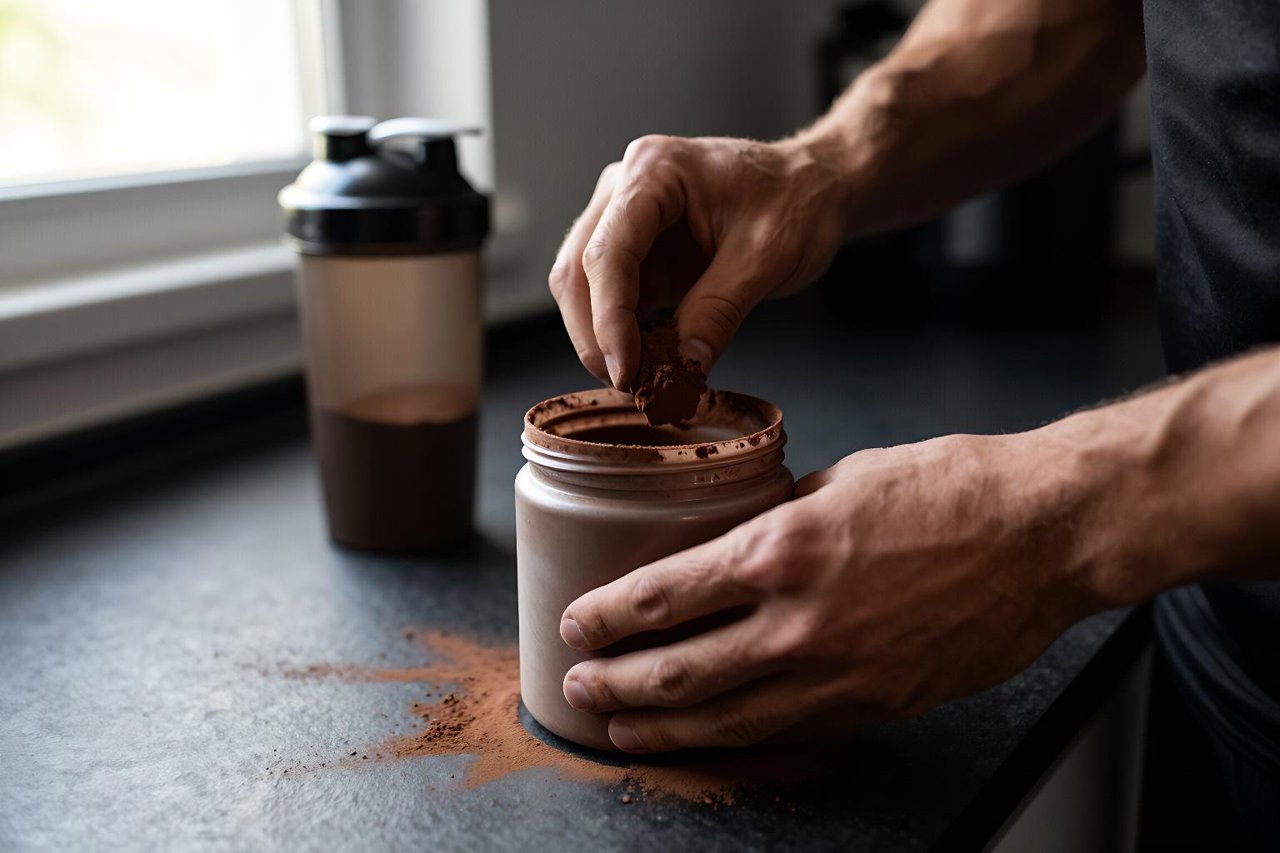
Three weeks into a new whey habit, most men notice something. Gas that wasn’t there before. A jawline that’s broken out. Or a shake that somehow leaves them hungrier than they were before drinking it. None of that means protein powder is dangerous, but it does mean the label on the tub is only half the story.
Search “best protein powder for men” and you get a hundred listicles ranking flavours and cost per serving. Search the side effects and you get forum threads about kidneys failing and testosterone crashing. The truth sits in a rather boring middle ground, and it’s worth ten minutes before you buy another 5lb bag.
What side effects actually look like in real life
Serious harm from protein powder is rare. Everyday annoyance is common. In practice, the complaints men bring to doctors and dietitians cluster into four buckets:
- Digestive: bloating, wind, loose stools, cramping
- Skin: acne along the jaw, back and shoulders
- Metabolic: unexplained weight gain, blood sugar wobbles
- Organ-related: the kidney and liver worries that get searched far more often than they get diagnosed
Work out which bucket you’re in before you blame the brand. A powder that wrecks one guy’s stomach is fine for the next ten.
The bloating problem is usually lactose, not protein
Whey concentrate carries somewhere between 2 and 8 grams of lactose per 30g scoop depending on the grade. If you’re mildly lactose intolerant, that’s enough to produce cramps and gas within 40 minutes. A large share of adult men are, particularly those with East Asian, West African or Southern European ancestry.
What to switch to instead
Whey isolate drops lactose below 1 gram per scoop. Hydrolysed whey goes lower again, at a higher price. If dairy is the issue outright, egg white and pea-rice blends work fine, though plant proteins tend to sit heavier thanks to their fibre and oligosaccharide content.
Stacking a fibre supplement on top of a shake can double the trouble in those first couple of weeks. There’s a useful breakdown of that in the side effects of fiber supplements for men that hit in the first two weeks.
Dose and speed matter
Downing 50g in one go, on an empty stomach, in under two minutes, is a reliable way to feel awful regardless of the powder. Split it into 25–30g servings and sip rather than chug.
The kidney question, answered without the panic
Healthy kidneys handle protein fine. The confusion comes from advice given to people who already have chronic kidney disease, where protein restriction is standard practice. If your eGFR is normal and you have no diagnosed kidney condition, going from 1.2 to 1.8 g/kg of bodyweight per day hasn’t been shown to damage renal function.
Where it does get real: existing kidney disease, a single kidney, uncontrolled diabetes, or a history of gout. Higher purine intake from certain proteins can nudge uric acid upward. Speak to your GP before adding two shakes a day in any of those cases.
Liver worries have even less behind them. Reviews of whey supplementation in healthy adults haven’t turned up meaningful changes in liver enzymes at typical doses. What does stress the liver is the alcohol, the ultra-processed diet, and occasionally the “detox” extras blended into cheap mass gainers.
Heavy metals, spiking and the label problem
Independent testing over the years has flagged cadmium and lead in some plant-based powders, chocolate flavours especially, because cocoa and soil uptake concentrate metals. It’s a genuine issue and rarely a crisis at one scoop a day. The practical fix is buying products with third-party certificates such as NSF Certified for Sport or Informed Sport, and not sticking to the same brand for three years straight.
The protein spiking trick
Some cheaper powders bulk up the nitrogen reading with glycine, taurine or creatine so the label claims 25g protein when the intact protein is closer to 15g. Look for brands that publish a full amino acid profile. If a 5lb tub costs £22, something got cut somewhere.
Acne, hormones and hair: what’s real
Whey raises insulin-like growth factor 1 modestly. For some men that shows up as acne on the jaw, back and chest, appearing two to four weeks after starting. Skim milk powders seem worse than isolate, and casein worse than whey. Switching to a clear whey isolate or a plant blend clears it up for plenty of people.
The hair-loss claim is where internet logic falls apart. Whey doesn’t directly raise DHT in any meaningful way, and the studies showing testosterone bumps are small and inconsistent. Men researching hair and hormones do tend to fall down a supplement rabbit hole, though; the same thing happens to women reading about what saw palmetto can and can’t do for hair, hormones and PCOS, where confident marketing runs well ahead of the evidence.
What moves skin and hormones more than the powder: sleep debt, alcohol, and an 800-calorie surplus built from three shakes a day.
Where protein powder actually causes weight gain
Not the protein. The calories around it. A double scoop in whole milk with a banana and two tablespoons of peanut butter lands near 700 kcal. Do that daily on top of normal eating and you’ll gain roughly half a kilo a fortnight. Men bulking on purpose want exactly that. Men who bought a tub “for health” usually don’t.
Read the sugar line. Some flavoured powders carry 8–12g per scoop, and mass gainers can hit 60g of sugar plus maltodextrin in a single serving. That’s a blood sugar spike dressed up as sports nutrition.
Choosing a powder that won’t fight back
Most of the side effects above are avoided by reading three things on the tub:
- Protein per 100g, not per scoop. Anything above 80g per 100g is a real concentrate or isolate rather than a sugary blend.
- The ingredient list length. Whey isolate, cocoa, lecithin, flavouring, sucralose. That’s a normal list. Fifteen ingredients including gums and thickeners is where stomach trouble often starts.
- A third-party test logo. Non-negotiable if you’re having two or more servings a day.
Women face a slightly different set of issues, from iron and calcium intake to smaller bodyweight dosing and a marketing machine pushing “lean” blends. That side of it is covered properly in this look at protein powder side effects in women. Worth a read if you’re buying for a partner, because the scoop-size advice is not the same.
How much you actually need, and when it bites
Target 1.6–2.0g of protein per kilo of bodyweight if you’re lifting seriously, spread across three or four meals. An 85kg man lands at 136–170g a day. Food covers most of that for anyone eating meat, eggs or dairy at two meals already, so one or two scoops fills the gap nicely.
Beyond roughly 2.5g/kg, the extra does nothing for muscle and plenty for your digestive system and your water bill. Protein also has a high thermic effect, which means very high intakes can leave you feeling flat and thirsty if you’re not drinking enough through the day.
Signs you should stop and see someone
Most side effects are nuisance-level. A few aren’t. Get checked if you notice persistently foamy urine, swelling in the ankles, blood in your stool, hives within an hour of a shake, or a sudden drop in appetite alongside fatigue. Those aren’t “just the whey”.
Common sense does the rest. Start with one scoop a day for two weeks before committing to the big tub. Buy the small size of anything new. Keep a rough note of how your stomach, skin and energy respond. The best protein powder for men isn’t the one with the biggest marketing budget; it’s the one your body has stopped complaining about by week three.
