 1-800-656-4211




Blog
Best Time to Take Probiotics: Side Effects, Timing and a Two-Week Test

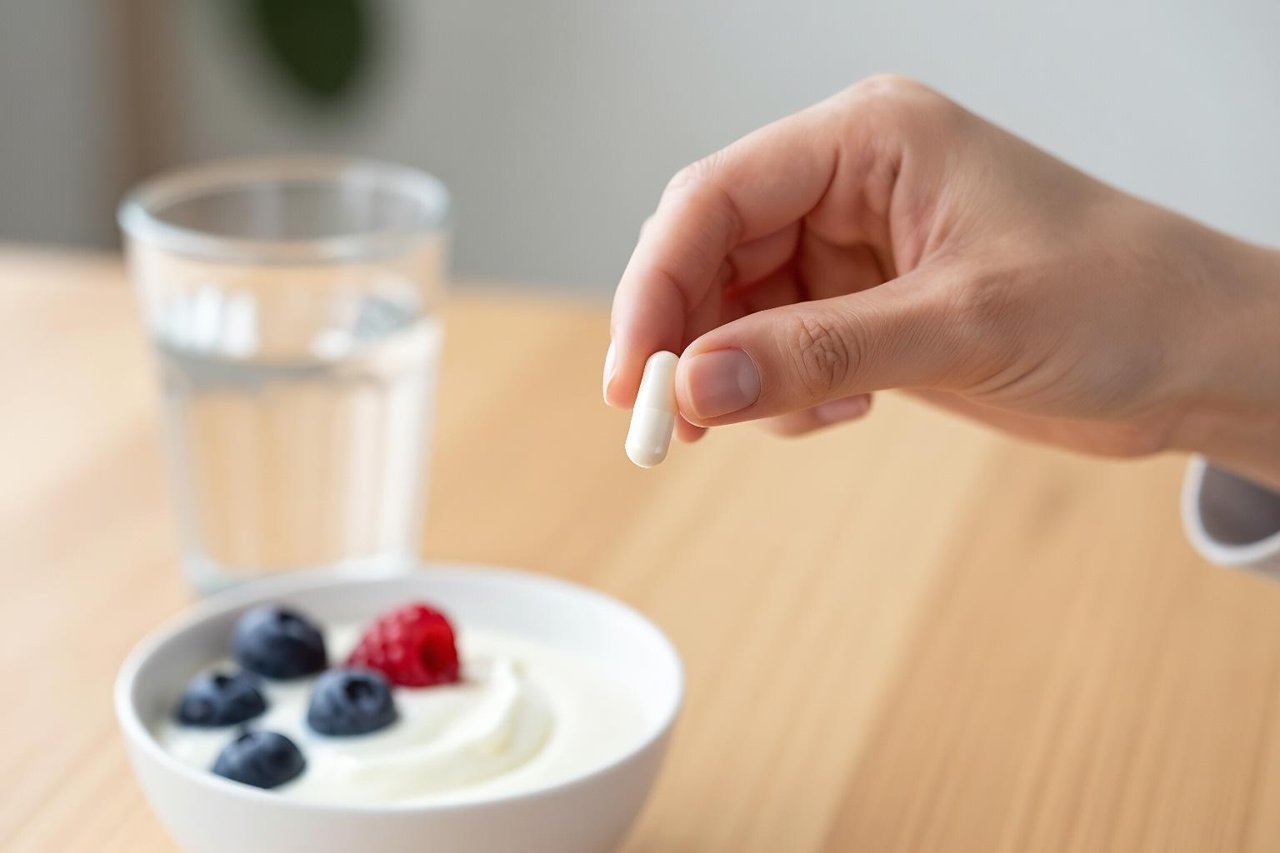
You swallow a probiotic capsule at 7am with a glass of water, then spend the next ninety minutes wondering why your stomach is gurgling through a team meeting. Nothing went wrong. The bacteria still arrived. But you’ve just discovered that when you take a probiotic shapes how your gut reacts to it, and the gurgling is the mildest version of that reaction.
Timing questions come up constantly, and the honest answer isn’t one clock time. It depends on the strain, the format (capsule, powder, fermented food), whether you’ve eaten, and how reactive your digestive system already is.
The Short Answer on the Best Time to Take Probiotics
Most clinical trials with real outcomes behind them use one of two windows: early morning, roughly 20 to 30 minutes before food, or within half an hour of eating a meal. Both produce results. No health body has declared a universal time because researchers care about consistency across weeks, not precision across minutes.
What matters more than the clock is taking it at the same point every day and giving the bacteria a fair chance of surviving stomach acid. Check your label. Enteric-coated capsules and spore-forming strains handle acid well, which makes timing nearly irrelevant. Naked freeze-dried powders do better with a little food as a buffer.
Empty Stomach or With Food?
The case for taking it before breakfast
Gastric acid output is lower in the fasting morning than it is later in the day, so a capsule taken 20 to 30 minutes before your first meal faces a less hostile environment. It’s a reasonable default, especially for acid-sensitive strains, and it’s easy to remember.
The case for taking it with food
Eating temporarily raises the pH inside your stomach and slows emptying, particularly if the meal contains fat. Bacteria get a longer ride through a less acidic space. Several studies on Lactobacillus and Bifidobacterium blends found better survival and higher recovery in stool when the dose was taken within 30 minutes of a meal rather than on a completely empty stomach.
If you want a single rule that covers most products, take your capsule within 30 minutes of starting a meal. Acid buffering is near its peak, and you’re unlikely to forget it.
Where Side Effects Fit Into the Timing Decision
Timing and side effects get searched together for a reason. Most early probiotic complaints, gas, mild distension, a change in stool frequency, aren’t damage. They’re your existing gut community reacting to new arrivals, plus a burst of fermentation as the new strains start producing short-chain fatty acids. That reaction usually peaks in the first hour or two after the dose, which is exactly when a food-buffered environment can take the edge off.
If gas and bloating are already your main problem, strain choice matters as much as timing. Some have genuinely good trial data behind them and others are riding on marketing. A look at the science-backed strains that actually help with bloating will save you a wasted three months.
Side Effects Worth Expecting, and the Ones That Need a Second Look
Normal, dose-related reactions that tend to fade within 3 to 10 days:
- Gas and mild bloating, often worst on days 2 to 5
- Increased bowel noise, especially after the first dose of the day
- A temporary shift in stool consistency in either direction
- Mild nausea if the capsule goes down on a completely empty stomach
- Occasional headache in the first week with some multi-strain blends
Stop and speak to a doctor if you notice hives, facial swelling, fever, severe abdominal cramping, or blood in your stool. People who are immunocompromised, have a central line, or are critically ill shouldn’t start probiotics without medical supervision, because live bacteria carry a small but real infection risk in those groups. Our guide to gut health supplement side effects that appear before any benefit covers the wider picture, including herbal blends commonly stacked with probiotics.
If You’re on Antibiotics, the Two-Hour Rule Matters
Antibiotics don’t distinguish between the pathogen you’re targeting and the Lactobacillus in your capsule. Separate the two by at least two hours, and take the probiotic dose later than the antibiotic rather than alongside it. If you take the antibiotic at 8am and 8pm, 10am and 10pm are sensible probiotic slots.
Antibiotic-associated diarrhoea is one of the few areas where probiotics have solid evidence, so the scheduling effort is worth it. Expect some looseness in the first few days regardless, and mention anything lasting beyond a week to your prescriber.
Strain Choice Changes the Timing Answer
Spore-forming species such as Bacillus coagulans and Bacillus subtilis are built to survive acid and can be taken whenever suits you. Newer strains behave differently again. Akkermansia muciniphila, which feeds on gut mucus and is linked to metabolic health, is often sold as a pasteurised formulation where timing barely affects survival, though consistency still seems to matter for results.
Women’s blends with Lactobacillus crispatus or L. rhamnosus GR-1 are a separate conversation, because the target isn’t only the gut. For those, strain identity and acid protection beat clock precision. There’s a practical primer on choosing a women’s probiotic without triggering side effects if that’s your situation, and a deeper look at vaginal probiotics and how to keep a healthy balance if vaginal health is the goal.
A Two-Week Test for Finding Your Own Best Time
You don’t need a lab. You need two weeks and a two-line note on your phone.
- Week one: take your usual dose within 30 minutes of starting breakfast. Each evening, rate gas, bloating and stool changes from 1 to 5.
- Week two: same dose, same product, but 20 to 30 minutes before your first food. Rate the same three things.
- Compare. If the scores are identical, keep whichever routine you’ll actually stick to.
A few details make that test cleaner. Halve the label dose for the first week if the product is new to you, and increase only once symptoms settle. Keep the rest of your diet steady, because a sudden run of beans or a course of antibiotics will drown out any timing signal. If you travel, keep the dose on your home time zone rather than shifting it, since the bacteria don’t care about local time but your gut rhythm does.
One last thing worth knowing. Plenty of people feel nothing in either week, and that’s a legitimate result. Probiotics aren’t a stimulant and there’s no rush to feel. If you’ve run six weeks at a consistent time with a well-evidenced strain and noticed no change, timing was never your bottleneck, and the money is better spent on fibre, fermented foods and sleep.
