 1-800-656-4211




Blog
Ubiquinol Supplement: What It Is, Who Actually Benefits, and How to Take It

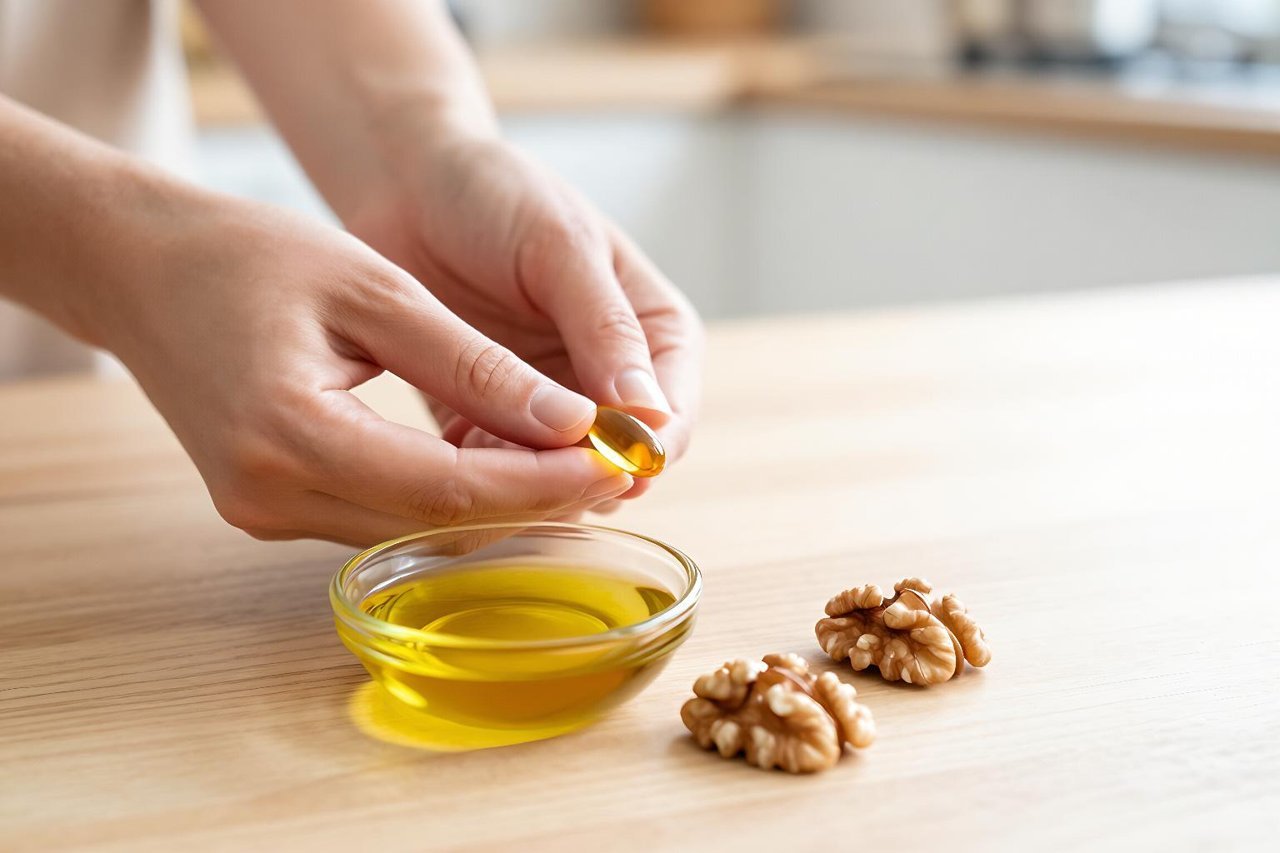
Coenzyme Q10 has been sold in health food shops since the 1970s, but the version most people recognise, ubiquinone, isn’t the form your cells actually use. Ubiquinol is. Your body converts ubiquinone into ubiquinol before it can do anything useful, and that conversion slows down as you age. That single fact explains why ubiquinol supplements exist at all, and also why they cost roughly two to three times as much as the older ubiquinone capsules sitting on the same shelf.
Whether that premium is worth paying depends on details the label usually doesn’t explain. Here is what ubiquinol does, who benefits from it, what a sensible dose looks like, and how to tell a good product from an overpriced one.
What ubiquinol actually is
Ubiquinol is the reduced, electron-rich form of CoQ10. It lives inside the mitochondria, the compartments in your cells that turn food into usable energy. There it shuttles electrons along the respiratory chain, the process that produces ATP, the molecule your muscles, heart, and brain run on.
It also works as a fat-soluble antioxidant, protecting cell membranes and LDL cholesterol from oxidative damage. Heart muscle is packed with mitochondria, which is why CoQ10 shows up there in higher concentrations than almost anywhere else in the body.
Your body makes CoQ10 from scratch and absorbs a little from food. The richest sources are organ meats, fatty fish like sardines and mackerel, beef, and, to a lesser degree, soybean oil and nuts. A typical diet supplies somewhere between 3 and 6 mg a day. Supplements deliver 50 to 200 mg, which tells you something about the gap between food and capsules.
Ubiquinol vs ubiquinone: the difference that matters
Ubiquinone is the oxidised form. It’s stable, cheap to manufacture, and what most clinical trials used. Once you swallow it, your body reduces it to ubiquinol using an enzyme called NAD(P)H quinone oxidoreductase. Young, healthy people do this efficiently.
Ubiquinol is chemically less stable, so manufacturers have to protect it from oxygen and light. That’s part of the cost. In exchange, you skip the conversion step. For the full picture of how these two forms compare in practice, this breakdown of the active form of CoQ10 and what the research says is worth reading before you buy.
Here’s the part marketing tends to gloss over. About 90% of the CoQ10 circulating in a healthy adult’s bloodstream is already ubiquinol. Small studies from the 2000s reported that ubiquinol absorbed better than ubiquinone in older adults, sometimes by a wide margin. Independent comparisons have found the gap much smaller, and occasionally nonexistent, especially when ubiquinone is dissolved in oil.
The honest answer: ubiquinol is the more bioavailable form for some people, particularly those over 60 or taking statins, but it isn’t magic. A well-formulated ubiquinone softgel can perform respectably too.
Who tends to benefit most from a ubiquinol supplement
CoQ10 isn’t a vitamin. You can make it, and you do, until you can’t keep up. The groups where that gap shows up are fairly well defined.
People taking statins
Statins work by blocking HMG-CoA reductase, an enzyme in the same pathway your body uses to synthesise CoQ10. Blood levels typically fall 30 to 50% within a few weeks of starting a statin. Some people notice muscle aches or fatigue alongside that drop. The evidence on whether CoQ10 relieves statin-related muscle symptoms is mixed, with larger trials leaning toward modest or no benefit, though individual responses vary.
Adults over 60
CoQ10 production peaks in your twenties and declines steadily after that. By 80, tissue levels can be roughly half those of a young adult. Conversion of ubiquinone to ubiquinol also slows, which is the strongest argument for choosing the reduced form later in life.
People with heart conditions, under medical care
The Q-SYMBIO trial, published in 2014, gave 420 people with moderate to severe heart failure either 300 mg of CoQ10 or a placebo daily for two years. The CoQ10 group had fewer major cardiovascular events and lower mortality. That’s a meaningful result, though it used ubiquinone and remains a single trial. Anyone with heart failure should treat supplements as an addition to prescribed treatment, never a replacement, and talk to their cardiologist first.
Fertility and migraine research
Smaller studies have looked at CoQ10 for egg and sperm quality, typically at 200 to 600 mg daily for several months, with encouraging but preliminary results. Migraine prevention trials often use 100 mg three times a day, and there is a reasonable body of evidence there.
If you’re weighing ubiquinol against other options in the same aisle, this guide to antioxidant supplements that actually work is a useful filter for separating evidence-backed picks from hype.
How much to take, and how to take it
Doses in published research cluster between 100 mg and 300 mg per day. For general support, 100 to 200 mg is a common starting point. For statin users or older adults, 200 mg daily shows up frequently in the literature.
- Take it with fat. CoQ10 is fat-soluble. A capsule swallowed with a meal containing 10 to 15 grams of fat absorbed several times better than the same capsule taken on an empty stomach.
- Split the dose if you can. Absorption gets less efficient at higher single doses, so 100 mg twice daily often beats 200 mg once.
- Be patient. Blood levels take two to four weeks to plateau. Judging a supplement after five days tells you nothing.
- Morning or midday is easier. Some people find evening doses mildly stimulating and sleep worse.
What the research does and doesn’t show
Solid ground: CoQ10 supplements reliably raise blood CoQ10 levels, and they help correct the deficiency caused by statins or certain rare genetic conditions. Reasonably strong: modest benefits in heart failure and migraine prevention.
Thinner ground: claims about athletic performance, general anti-aging effects, and fatigue in otherwise healthy young adults. Trials in those areas tend to be small and inconsistent. CoQ10 is not a stimulant, and most healthy 30-year-olds won’t feel anything obvious from taking it. If you want to know which of the people around you genuinely needs the active form, this guide on who needs ubiquinol most covers the subgroups in more depth.
How to pick a ubiquinol supplement that isn’t a waste of money
- Look for oil-based delivery. Softgels with a fat carrier such as medium-chain triglycerides or olive oil beat dry powders and hard tablets.
- Check the form on the label. It should say ubiquinol, often listed as Kaneka Ubiquinol, rather than “CoQ10” alone.
- Ignore absorption multipliers. Claims of 8x or 10x absorption rarely come from head-to-head human trials.
- Buy from brands that publish certificates of analysis. CoQ10 oxidises over time, and heat during shipping accelerates it.
- Skip megadoses for their own sake. There’s little evidence that 400 mg beats 200 mg for most people.
Side effects, interactions, and who should ask a doctor first
Ubiquinol is generally well tolerated. The most common complaints are mild stomach upset, nausea, or loose stools, usually at doses above 300 mg. Taking it with food reduces most of that.
The bigger issue is interactions. CoQ10 can reduce the effect of warfarin, a blood thinner, because it has a structural similarity to vitamin K. Anyone on anticoagulants needs medical supervision. It may also interact with blood pressure medications, chemotherapy drugs, and thyroid medication. If you are pregnant, breastfeeding, or managing a chronic condition, get a clinician’s view before starting.
Tracking whether it’s actually working
Supplements like this are easy to take for years without ever asking whether they help. Set a benchmark before you start: note your energy levels, any muscle soreness, sleep quality, or migraine frequency for two weeks. Then take ubiquinol consistently for eight to twelve weeks and compare. If nothing changes and you’re not in a group with a clear reason to supplement, that’s useful information, and you can put the money elsewhere.
If you do notice a difference, the practical next step is a blood test. Some doctors will order a CoQ10 level, and it confirms whether your dose is actually raising your numbers or just passing through. A 200 mg daily dose that shifts your plasma level from around 0.7 to 1.5 micrograms per millilitre is doing its job. One that changes nothing means you’re either taking it without fat, or the product isn’t what it claims to be.
