 1-800-656-4211




Blog
Ubiquinol CoQ10: The Active Form, Who Needs It, and What the Research Says

Your heart burns through more energy per gram of tissue than almost any other organ in your body, and coenzyme Q10 sits at the centre of the machinery that produces it. That same molecule is also behind two of the most confusing labels in the supplement aisle: ubiquinone and ubiquinol. Most shoppers assume the second one is pure marketing. It isn’t, exactly, but the real story is more interesting than “ubiquinol is just stronger.”
Ubiquinone vs ubiquinol: what two extra hydrogens change
Both compounds are the same molecule, CoQ10, with the same 50-carbon tail that anchors it inside your cell membranes. The difference sits in the ring at the head. Ubiquinone carries two extra oxygen bonds. Ubiquinol carries two hydroxyl groups in their place, which lets it hand off electrons directly. That electron transfer is the whole point of CoQ10 in the mitochondrial electron transport chain.
Your body flips between the two all day
Cells shuttle constantly between the oxidised and reduced forms depending on what the mitochondria need. Enzymes such as NQO1 reduce ubiquinone into ubiquinol, and other reactions push it back the other way. In a healthy young adult, more than 90% of the CoQ10 circulating in blood is already in the ubiquinol form. Your body does the conversion itself, and does it well.
Where that conversion starts to slip
NQO1 activity and overall mitochondrial capacity decline with age. Older adults, people with chronic inflammatory conditions, and those under sustained oxidative stress tend to show a lower ubiquinol-to-ubiquinone ratio in their blood. Some people also carry genetic variants that blunt the enzyme’s output. When that happens, taking the pre-reduced form skips a step the body is already struggling with. That is the entire case for ubiquinol in one sentence.
What ubiquinol actually does inside your cells
It has two jobs, and both are unusually well defined compared with most supplement claims:
- Energy production. CoQ10 ferries electrons between Complexes I, II and III of the electron transport chain. No CoQ10, no ATP. Muscle, heart and brain tissue, the biggest energy consumers, hold the highest concentrations.
- Membrane protection. Ubiquinol is a lipid-soluble antioxidant that sits inside cell membranes and LDL particles, where it stops lipid peroxidation before it cascades. It also recharges vitamin E back into its active form after vitamin E has been spent.
That second role is why CoQ10 gets filed under antioxidants, though it behaves quite differently from the generic blends on shelves. If you want a wider picture of which of those compounds have real evidence behind them, it’s worth reading up on antioxidant supplements that actually work and how to choose one.
Who tends to notice the most from ubiquinol
Response is not uniform. The people who report the clearest changes tend to fall into a few groups:
- Adults over 60. Natural CoQ10 levels drop steadily from your late thirties onward, and conversion efficiency drops with them.
- Statin users. Statins block the mevalonate pathway, which produces both cholesterol and CoQ10. Plasma levels often fall 30 to 40%.
- People with heart failure or cardiomyopathy. This is the group with the strongest clinical trial data, always under a cardiologist’s supervision.
- Frequent migraine sufferers. Several small trials used 100 mg three times daily and reported meaningful reductions in migraine days.
- Anyone with diagnosed mitochondrial dysfunction or a known NQO1 variant.
A healthy 30-year-old taking it for general wellness is unlikely to feel much. That’s not a flaw in the product, just a mismatch between the supplement and the person taking it.
The statin question, honestly answered
Statins reduce CoQ10 levels, and that part is not controversial. Whether those lower levels cause the muscle aches that push people off statins is genuinely unsettled. Some randomised trials of CoQ10 for statin-associated muscle symptoms found no difference from placebo, while others reported modest improvements. What most cardiologists do in practice is suggest a trial of 100 to 200 mg daily for a few months when someone has real symptoms and no other explanation. If it helps, keep going. If nothing changes after 12 weeks, it probably won’t.
Ubiquinol CoQ10 dosage: how much and how to take it
Ubiquinol is usually dosed lower than ubiquinone because it arrives already reduced. Typical daily ranges land at 100 to 200 mg for general use, with 300 mg appearing in clinical heart failure protocols. The equivalent ubiquinone dose for the same blood levels is often 200 to 400 mg. If you’re switching from one to the other, expect to roughly halve the number on the label.
Take it with fat, every time
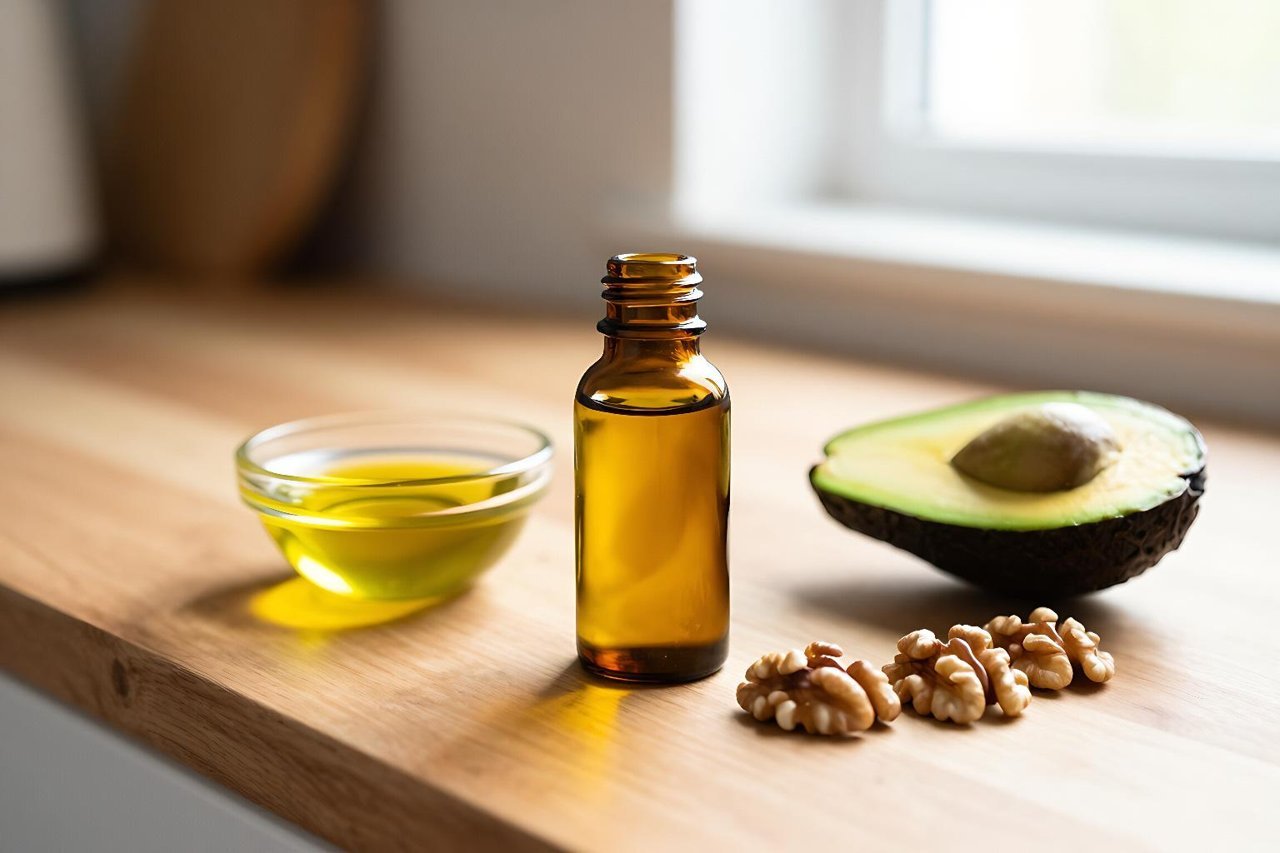
Oral CoQ10 absorption is poor, somewhere between 1% and 3% of the dose in most studies. Fat changes that significantly. A tablespoon of olive oil, two eggs, or half an avocado alongside your capsule can improve uptake several-fold compared with taking it on an empty stomach. Plasma levels typically peak about five to six hours later, so with your largest meal of the day makes sense. Doses above 200 mg are worth splitting into two servings to smooth out absorption.
Form and storage matter more than you’d think
Ubiquinol oxidises faster than ubiquinone when exposed to heat, light and air. Buy it as a softgel suspended in an oil base, not as a loose powder or a dry tablet, and keep the bottle somewhere cool and dark rather than on a sunny windowsill. A fishy or rancid smell when you open it is a bad sign.
What the research supports and what it doesn’t
The strongest single data point is the Q-SYMBIO trial, which followed 420 people with moderate to severe heart failure for two years. Those given 300 mg of CoQ10 daily had fewer major cardiovascular events and lower all-cause mortality than the placebo group. That result is why CoQ10 appears in European heart failure guidelines as an adjunct therapy.
Beyond that, the picture is uneven. Migraine prevention looks promising but the trials are small. Blood pressure effects are real but modest, usually a few points. Exercise recovery studies are mixed. Fertility research, particularly around egg quality in women over 35, is interesting but nowhere near conclusive. Head-to-head trials of ubiquinol versus ubiquinone are also thin. The absorption advantage of ubiquinol is fairly consistent across studies, but outcome data showing it produces better health results is limited. If you’re healthy and converting fine, the cheaper form does the same job.
Choosing a ubiquinol CoQ10 product worth the money
This category has more price variation than almost any other supplement, and the differences aren’t always visible on the front of the bottle.
- Check for Kaneka Ubiquinol on the label. The majority of published ubiquinol research uses this yeast-fermented raw material, and it’s the benchmark most manufacturers measure against.
- Read the ingredient list, not the marketing copy. It should say ubiquinol specifically. “CoQ10” alone usually means ubiquinone.
- Look for an oil base such as MCT, olive or flaxseed oil, and a softgel rather than a hard tablet.
- Third-party testing. USP, NSF or a published certificate of analysis from an independent lab. The supplement industry is loosely regulated, and testing is your only real verification of what’s inside.
- Cost per 100 mg. Reasonable pricing runs roughly $0.30 to $0.60. Anything dramatically cheaper is usually ubiquinone in disguise or underdosed.
Fancy delivery systems, liposomal claims and sublingual sprays rarely justify a doubling in price. A well-made softgel taken with a meal does the same work.
How to tell whether it’s working, and who should be careful
Give it 8 to 12 weeks before judging. CoQ10 isn’t a stimulant and you won’t feel it within an hour. The signals people notice first are steadier energy through the afternoon, less muscle soreness after exercise, and a slight improvement in exercise tolerance. Keep a simple note of two or three things you care about, then compare after three months. If nothing has moved, the honest move is to stop rather than keep buying.
Two cautions are worth flagging. CoQ10 has a chemical structure similar to vitamin K, which means it can reduce the effect of warfarin and shift your INR. If you take any blood thinner, talk to your doctor before starting. It can also add to the effect of blood pressure medication, so monitor your readings if you’re on both. In trials, side effects are rare and mild, mostly stomach upset or occasional insomnia at higher doses, and taking it earlier in the day usually fixes the latter.
Match the form to the person. For someone over 60, on a statin, or managing a heart condition, ubiquinol removes a bottleneck their body is already fighting. For a healthy younger adult chasing general antioxidant support, the standard form is cheaper and just as effective. Neither choice is wrong. The mistake is paying premium prices without knowing which situation you’re actually in.
