 1-800-656-4211




Blog
Carrot Benefits: What One Carrot a Day Actually Does for Your Body

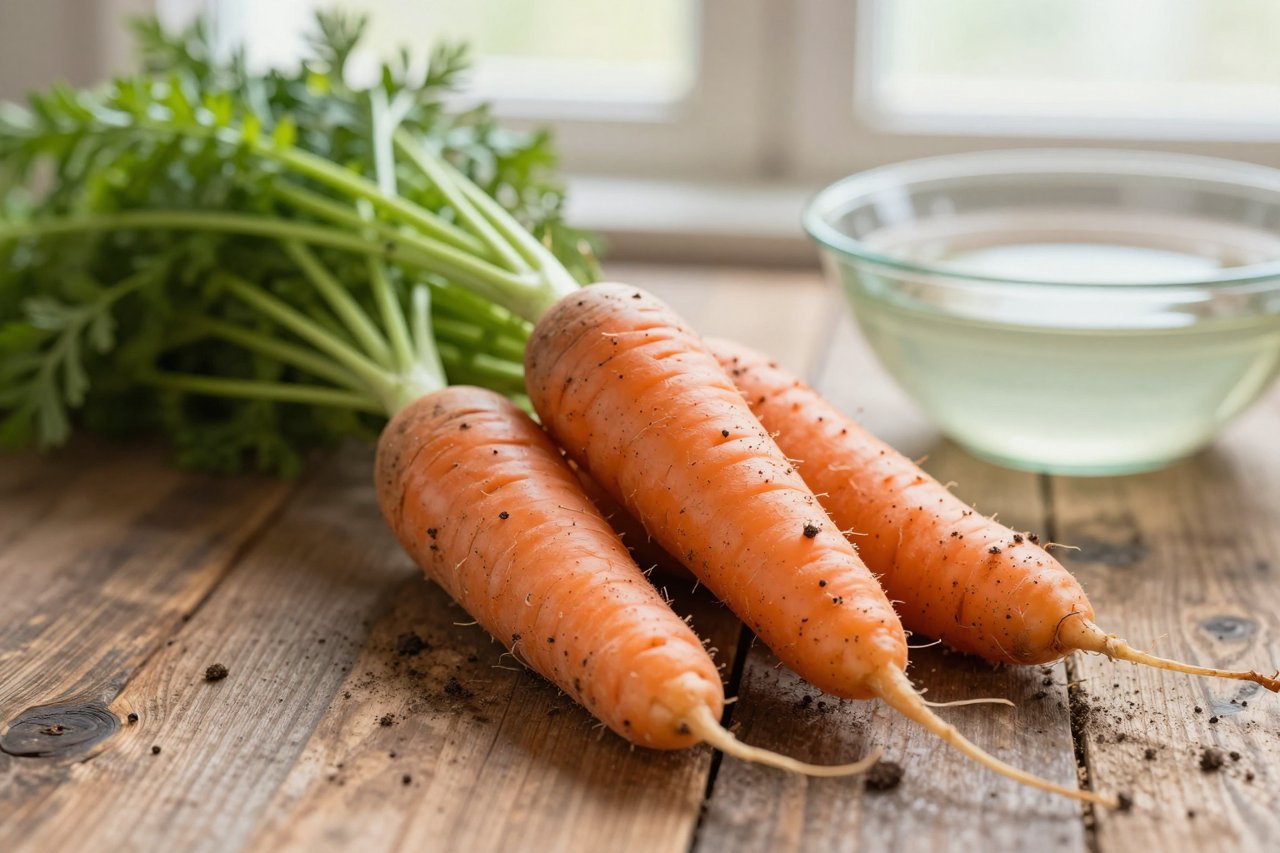
Carrots are the vegetable that quietly keeps its promises. They sit in the crisper drawer for three weeks without complaint, cost less than a chocolate bar, and taste perfectly decent straight from the ground with nothing but a rinse. Cheap, sturdy, and genuinely pleasant to eat, which already makes them one of the most useful things in a kitchen. The nutrition turns out to be more interesting than the old “good for your eyes” line suggests, too, with a few caveats the marketing rarely mentions.
Here’s what the evidence actually says about carrot benefits, including the places where carrots don’t live up to their reputation.
What You’re Actually Eating
A medium carrot weighs around 60 grams. In that you get roughly 25 calories, 1.7 grams of fibre, and about 500 micrograms of vitamin A as retinol activity equivalents. That’s close to half of what most adults need in a day, from a single carrot. Per 100 grams you’re also getting 320 milligrams of potassium and 2.8 grams of fibre.
Beta-Carotene Isn’t Vitamin A Yet
The orange pigment, beta-carotene, is a precursor. Your body has to convert it, and the conversion is inefficient: roughly 12 micrograms of beta-carotene from food yields 1 microgram of usable vitamin A. A 100-gram raw carrot carries about 8,300 micrograms of beta-carotene, which sounds enormous until you apply that 12-to-1 ratio. Genetics, thyroid function, and how much fat you ate alongside the carrot all shift the number further. This is why carrots are a dependable vitamin A source rather than an extraordinary one, and why eating them with a drizzle of oil or a knob of butter genuinely matters.
Eyes: Where the Reputation Comes From
Vitamin A is a building block of rhodopsin, the pigment your retina uses to see in dim light. A real deficiency causes night blindness, and carrots correct that quickly. If your vitamin A status is already normal, though, extra carrots won’t sharpen your vision or help you read in the dark. The myth has an origin worth knowing: British propaganda during the Second World War credited RAF pilots’ night-flying success to carrots, partly to explain away a new radar system and partly to nudge ration-weary households toward vegetables.
Carrots do contain lutein and zeaxanthin, the two carotenoids that collect in the macula and filter blue light, though spinach and kale carry far more. Other deeply coloured sources count too. Goji juice, for instance, is unusually rich in zeaxanthin, which is part of why it keeps appearing in conversations about eye health.
Skin, Sun, and Orange Palms
Beta-carotene settles into your skin, and the effect is measurable. A 2011 study in the journal Evolution and Human Behavior found that participants rated the subtle golden tone from carotenoids as more attractive than a suntan, and the people eating more fruit and vegetables got the better scores. The antioxidant side of that story belongs to a longer list of carrot benefits for health and beauty than most people expect, spanning skin, hair, and nails.
When You’ve Gone Too Far
Eat enough carrots and you will turn orange. Carotenemia shows up first on the palms, the soles, and the creases around your nose. It looks alarming and is completely harmless, fading within a few weeks once intake drops. It generally takes around 20 to 30 milligrams of beta-carotene a day, sustained, which works out at three to five large carrots daily or one big glass of fresh juice.
Your Gut Will Notice
Most of the fibre in a carrot is soluble pectin, which forms a gel in the stomach, slows emptying, and feeds gut bacteria. It’s a modest but reliable contributor to a daily fibre target. If you’re leaning on carrots to get there and still falling short, a soluble fibre supplement can close the gap, though whole vegetables bring vitamins and polyphenols that a powder won’t match. For stubborn constipation specifically, fibre supplements for constipation are worth understanding before you buy anything.
One caution: raw carrots are firm, and for people with IBS or a sensitive gut the insoluble fibre can trigger bloating. Cooked, mashed carrots are usually tolerated far better.
Blood Sugar: Raw and Cooked Split Ways
Raw carrots have a glycemic index around 16, which is very low. Boiled carrots land nearer 39 to 49, and puréed or juiced carrots higher still, because cooking and blending rupture cell walls and free the sugars. That sounds worse than it is. A cup of cooked carrot carries about 8 grams of carbohydrate, so the glycemic load per realistic serving stays small. Pairing them with protein or fat flattens the curve further. Larger observational studies have linked higher carrot intake with lower type 2 diabetes risk, though people who eat carrots regularly differ from those who don’t in plenty of other ways.
Heart and Blood Vessels
The soluble fibre in carrots binds bile acids in the gut, which pushes the liver to pull cholesterol out of the bloodstream to build replacements. It’s a small effect per carrot and a meaningful one across a whole diet. Add 320 milligrams of potassium per 100 grams, a mineral that helps counter sodium’s effect on blood pressure, plus carotenoids that slow LDL oxidation, and carrots earn a quiet place in heart-healthy eating. Purple and black varieties bring anthocyanins, which have shown modest blood pressure improvements in small trials.
Cancer: Encouraging Signals, Not Proof
Meta-analyses have found that people eating more carrots tend to have lower rates of stomach, prostate, lung, and breast cancers. These are observational studies, so they show association rather than cause. The supplement trials went the other way: the CARET and ATBC studies found that high-dose beta-carotene pills actually raised lung cancer rates in smokers and asbestos-exposed workers. The lesson isn’t that carotenoids are dangerous. It’s that isolating one compound from a vegetable behaves differently from eating the vegetable. Other carotenoid-rich foods, from tomatoes to papaya, show similar patterns in the data.
How to Eat More of Them Without Boredom
- Roast them whole at 200°C for 40 minutes with cumin and olive oil. The sugars caramelise and the flavour turns almost sweet.
- Grate raw carrot into slaws with lemon, salt, and a spoon of yogurt. Ten seconds of work, and it keeps for days.
- Pickle ribbons in vinegar, sugar, and a pinch of chilli for a sharp topping on sandwiches or rice bowls.
- Blend a soup with ginger and coconut milk, then finish with lime. Freeze it in single portions.
- Keep a bag in the fridge door, not the bottom drawer. You eat what you see.
Raw or Cooked?
Both have a place. Raw carrots hold onto their vitamin C and their crunch. Cooking raises carotenoid bioavailability substantially, sometimes by more than half, because heat breaks down the cell walls that trap the pigments. Add fat to either version and absorption climbs again, since carotenoids are fat-soluble. Lightly steamed with a glug of olive oil is close to ideal.
Who Should Ease Off
Carotenemia is cosmetic, not dangerous, so orange palms are nothing to worry about. People with a history of oxalate kidney stones don’t need to avoid carrots, which are relatively low in oxalate, but shouldn’t lean on giant daily juices either. Smokers and former heavy smokers are better off getting beta-carotene from food than from high-dose supplements, for the reasons those trials demonstrated. Anyone managing IBS should test cooked carrots before raw.
How Many Carrots a Day Is Reasonable
One or two medium carrots daily, or about a cup of cooked carrot, slots neatly into a five-a-day target without crowding anything else out. That’s enough to matter for vitamin A, fibre, and potassium, and far short of the level that turns your skin orange. Treat carrot juice as an occasional thing rather than a habit, since a glass can carry the sugar of four or five carrots with none of the fibre to slow it down. The simplest version of all: buy a bag, wash them when you get home so there’s no excuse, and eat one while you decide what to cook.
