 1-800-656-4211




Blog
Benefits of Papaya Fruit: What One Cup Really Does for Your Body

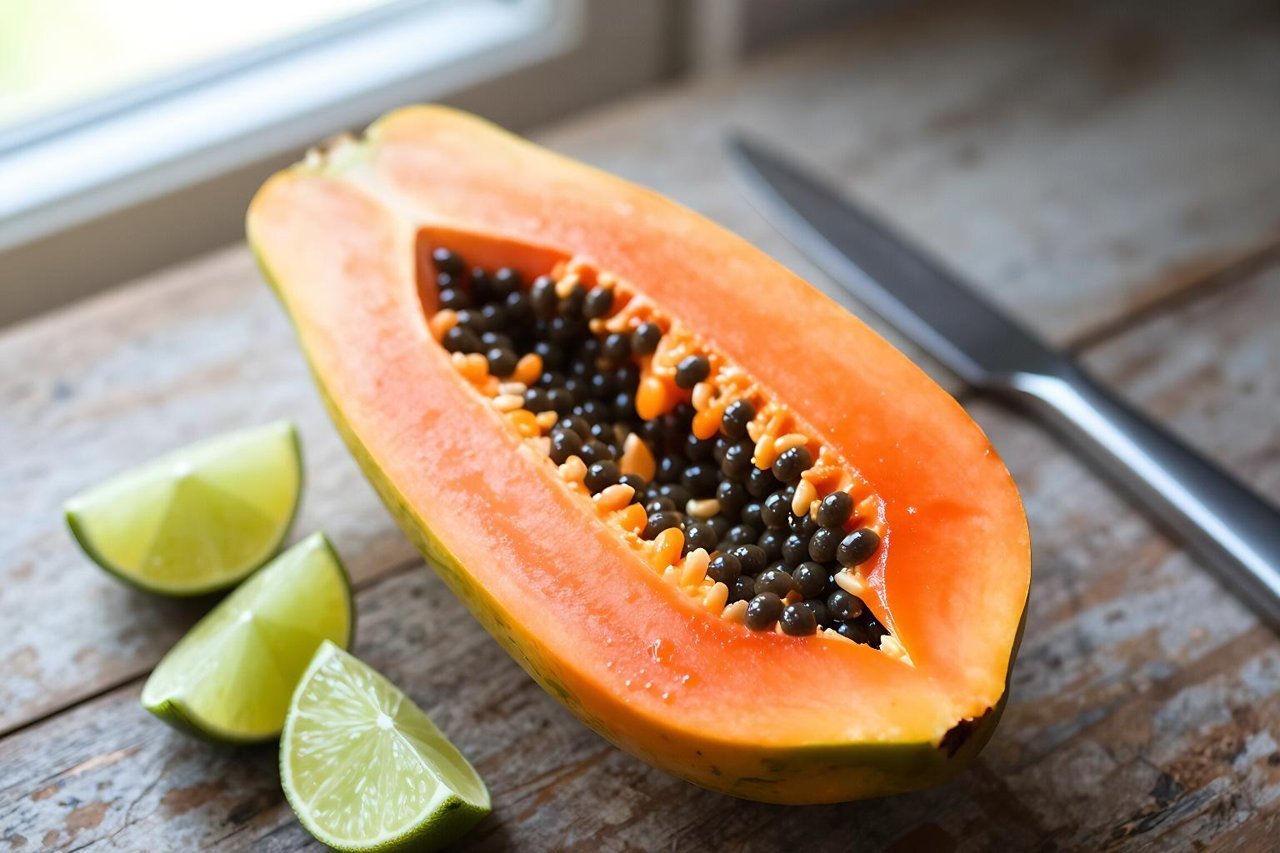
A ripe papaya splits open like a small melon, though it smells closer to peach crossed with melon: sweet, faintly musky, and far softer than mango. In Mexico and Thailand it is breakfast, eaten with a squeeze of lime and nothing else. Nutrition researchers care about it for a different reason. One cup carries more vitamin C than most adults get in an entire day, along with an enzyme that also shows up in digestive supplements and meat tenderisers.
Here is what that translates to inside the body, plus the handful of situations where papaya is better left on the shelf.
The numbers inside a single cup
Vague praise is easy; specifics are more useful. One cup of cubed ripe papaya, about 145 grams, contains:
- 62 calories, 16 g carbohydrate, 2.5 g fibre, 10 g natural sugar
- 88 mg vitamin C, roughly 98% of the daily target for adults
- 360 mg potassium
- 53 mcg folate, plus about 31% of daily vitamin A in the form of beta-carotene
- 1.8 to 5.3 mg lycopene per 100 g, which outpaces a ripe tomato in several varieties
What those figures mean in practice is a fruit you can eat a lot of without much cost. A generous bowl lands under 100 calories, most of the weight is water, and the sugar arrives bundled with fibre rather than on its own.
Papain and the digestion story
Papaya’s signature compound is papain, a protease, which means an enzyme that breaks proteins into smaller pieces. It is concentrated in the green, unripe fruit and in the leaves. That is why cooks across the Caribbean and Southeast Asia have used unripe papaya for centuries to tenderise tough cuts of beef, and why a slice of it after a heavy meal became a folk remedy for that uncomfortably full feeling.
What the evidence actually supports
A few small human trials have tested papaya or papain preparations against bloating and constipation, largely in people with irritable bowel syndrome, and reported modest improvements. The sample sizes are tiny and some funding came from supplement makers, so treat those results as interesting rather than settled. The 2.5 g of fibre in a cup is the less glamorous, more dependable part of the equation: it adds bulk, feeds beneficial gut bacteria, and keeps things moving. If you want the wider catalogue of effects, from wound healing to eye health, there is a fuller look at what this tropical fruit really does for your body.
Vitamin C, immunity, and better iron absorption
That 88 mg of vitamin C is the headline. It supports immune cell function, feeds collagen production, and helps you pull iron out of plant foods. Eat papaya next to lentils, chickpeas, or spinach and you absorb noticeably more of the iron they contain, which matters a great deal if you eat mostly plants.
Food sources also arrive with company. A pill gives you ascorbic acid and little else; papaya brings folate, potassium, carotenoids, and water along with it. Supplements earn their keep in specific cases, and this guide to which vitamin C supplements actually work and which are just hype sorts the useful ones from the marketing.
Skin, hair, and why papaya ends up in face masks
Every papaya exfoliating mask on a shelf is selling two ideas. The first is that papain loosens dead protein on the surface of the skin, giving you a gentle chemical exfoliation. The second, more consequential one is that vitamin C is a required cofactor for collagen synthesis. Without enough of it, the body cannot build collagen properly, which shows up in skin that heals slowly and loses firmness over time. Lycopene and beta-carotene add antioxidant coverage against UV-driven free radicals, though no fruit replaces sunscreen.
Papaya also turns up in hair treatments and traditional beauty routines across Asia and Latin America, often for scalp soothing or shine. There is a good roundup of those uses, along with skin and immune angles, in this list of 19 papaya benefits for health and beauty.
Heart health and blood pressure
360 mg of potassium per cup is a meaningful contribution toward the 3,500 mg most adults need each day and rarely get. Potassium blunts the effect of sodium on blood pressure, one reason DASH-style eating plans lean so hard on fruit. The fibre does quieter work too. Soluble fibre binds bile acids in the gut, forcing the liver to pull cholesterol from the bloodstream to make more, which nudges LDL down slightly. Folate adds a third lever by helping keep homocysteine, an amino acid linked to cardiovascular risk, inside a normal range.
None of this makes papaya a treatment for anything. It makes it a sensible habit inside a diet that already has vegetables, legumes, and fish in it.
Blood sugar depends on how ripe it is
Ripe papaya has a glycemic index around 60, which sits in the middle of the scale. The glycemic load of a one-cup serving is low, because most of that cup is water and fibre. For someone managing type 2 diabetes, a cup alongside protein or fat (yoghurt, nuts, eggs) is generally well tolerated. The firmer, less ripe fruit carries less sugar and more papain, so if you are watching glucose, green papaya in a salad beats a heap of the soft ripe kind. Test your own response rather than assuming.
When papaya is not a good idea
- Latex allergy. Papain is a relative of latex proteins, so people allergic to latex sometimes react to papaya with itching, swelling, or in rare cases something more serious. Start with a small amount if that applies to you.
- Unripe papaya in pregnancy. The green fruit contains latex and has a long folk history of being used to bring on labour. It is not worth the risk.
- Papaya seeds. A few scattered over a salad are fine. Large daily doses are another matter, since the seeds contain benzyl isothiocyanate and concentrated extracts have caused problems in animal studies.
- Papain supplements. If you take blood thinners, talk to a clinician before adding enzyme capsules to the mix.
Choosing one, keeping it, eating it
- Skin mostly yellow-orange with a patch of green near the stem means it will be ready in a day or two.
- Fully yellow and yielding slightly at the base means eat it today.
- Leave it on the counter to ripen, then move it to the fridge once cut; it holds for about five days.
- Halve it lengthways, scrape the seeds out with a spoon, and squeeze lime over the flesh. The acidity sharpens the flavour considerably.
- Firm, underripe fruit is for shredding into green papaya salad with carrot, chilli, fish sauce, and roasted peanuts.
Getting more of it into your week
Blend a cup of flesh with half a banana, the juice of one lime, and coconut water for a smoothie that tastes considerably better than most green ones. Dice it with red onion, coriander, and a little chilli for a salsa that works on grilled fish or in tacos. Freeze cubes on a tray, bag them, and drop a handful into yoghurt when you want something cold and sweet without added sugar. Or keep it simple: a wedge of lime, a pinch of salt, and a spoon.
Buy one that feels heavy for its size and smells faintly sweet at the stem end. Whatever variety is in season near you will taste better than any of this theory anyway.
