 1-800-656-4211




Blog
Benefits of Graviola Soursop: What This Spiky Green Fruit Can Really Do

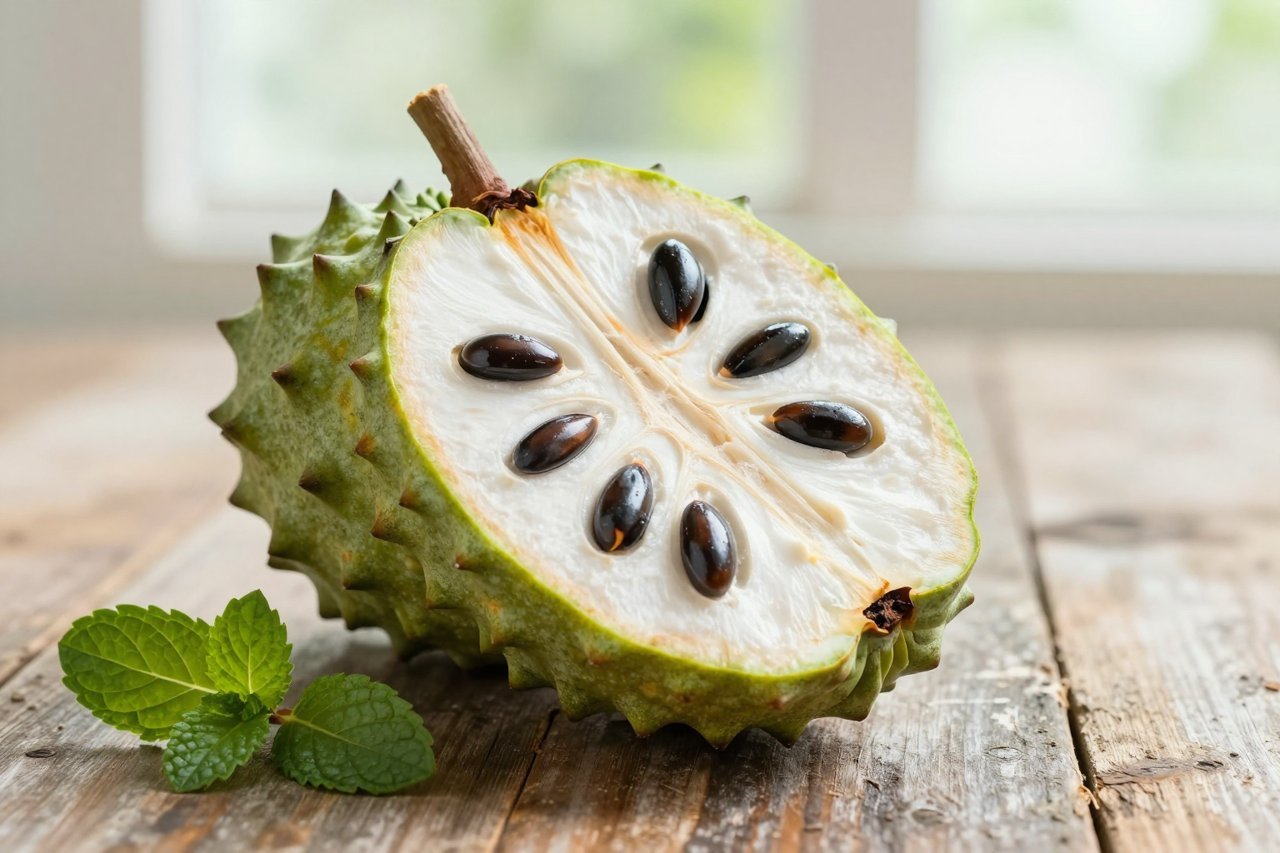
Cut open a ripe graviola and you’ll find soft, snow-white pulp that tastes like a mash-up of strawberry, pineapple and coconut, with a tangy edge that explains the English name “soursop.” Brazilians call it graviola. Spanish speakers call it guanabana. In markets across Southeast Asia it’s simply soursop. Whatever the label, the fruit has picked up a reputation far bigger than its shelf life, which is roughly two days on the counter before it turns soft.
That short window is one reason graviola gets drunk more often than eaten, as juice, smoothies, sorbet, and as a tea brewed from the leaves. The other reason is the pile of health claims attached to it. Some hold up under scrutiny. Plenty don’t. Here’s a clear-eyed look at the benefits of graviola soursop, what’s actually behind them, and how to use the fruit without overdoing it.
What’s Actually Inside a Graviola
The edible pulp is about 80% water and delivers roughly 60 to 70 calories per 100 grams. Not much, but the fruit isn’t nutritionally empty either. A 100g serving gives you a solid hit of vitamin C, enough to cover a decent share of an adult’s daily requirement, plus potassium, magnesium and around 3 grams of fibre.
The compounds that generate most of the excitement sit in the leaves, seeds and bark. These are acetogenins, a family of natural substances studied for their effects on cells. They’re also the reason graviola leaf tea deserves more caution than your average herbal brew, which I’ll come back to.
A Serious Antioxidant Payload
Vitamin C is the headline antioxidant here, but it isn’t the only one. The pulp carries polyphenols and flavonoids that help neutralise free radicals, the unstable molecules that build up from pollution, UV exposure, fried food and ordinary metabolism.
Antioxidants matter most when your diet is otherwise thin on fresh produce. If you already eat a wide range of fruit and vegetables, graviola is a pleasant addition rather than a rescue mission. If you don’t, a glass of fresh soursop juice is a low-effort upgrade. The antioxidant and vitamin profile of soursop fruit is broader than most people expect for something that tastes this good.
Anti-Inflammatory Effects
Chronic, low-grade inflammation sits behind a lot of what we shrug off as “just getting older”: stiff joints, lingering fatigue, stubborn blood pressure readings. Lab studies on graviola extracts have shown measurable anti-inflammatory activity, particularly from the leaf compounds, though human trials remain thin.
What’s realistic right now is simpler. Swapping a sugary soda for soursop juice removes a pro-inflammatory input even if the fruit itself does nothing dramatic. That math alone is usually worth it.
Digestion and Gut Comfort
That 3 grams of fibre per 100g does quiet work. Fibre feeds gut bacteria, keeps things moving and helps you feel full longer after a meal. Graviola also contains small amounts of natural enzymes and organic acids, which is why traditional guanabana remedies lean so heavily on the leaf tea for stomach complaints.
There’s no strong clinical evidence that a cup of soursop tea digests your dinner for you. Still, a warm, mildly bitter brew is a gentler nightcap than a second glass of wine.
Blood Sugar and Metabolism
This is one of the more interesting threads in the research. Some studies on graviola extracts point to improved insulin sensitivity and lower blood glucose in animal models. The fruit itself is low in calories and moderate in sugar, so it fits comfortably into most diets.
One caveat worth taking seriously: if you’re on diabetes medication, speak to your doctor before making graviola a daily habit. Anything that genuinely nudges blood sugar can stack with your prescriptions, and “natural” is not the same as “harmless alongside medication.”
Immune System Support
Vitamin C plays a real role in immune function, supporting the production and activity of white blood cells. A single cup of fresh soursop juice can deliver a meaningful dose of it. That’s not a shield against colds, but it’s a reasonable everyday contribution.
Beyond vitamin C, it pays to separate marketing from mechanism. Many products sold as graviola capsules promise immune benefits nobody has demonstrated in humans. For a grounded overview of what soursop actually does for the body, the evidence sits far closer to “good fruit” than “miracle supplement.”
Sleep, Nerves and Mood
Across the Caribbean and Latin America, soursop leaf tea has a long history as a sleep aid and a calmer of frayed nerves. Some of the plant’s alkaloids carry a mild sedative reputation. Whether the effect is pharmacological or simply the ritual of a warm drink before bed is hard to untangle, and honestly, either way you get something out of it.
If you want to try it, keep the dose low and don’t pair it with sedatives or alcohol.
How to Actually Eat It
The pulp is best cold. Warm soursop tastes flat and slightly cloying, so chill the fruit before you open it. A few practical ways to use it:
- Fresh with a spoon, seeds pulled out as you go
- Juiced with water or milk and a squeeze of lime, then strained to catch stray seeds
- Blended into smoothies with mango or banana to balance the tartness
- Frozen as sorbet, ice pops or a yoghurt-style dessert
- As leaf tea, steeped briefly, one cup at a time
One rule matters more than the rest: never crush or blend the black seeds. They’re toxic and should be discarded whole.
The Safety Side Nobody Mentions Enough
Graviola seeds and leaves contain annonacin, an acetogenin linked in some epidemiological research to atypical Parkinsonism among people who consumed large amounts of the fruit and its teas over many years. The occasional serving of pulp is not the concern. Heavy, long-term, high-dose use of seeds and leaves is.
Sensible ground rules: stick to the pulp for regular eating, treat leaf tea as an occasional drink rather than a daily litre, and avoid graviola supplements entirely if you’re pregnant, breastfeeding, on blood pressure or diabetes medication, or managing a neurological condition.
Buying and Storing a Good One
A ripe graviola gives slightly under gentle pressure, like a ripe avocado, and smells faintly sweet near the stem. Rock-hard fruit needs two to four days at room temperature; once it yields, move it to the fridge and eat within a day or two. If you’re buying juice or frozen pulp instead, check the label for added sugar, since commercial soursop nectar often carries as much as a soft drink.
Frozen pulp is genuinely the practical option for most people outside the tropics. It keeps the flavour, skips the two-day countdown, and lets you portion out exactly what you need rather than racing a whole fruit to the finish line.
