 1-800-656-4211




Blog
Soursop Fruit Benefits: What This Spiky Tropical Fruit Really Does for Your Body

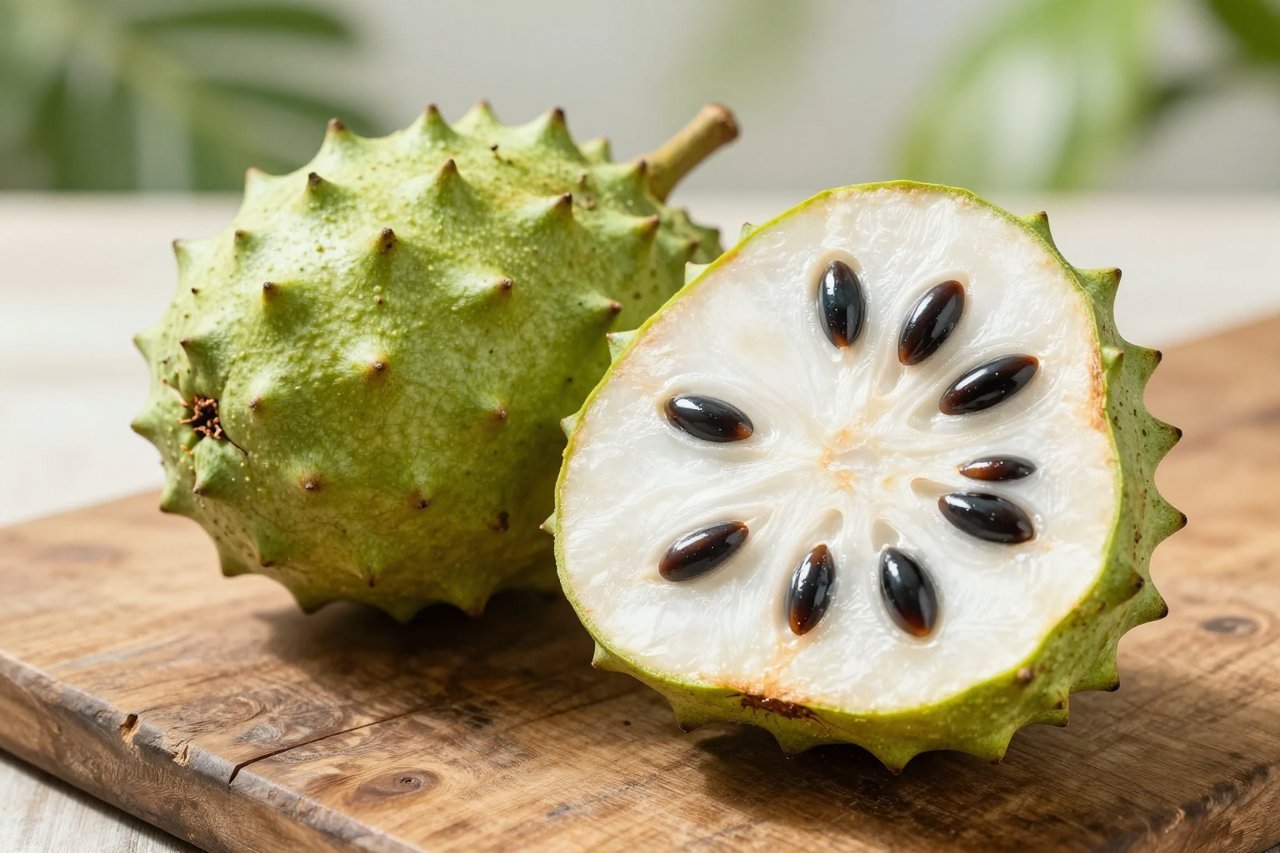
A ripe soursop looks like it belongs in a cartoon. Lumpy, dark green, studded with soft spines and heavy enough to bruise your foot if you drop it, it doesn’t exactly invite you to take a bite. Cut one open and the story changes. The flesh is pale and creamy, and it smells like pineapple with a strawberry finish.
In the Caribbean it’s guanábana. In Brazil, graviola. In the Philippines, guyabano. Same fruit, a dozen names, and several centuries of use as both dessert and medicine. The modern interest, and most of the research, is about the second part.
Soursop, Guanábana and Graviola: One Fruit, Many Names
Soursop comes from Annona muricata, a small evergreen tree native to the Caribbean, Central America and northern South America. It grows across the tropics now, from Nigeria to Indonesia, which is why your neighbour, your grandmother and a food blog may each call it something different.
One thing worth saying early: much of what gets claimed about soursop comes from traditional use and laboratory studies rather than large human trials. That doesn’t make it worthless, but it does mean dramatic headlines deserve a raised eyebrow. If you grew up calling it guanábana, the guanábana side of the story will feel familiar, because it’s the same plant with the same uses.
What’s Actually in a Soursop?
Strip away the folklore and you still have a genuinely nutritious fruit. A 100-gram serving of raw pulp, roughly half a cup, gives you:
- Calories: about 66
- Carbohydrate: 16.8 g, including 3.3 g of fibre
- Vitamin C: around 20 mg, a little over a fifth of an adult’s daily requirement
- Potassium: 278 mg, roughly what a small banana provides
- Magnesium: 21 mg, plus smaller amounts of thiamine, niacin, iron and calcium
- Water: about 80%
Then there are the phytonutrients: phenolic acids, flavonoids and a group of compounds called acetogenins. Acetogenins concentrate in the leaves and seeds rather than the flesh, and they are the main reason soursop attracts so much attention in laboratory research.
Antioxidants and Everyday Cell Protection
Vitamin C is the headline antioxidant here, but it isn’t working alone. The phenolic compounds in soursop pulp have shown free-radical scavenging activity in test-tube studies, and animal research has found that soursop extracts can raise antioxidant enzyme levels in the body. Promising, though a test-tube result doesn’t automatically become a health benefit for someone eating the fruit on a Tuesday.
What you can count on more confidently is the vitamin C itself. At around 20 mg per 100 g it supports collagen production, helps your body absorb iron from plant foods, and plays a role in immune cell function. Eat soursop alongside lentils or spinach and you quietly improve the iron you take in from that meal.
Inflammation, Aches and Traditional Pain Relief
Across the Caribbean and Latin America, soursop leaves are brewed into tea for rheumatism, joint pain and general aches. It’s one of the most consistent traditional uses of the plant, and there’s a thread of science underneath it: animal studies of Annona muricata leaf extracts have shown measurable anti-inflammatory effects.
Human evidence is thin. If you want the fuller picture of how that reputation developed, what soursop actually does for the body goes through it in more detail.
Fibre, Digestion and Gut Comfort
One cup of soursop pulp carries roughly 7 grams of fibre, more than a quarter of what many adults manage in an entire day. That fibre feeds gut bacteria, slows digestion and keeps things moving.
Curiously, traditional medicine uses soursop for both loose stools and constipation. Unripe fruit and leaves are astringent, which is why they turn up in remedies for diarrhoea in West Africa and the Caribbean. Ripe fruit, higher in soluble fibre and water, leans the other way. It’s a neat illustration of how much ripeness changes what a plant does.
Blood Sugar: Interesting, but Handle With Care
Several animal studies have found that soursop leaf and fruit extracts lower blood glucose, sometimes substantially. The mechanism isn’t fully understood and human trials are essentially absent.
Eating the fruit is a different question from taking a concentrated extract. With 3.3 g of fibre per 100 g and a moderate sugar load, a sensible portion is unlikely to spike anyone. If you take insulin or a sulfonylurea, though, adding large amounts of soursop, particularly leaf tea or capsules, could push your glucose lower than expected. Test your levels and talk to your doctor rather than guessing.
The Leaves, the Tea and Sleep
In Jamaica, Haiti and much of Latin America, soursop leaf tea is the go-to for a restless night. Animal research supports the idea that leaf extracts have a sedative effect, with studies in mice showing prolonged sleep time. There’s no equivalent human trial to hang a firm recommendation on.
If you try the tea, treat the leaves like any herbal infusion: steep a couple of fresh or dried leaves in hot water for five minutes, drink it in the evening, and don’t make it a strong daily habit. The next section explains why that last point matters more for soursop than it would for peppermint.
How to Choose, Store and Eat One
A good soursop is heavy for its size and gives slightly when you press between the spines. Rock-hard fruit needs two to four days on the counter. Once it softens and smells sweet, move it to the fridge and eat it within three days. Black patches near the stem are normal; deep, weeping bruises are not.
To eat it, halve the fruit lengthways, scoop the flesh with a spoon, and pull out every black seed. The seeds are hard, glossy and not edible. From there:
- Blend the flesh with milk or coconut water (Cuba’s champola is the classic version)
- Add it to smoothies with banana and lime, which cuts the sweetness
- Churn it into sorbet or ice cream, where the creamy texture does most of the work
- Toss it into fruit salad with a squeeze of lime to stop browning
Safety: Where Soursop Deserves Respect
Soursop seeds contain annonacin, a compound that is toxic in meaningful doses. Swallow them whole and they pass through. Crush or blend them into a smoothie and you’re releasing something you don’t want. Strain your juice.
There’s a bigger caution around concentrated products. An epidemiological study in Guadeloupe linked long-term, heavy consumption of Annona muricata, including leaf tea and bark preparations, to an atypical form of parkinsonism in older men. It’s an association rather than proof of cause, and those men were consuming far more than a casual fruit eater would. Even so, it’s the reason sensible advice points to enjoying soursop as food and skipping mega-dose leaf, bark or seed supplements.
- Pregnancy and breastfeeding: skip supplements and heavy leaf tea; there isn’t enough safety data.
- Diabetes: monitor blood sugar if you eat the fruit regularly or drink the tea.
- Blood pressure medication: soursop may have a mild blood-pressure-lowering effect, so watch for dizziness.
- Parkinson’s disease or a family history: moderate your intake and avoid concentrated extracts.
Making Room for Soursop Without the Hype
A realistic target is one portion a day at most: a cup of fresh pulp, a glass of strained juice, or a smoothie a few times a week. That gets you the vitamin C, potassium, fibre and polyphenols without wandering near the doses that raised questions in the research.
Buy the fruit when it’s in season and cheap, which in the Caribbean means late summer into autumn and in much of West Africa and Southeast Asia means most of the year. A whole soursop costs a fraction of a bottle of capsules, and it tastes considerably better. If you’re weighing the two up, the case for eating the whole fruit instead is easy to make.
Chilled, scooped straight from the shell with a squeeze of lime, it needs no justification at all.
