 1-800-656-4211




Blog
Pitaya Dragon Fruit: Types, Taste, Nutrition and How to Pick a Ripe One

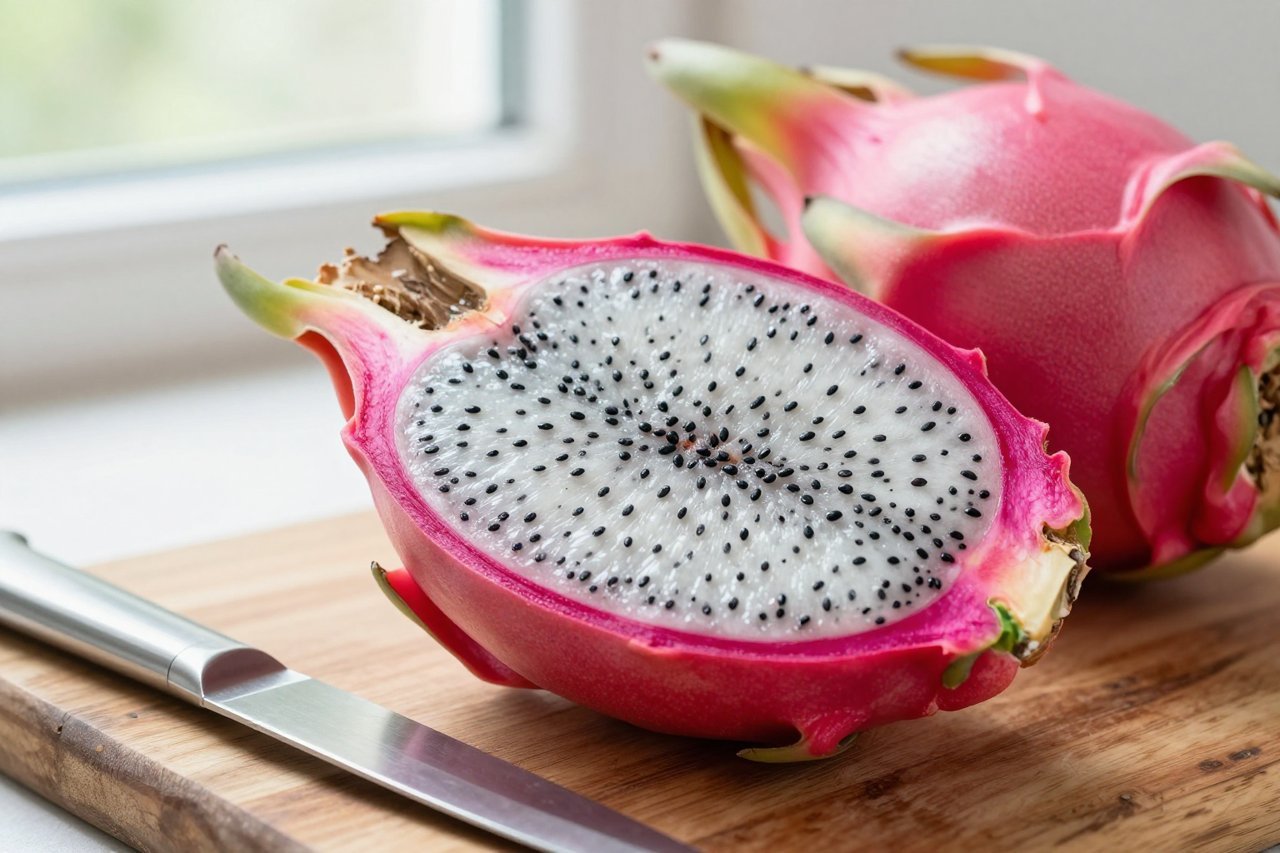
Pitaya and dragon fruit are the same fruit. The climbing cactus that produces it is native to Central America, and Spanish speakers across Mexico, Colombia and Nicaragua have called it pitaya or pitahaya for centuries — the word goes back to the Taíno people of the Caribbean. The name “dragon fruit” turned up far later, pushed by Vietnamese growers in the 1980s who thought the spiky pink skin looked like dragon scales. The marketing worked. Vietnam now exports more of it than any other country, with Ecuador, Colombia and Thailand trailing behind.
What you actually get for your money is a fruit that is roughly 84% water, mild enough to eat by the bowlful, and priced like a luxury item partly because it bruises easily and travels badly. Knowing which type you’re holding and how to judge ripeness is the difference between a sweet, refreshing snack and a six-dollar disappointment.
Three Pitaya Varieties You’ll See in Shops
Almost every pitaya sold commercially belongs to one of three groups, and they behave quite differently in the kitchen.
Red skin, white flesh
The default. This is Hylocereus undatus, the cheapest and most widely shipped type, with bright pink skin and green-tipped scales. The flesh is white, faintly sweet and very mild — think of a watered-down pear crossed with kiwi. It’s the version most people mean when they say dragon fruit and, unfortunately, the one most likely to taste of almost nothing if it was picked early.
Red skin, red flesh
Sometimes labelled “Costa Rica pitaya” or simply red dragon fruit. The flesh ranges from deep magenta to almost purple, and it is noticeably sweeter and juicier than the white type, often hitting 14–18 Brix (a measure of dissolved sugar) at peak ripeness. The colour comes from betacyanins, the same pigment family found in beetroot — which is why it can turn your urine or stool pink for a day. Harmless, and briefly alarming.
Yellow skin, white flesh
This one, Selenicereus megalanthus, is a different species entirely. It looks like a knobbly yellow lemon with a few soft spines, and it is the sweetest of the three, with a floral, almost honeyed flavour. It grows mainly in Colombia and Ecuador, costs more, and rarely appears outside specialty markets.
What Pitaya Tastes Like, and Why Some Batches Are Bland
The honest answer is that dragon fruit is subtle. Ripe white-fleshed pitaya tastes like a mix of kiwi, pear and watermelon, with a texture closer to a firm jelly than a melon. The seeds are tiny, black and crunchy, somewhere between a kiwi’s seeds and poppy seeds. Red-fleshed fruit adds a berry-like tartness at the finish; yellow pitaya brings more perfume and a thicker, creamier texture.
Bland fruit almost always comes down to harvest timing. Pitaya is a non-climacteric fruit, meaning it does not ripen further once picked — it just gets softer. Fruit harvested for long-haul shipping is cut days early, so it arrives looking perfect and tasting flat. If you want the full picture of how the flavours differ between varieties, this breakdown of what dragon fruit tastes like and how to pick a good one covers the variety-by-variety differences well.
The Nutrition Numbers Behind the Hype
Per 100 g of fresh white-fleshed flesh (about two-thirds of a small fruit):
- Calories: roughly 60
- Carbohydrates: 13 g, of which 8–9 g is sugar
- Fibre: about 3 g, mostly soluble
- Water: 84%
- Magnesium: 18 mg
- Iron: 0.65 mg
- Vitamin C: only 3 mg — a fraction of an orange
- Fat: 0.4 g, almost all of it from the seeds (oleic and linoleic acid)
Two things are worth flagging here. First, pitaya is not a vitamin C powerhouse, whatever the smoothie blogs suggest. Second, the red-fleshed types carry a real dose of betalain antioxidants, and that pigment is where a lot of the dragon fruit benefits you keep reading about actually come from.
Health Benefits With Actual Research Behind Them
Fibre and gut bacteria
Pitaya contains oligosaccharides — short-chain sugars your body can’t digest but gut bacteria can. That makes it a mild prebiotic. In one small study, adults who ate 200 g of red-fleshed pitaya daily for several weeks showed increased lactobacilli and bifidobacteria in their stool. A single fruit won’t fix your microbiome, but it’s a pleasant way to add 5–6 g of fibre to a day.
Antioxidants in the red flesh
Betanin and related betacyanins neutralise free radicals in lab tests, and red pitaya outperforms white in almost every antioxidant assay. Whether that translates into measurable health outcomes in humans is still an open question — most trials have been small, short, or done in mice.
Blood sugar
The glycaemic index of dragon fruit sits around 48–52, which is low. A 2019 study in people with prediabetes found that eating red pitaya improved fasting glucose slightly. That’s encouraging, not conclusive. If you’re managing diabetes, treat it as a reasonable fruit choice rather than a treatment.
How to Judge Ripeness Before You Pay
Pitaya doesn’t change much on the shelf, so most of the assessment happens in the shop.
- Press the stem end gently. A ripe fruit gives slightly, like a ripe avocado. Rock-hard means underripe; squishy means paste.
- Check the scales. Green tips are fine, but dry brown edges on the outer scales are a normal ripeness sign, not damage.
- Weigh it in your hand. Heavier fruit means more water content and juicier flesh.
- Look for even colour with no dark soft patches, sunken spots or mould at the stem.
A fruit that’s firm and flavourless can be rescued at home: leave it on the counter for two to three days, and the flesh will soften and sweeten a little. For a fuller checklist on spotting a good one versus a dud, the same guide on choosing a ripe, flavourful pitaya is worth a read before your next shop.
Cutting, Storing and Using It
The fastest method: slice off both ends, stand the fruit upright, and cut a shallow line down one side through the skin only. Peel the skin back in one or two pieces with your thumbs — it separates from the flesh more easily than most people expect. Alternatively, halve it and scoop with a spoon, which is how it’s usually eaten across Southeast Asia.
Storing is where people lose fruit. Whole, uncut pitaya keeps one to two days at room temperature and up to five days in the fridge crisper, loosely wrapped. Once cut, it needs an airtight container and should be eaten within two to three days — the flesh picks up fridge smells quickly.
In the kitchen it works cubed into fruit salads, blended into smoothies with lime and a little honey, frozen into chunks for sorbet, or muddled into a cocktail where its colour does the heavy lifting. Purée red-fleshed pitaya with a squeeze of lime to brighten it; the acid stops the flavour disappearing into whatever you mix it with.
Growing Pitaya at Home
Pitaya is a cactus, which surprises people who picture it hanging off rainforest trees. It’s an epiphyte that climbs and needs free-draining soil, full sun, and frost-free conditions. From a rooted cutting you’ll usually wait 12 to 18 months for fruit; from seed, up to five years. The flowers are spectacular — white, dinner-plate sized, and they open for a single night, pollinated by moths or bats. Outside the tropics you’ll often need to hand-pollinate with a soft brush between 9pm and midnight, and you’ll want a sturdy post or trellis, since a mature plant can weigh 20 kg or more.
A Few Things Nobody Warns You About
Eat a whole large red-fleshed pitaya and you may notice pink urine the next morning. It’s caused by betalains, the same pigments that make beetroot do it, and it clears within a day. The seeds pass through largely intact, which is fine unless you have diverticulitis or another condition where you’ve been told to watch small seeds. Fibre is the other thing: jumping from a low-fibre diet straight to a whole fruit plus a smoothie can leave you bloated by the afternoon, so start with half. Genuine allergies are rare but documented, mostly in people who already react to latex-related plants. And if you buy a fruit with thick, dry, pale skin and no give at the stem, save your money for a red-fleshed one instead — the flavour is almost always worth the extra dollar.
