 1-800-656-4211




Blog
Turkesterone Supplements: Does the Hype Survive the Evidence?

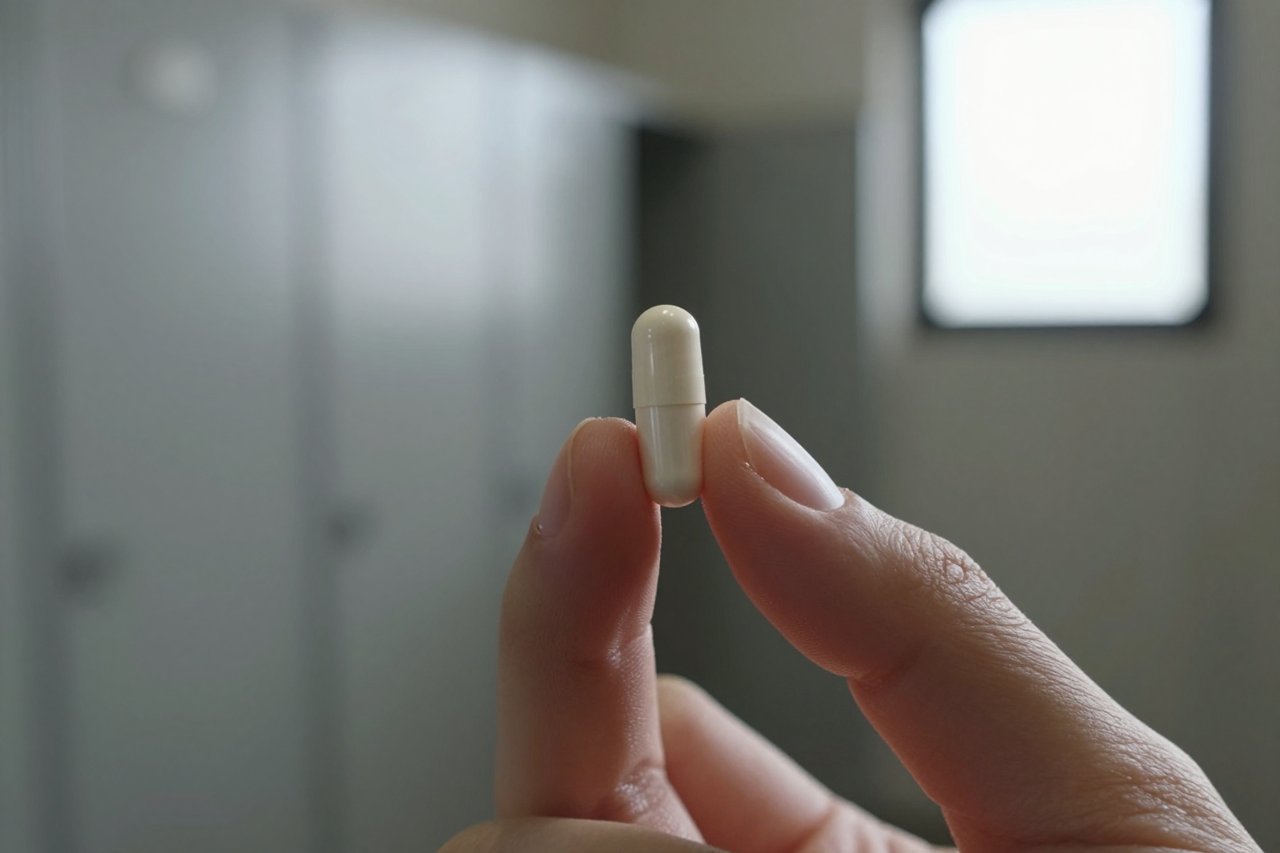
Turkesterone went from a compound almost nobody outside a handful of sports science labs had heard of to one of the best-selling “natural anabolics” on the market, and it happened in about eighteen months. Search interest spiked through 2021, tubs sold out for months, and a supplement that used to sit quietly on shelves started reselling at a markup. Nearly all of that momentum came from a few very loud YouTube videos rather than from new human data.
Which is the thing worth knowing before you hand over £60 for a month’s supply. Here’s what turkesterone actually is, what the research does and doesn’t show, and how to work out whether the bottle in front of you contains anything useful at all.
What turkesterone actually is
Turkesterone is a phytoecdysteroid, a plant compound whose structure closely resembles the moulting hormone insects use to shed their exoskeletons. It was first isolated from Ajuga turkestanica, a plant native to the rocky slopes of Central Asia, and it also turns up in smaller quantities in spinach, quinoa and yams. Chemically it belongs to the same family as 20-hydroxyecdysone, usually shortened to ecdysterone, which is the compound most of the actual research has been done on.
That distinction matters more than most marketing copy admits. Retailers describe turkesterone as an anabolic agent that ramps up protein synthesis without touching your hormones, and that description is borrowed largely from studies on ecdysterone, on whole Ajuga extracts, or on mice. It doesn’t convert to testosterone and it isn’t a steroid in the conventional sense. Whether it does anything meaningful in a human being is the open question.
Where the hype came from
The evidence base rests almost entirely on one 2019 paper from a German research group, published in Archives of Toxicology. The human portion of that study put 46 young men through a ten-week resistance training programme, with half of them taking ecdysterone at roughly 5 mg per kilogram of body weight per day, which works out to about 300-360 mg. The ecdysterone group gained noticeably more lean mass and added more to their biceps and their squat one-rep max than the placebo group. It’s a small trial, it hasn’t been replicated at scale, and it tested ecdysterone, not turkesterone.
There’s a second detail people tend to skip. In the mouse arm of that same study, the researchers ran ecdysterone and turkesterone side by side, and turkesterone came out weaker. The compound everyone is now buying in capsules was the less impressive of the two.
Search any clinical trial registry for turkesterone in humans and you’ll find nothing completed. No dosing study, no safety trial, no lean mass trial. What exists is rodent work, cell culture, and thousands of enthusiastic forum posts.
Reading a label properly
This is where most people get burned, and it has nothing to do with whether the ingredient works.
Turkesterone content in Ajuga turkestanica extract is expressed as a percentage. A bottle claiming “Ajuga turkestanica 1,000 mg” tells you nothing unless it also states the standardisation. If that 1,000 mg is a 10% extract, you’re getting roughly 100 mg of turkesterone. If it’s raw dried plant powder at 1%, you’re getting 10 mg. Same front label, tenfold difference in what’s inside.
Doses used in animal work translate to somewhere around 50-100 mg of actual turkesterone per day for an 80-90 kg person, and even that is an extrapolation. Oral bioavailability is poor, which is why some products pack in piperine or cyclodextrin to try to push more of it through the gut wall. Whether that works is unproven.
Red flags on a supplement label
- A milligram figure with no standardisation percentage anywhere on the panel.
- “Proprietary blend” that hides the individual amounts of everything in the capsule.
- No batch number, no expiry date, and no third-party certificate of analysis available on request.
- A price that looks too cheap. Genuine high-percentage Ajuga extract is expensive to source, and something has to give.
- Claims about “testosterone support”, “steroid-like gains” or “no side effects”. Turkesterone isn’t a hormone and nobody has studied its long-term safety.
Ask the brand for an HPLC certificate showing the turkesterone content of the batch you’re buying. Good manufacturers publish them. If the answer is a stock photo of a lab coat, walk away.
Safety, side effects and drug testing
Short-term human data on ecdysterone found no changes in testosterone, LH, FSH or liver enzymes over ten weeks, which is reassuring as far as it goes. Turkesterone itself has no equivalent human safety data, so anyone claiming it’s been proven safe is guessing. Complaints reported by users are vague and inconsistent: headaches, stomach upset, odd sleep. A handful of anecdotal blood tests show raised liver enzymes, though it’s impossible to pin those on the supplement alone.
The bigger practical risk is contamination. Independent testing of “natural” muscle-building supplements has repeatedly found undeclared steroids, stimulants and prescription drugs in products sold as herbal. That’s how people fail drug tests they thought they’d pass. If you compete under WADA rules, note that ecdysterone was added to the monitoring programme in 2020, which means anti-doping bodies are tracking it and collecting data toward a possible ban.
Who is likely to notice anything
Being straight about this: if you’re sleeping seven hours, eating 1.6-2.2 g of protein per kilogram of bodyweight, and adding weight to the bar most weeks, turkesterone at best contributes a rounding error. It isn’t going to compensate for a badly built programme or a calorie deficit.
If you already train consistently, have spare cash, and accept you might be buying hope in a capsule, there’s no strong reason to avoid a properly dosed, third-party tested product. Just don’t restructure your whole training year around it, and don’t skip the boring fundamentals to pay for it.
If money is tight, the same £60 spent on a block of coaching, a few kilos of whey, or a year of creatine will do more for your physique. Creatine has hundreds of studies behind it, costs pennies a day, and actually works.
How to test it on yourself in twelve weeks
If you’re going to try it anyway, at least run it as an experiment rather than a vibe.
- Take a standardised dose, aiming for 50-100 mg of actual turkesterone, at the same time each day for 10-12 weeks.
- Change nothing else. Same programme, same calories, same sleep. Don’t add three new supplements at once or you’ll learn nothing.
- Log your working weights for four or five key lifts every session.
- Take front, side and back photos in the same light once a fortnight, plus a morning bodyweight average each week.
- Get bloodwork before and after, including a full liver panel and lipids.
- Stop at week twelve and look at the numbers. If nothing moved, you have a clear, personal answer.
Twelve weeks and £120 is a cheap price for finding out, and far cheaper than a year of buying a product on faith. Whatever the outcome, the training log you build along the way is the part that genuinely changes your physique.
