 1-800-656-4211




Blog
Goji Juice Benefits: What Science Says About This Ruby-Red Superdrink

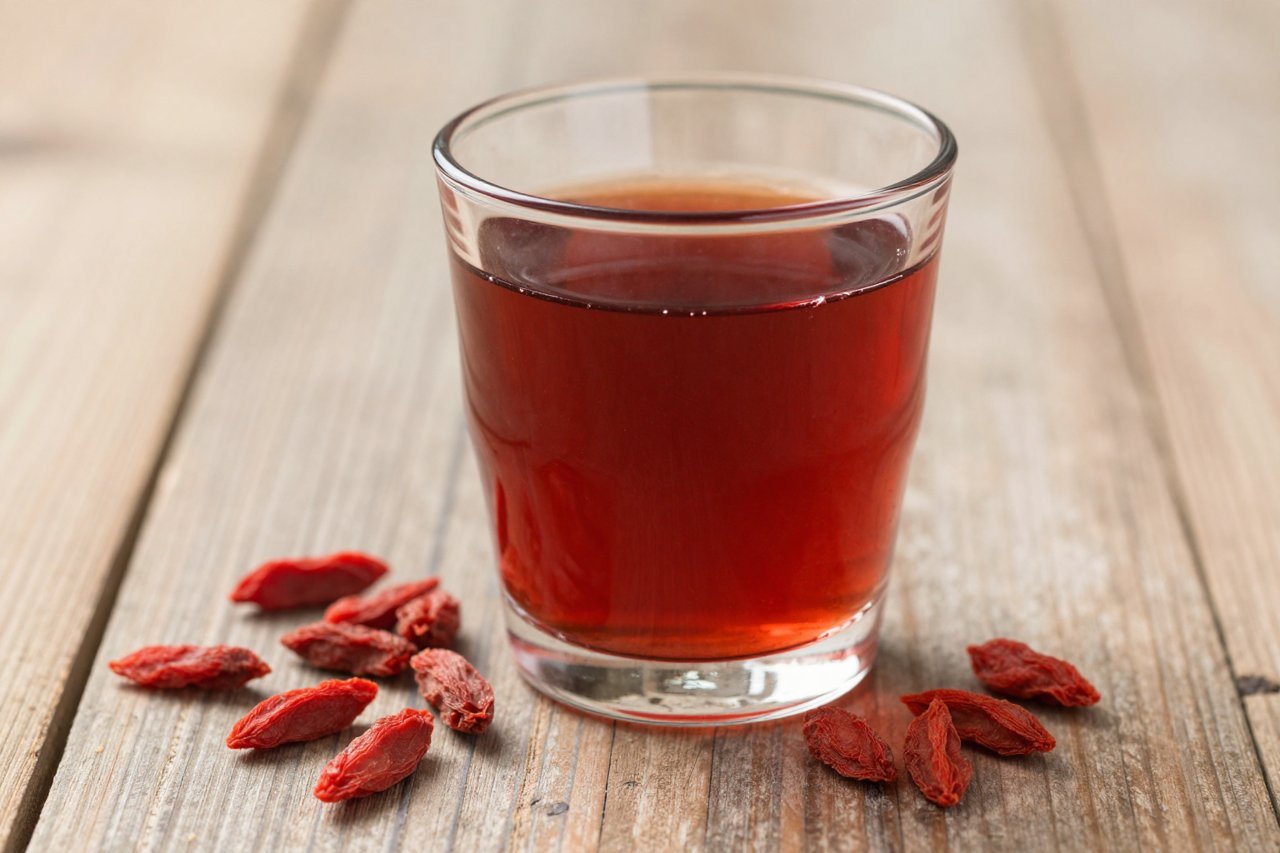
Goji juice has a marketing problem. It arrives in glass bottles with gold-leaf labels, gets labeled a ‘tincture,’ and often ends up next to $30 mushroom powders. So it’s easy to write the whole category off as overpriced wellness theatre. But inside the deep red liquid, there’s an unusually persuasive stack of research connecting goji berry compounds to your eyes, immune system, and aging skin. Here’s what goji juice benefits you can really bank on — and what you should filter out.
What Is Goji Juice, Exactly?
Goji juice is pressed from the berries of Lycium barbarum, a bush that grows wild on the arid hillsides of northern China. Known colloquially as wolfberries, these small oval fruits have been a fixture of Traditional Chinese Medicine for over two thousand years, typically simmered into soups, brewed as teas, or soaked in wine. To make goji juice, dried berries are rehydrated and then pureed, filtered, and often diluted with a milder fruit juice to tame their sharp, vegetal taste.
That dilution matters. Some store-bought ‘goji juice’ contains less than 20 percent actual goji purity (or goji ‘juice from concentrate’), with the remainder apple or sometimes even a blend of grapes. If you want to know exactly how the fruit and the bottled extract compare in both nutrition and practical uses, our earlier guide to the surprising goji berry benefits and easy ways to eat more is worth a read.
What Gives Goji Juice Its Superpowers?
Goji’s reputation isn’t built on one miracle molecule. It’s a combination of a few specific nutrients that, together, are rare in the juice aisle:
- Zeaxanthin: a protective carotenoid that concentrates in the retina and shields it from blue-light damage.
- Lycium barbarum polysaccharides (LBPs): complex carbohydrates that exhibit immunomodulating and prebiotic effects in clinical models.
- Vitamin C: surprisingly high for a fruit juice substrate, sometimes equating to a whole orange per 100 ml.
- Betaine: an amino-acid compound with liver-protective and cellular-hydration properties.
A warning for label readers: many of these molecules are sensitive to heat and pasteurisation. To benefit, you need a fresh bottled goji juice or a cold-processed goji shot, not a powder dissolved in boiling water.
The Goji Juice Benefits Worth Examining Closely
Once you get past the folklore, you’ll find a handful of goji juice benefits that appear in legitimate clinical work. The list below is not a guarantee — it’s an honest look at what the data supports so far.
1. Zeaxanthin for Sharpening Your Eye Health
Goji juice is perhaps most compelling for your retina. A small double-blind trial published in 2010 gave 15 older adults 120 ml of goji juice every day for 90 days. At the end, the group showed higher blood zeaxanthin levels and, crucially, increased density of the macular pigment that acts as the retina’s personal sunglasses blue-light filter. Numerous two-year trials with whole goji supplements have backed this connection. If you want to dig into the exact study numbers and design caveats, our goji berry health benefits science review squares the circle nicely.
2. A Buffered Immune Response
LBPs appear to tune the immune system rather than blindly turbocharge it. A Swiss pilot study gave naturally active goji juice to healthy elderly volunteers, and after 30 days, their T-lymphocyte cells were more responsive to antigen challenge. Similar patterns have shown up in animal work. The effect isn’t enormous, but there’s a strong mechanistic rationale that these specific polysaccharides bind to immune-cell receptors and act as a gentle regulator. We unpack the specifics of that and related dot points in our goji berry evidence deep dive.
3. Better Energy and Smoother Recovery
Traditional Chinese Medicine describes goji as a ‘chi tonic’ that reduces fatigue. Modern testing hasn’t exactly disproven that. One study in 34 healthy Chinese adults found that those who drank a goji juice preparation reported higher scores for sleep quality, mental focus, and lack of physical exhaustion than a placebo group. At the same time, a laboratory trial from the US Army Research Institute found that a 14-day goji juice protocol lowered perceived exertion during aerobic treadmill sessions. If you exercise or just need an afternoon lift, a small glass of unsweetened goji juice may act as a subtle natural stimulant without the caffeine crash.
4. Supporting Healthy Blood Sugar Patterns
Given that goji juice is a fruit juice, this benefit is easily misread. But several animal studies have observed improved glucose tolerance and lower fasting insulin levels with LBP extracts from goji berries. This does not mean goji juice is a free pass for people with diabetes — you still have to balance the sugar load. Yet there’s evidence that a small amount of goji juice, when paired with exercise or a meal, can modulate the post-meal glucose spike more favorably than other fruit juices.
5. Skin Elasticity and UV Resilience
The same zeaxanthin and polyphenol antioxidants are showing up in the skin-care research. A randomized, placebo-controlled study measured skin parameters in women over 12 weeks of drinking a goji-based preparation. They found less skin roughness and better resistance to nickel-sulfate-induced irritation. Goji juice doesn’t replace sunscreen, but as a dietary addition, it provides compounds your epidermis can store and deploy.
Before You Drink: The Side Effects Nobody Talks About
Don’t let marketing make you think this juice is suitable for everyone in unlimited quantities. Goji can interact with certain medications, and it is not a universal health food.
- Warfarin interaction: Goji contains vitamin K-like compounds and may increase bleeding risk when combined with warfarin. If on this medication, skip goji entirely or clear it with your clinician.
- Sugar level: A standard 250 ml juice glass of goji can contain 25 to 30 grams of naturally occurring sugars. That’s fine as an occasional drink but not a hydration substitute.
- Allergies: If you’re allergic to nightshade species, carrots, or daisy-family plants, introduce goji juice with extra caution.
- Kidney stones: Goji berries are also high in oxalates, which can bind with calcium and contribute to stone formation in sensitive individuals.
How to Pick a Goji Juice That Isn’t Overhyped Soda
Every bottle in your local health store will claim to be ‘pure’, but the ingredient list tells the real story.
- Turn the bottle around and look for the first ingredient: it should be ‘goji juice’ or ‘goji puree’, not apple juice.
- No juice concentrates from other fruits (especially pear or white grape) unless they are below a quarter of the total mix.
- Goji genuinely tastes bitter on its own, so a little acidity like lime or a touch of honey is fine, but watch out for brands that add refined sugar or natural sweeteners like stevia to make it more palatable.
- Purchase goji juice in dark glass rather than clear plastic to protect the zeaxanthin from light degradation over time.
How to Include Goji Juice in Your Day
The single best rule is to treat goji juice like you would unsweetened cranberry juice — as a tonic, not a tall tumbler you sip mindlessly. Start with a 50 ml shot.
Here are a few practical ways to get the benefits without puckering:
- Mix 100 ml chilled goji juice into a bottle of sparkling water and squeeze in lime.
- Add 50 ml to a morning smoothie with a banana, young spinach and a knob of fresh ginger.
- Stir two tablespoons into plain yogurt with a drizzle of almond butter.
- Make a ‘goji mojito’: muddle fresh mint, lime, and a teaspoon of honey, then top with sparkling goji juice.
Goji’s natural sharpness also works extremely well in savoury preparations. Drizzle a small amount into salads, stir into balsamic vinegar for a marinade, or combine with olive oil and black pepper in a dressing. Not every meal needs to shout ‘healthy’, but those simple adjustments can make goji juice a staple you genuinely look forward to.
