 1-800-656-4211




Blog
Acerola Berries Benefits: The Tart Superfruit That Puts Oranges to Shame

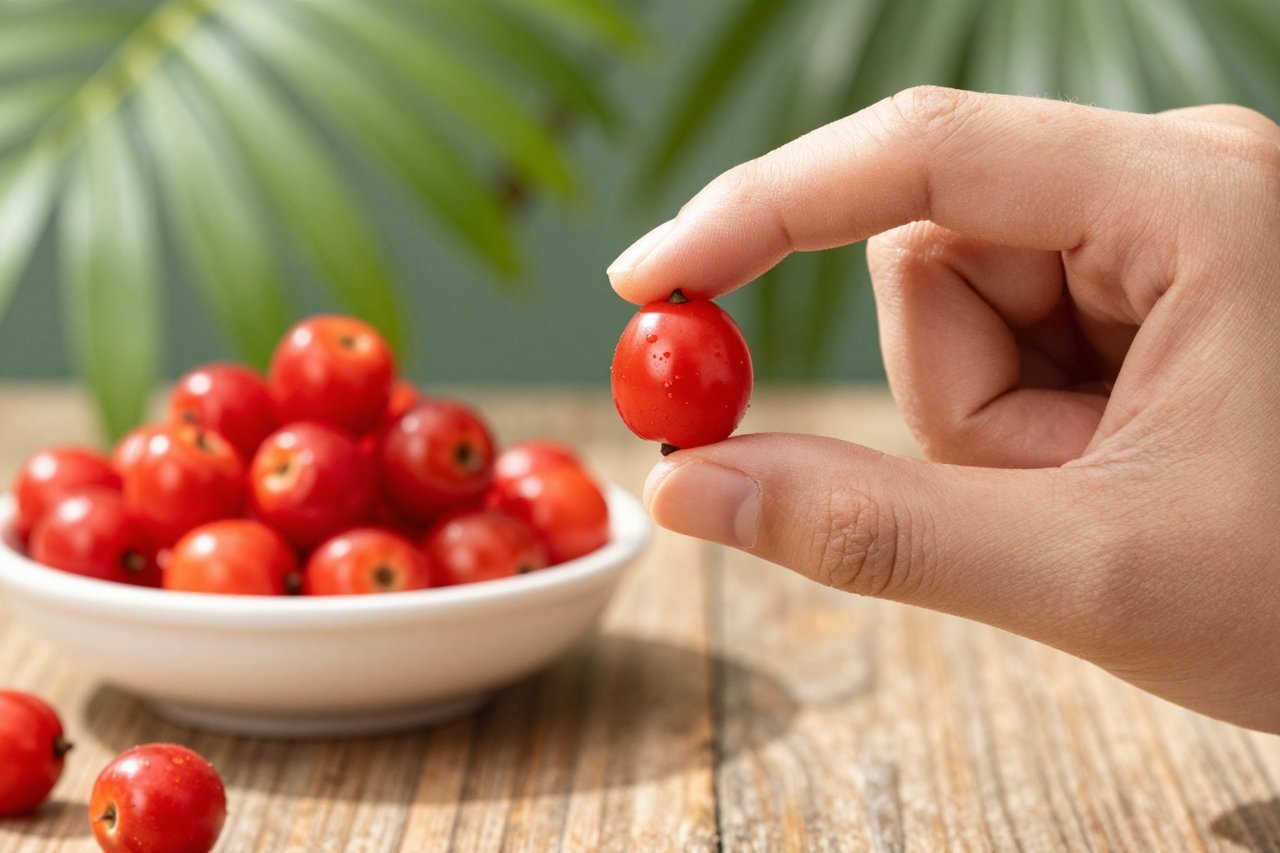
Acerola berries look like miniature cherries and taste like a dare. Bite into a ripe one, and your face puckers before a whisper of sweetness shows up. That sudden sour jolt is a clue: this little berry is one of the most concentrated natural sources of vitamin C on the planet.
Also known as Barbados cherry, West Indian cherry, or wild crepe myrtle, acerola is the fruit of Malpighia emarginata, a shrub native to the Caribbean and the Amazon Basin. It is now grown across Brazil, Puerto Rico, and subtropical parts of the United States. Because fresh acerola spoils quickly, most people get it freeze-dried or as frozen puree. Nutritionists sometimes call acerola the vitamin C superfruit you’re missing, and the comparison helps explain why it keeps showing up in new products.
The Vitamin C Content Deserves the Hype
One hundred grams of fresh acerola can carry between 1,500 and 4,500 mg of vitamin C depending on cultivar, ripeness, and soil. An orange delivers about 53 mg per 100 g, so acerola can be 30 to 85 times richer gram for gram. Since a typical berry weighs roughly 5 g, one piece can supply 75 to 225 mg of vitamin C. A medium orange has around 70 mg. You would have to eat an entire orange to equal what a single acerola berry can provide.
This density also explains why acerola powder is a popular substitute for synthetic vitamin C capsules. But before choosing a supplement, it helps to understand the effects that go beyond the immune system.
What Acerola Does Inside Your Body
Acerola berries benefits are often reduced to one line about vitamin C, yet the fruit acts on several pathways at once.
Helps Immune Cells Work Efficiently
White blood cells actively concentrate vitamin C and use it to fight infections. Deficiency can leave your immune response sluggish. Daily supplementation does not prevent colds, but regular vitamin C intake before symptoms begin may shorten a cold by around 8 percent in adults and 14 percent in children. Whole-food acerola is one convenient way to keep that baseline topped up without tablets.
Builds Collagen for Skin, Joints, and Healing
Your body cannot make stable collagen without vitamin C. It has to add hydroxyl groups to the amino acids proline and lysine, and ascorbic acid is the required cofactor. Collagen is a major structural protein in skin, tendons, ligaments, and blood vessels. That explains why people who improve their vitamin C intake often notice healthier-looking skin and quicker recovery from minor cuts.
Improves Iron Absorption from Plant Foods
Iron from beans, lentils, spinach, and other plant sources enters the body in the ferric form, which is poorly absorbed. Vitamin C converts some of it to ferrous iron and keeps it soluble in the digestive tract. Adding a little acerola powder to a meal of rice and beans, lentil soup, or sautéed greens can help your body use the iron already on your plate.
Delivers a Matrix of Antioxidants
Acerola is not just ascorbic acid in a fruit skin. It contains anthocyanins, quercetin, rutin, kaempferol, and carotenoids such as lutein and beta-carotene. Those polyphenols can help stop lipid oxidation and may protect vitamin C from breaking down in storage. In several laboratory studies, acerola extract outperformed isolated ascorbic acid as an antioxidant. That is a good reason to choose whole berry preparations. The chemistry behind this synergy is also the focus of the longer article on acerola cherry benefits if you want more detail.
Whole-Food Acerola vs Synthetic Ascorbic Acid
Synthetic ascorbic acid and the vitamin C in acerola are chemically identical molecules. The meaningful difference lies in what surrounds them. A typical synthetic tablet contains ascorbic acid, starch, and a flow agent. Freeze-dried acerola powder contains vitamin C alongside bioflavonoids, phenolic acids, minerals, and a small amount of fibre. Some supplement makers use an acerola extract standardized to 17 percent vitamin C; others use whole fruit powder. The whole fruit version is closer to what you would eat if you lived in the tropics.
The distinction might matter more than people assume. Vitamin C absorption is regulated by the gut, and bioflavonoids may influence how much stays in the body. Most studies use isolated ascorbic acid, which is why you see warnings about the limitations of synthetic forms. The earlier acerola cherry benefits article walks through label reading, but here is the short version: look for “whole fruit powder” high on the ingredients list.
How to Work Acerola into Your Kitchen
Fresh acerola is rare, so use powder or thawed pulp. Heat destroys ascorbic acid, so add it at the end of cooking or stir it into dishes that don’t require boiling.
- Blend half a teaspoon into a green smoothie; banana or mango keeps it sweet.
- Whisk one-quarter teaspoon into yogurt with honey and vanilla.
- Combine a teaspoon with olive oil, white wine vinegar, Dijon mustard, and black pepper for a sharp dressing.
- Mix powder into no-bake energy balls with dates, oats, coconut flakes, and almond butter.
- Add a small spoon to sparkling water with stevia for a homemade vitamin C soda.
Supplement Wisdom and Safety Notes
Before you buy a giant container, read the product label. Whole-food powders made from freeze-dried acerola usually show their vitamin C content per gram. Start with a quarter teaspoon if you are unused to the sour taste. Most adults can take half a teaspoon daily without trouble, but large doses of vitamin C can cause stomach cramps, diarrhea, or nausea, especially on an empty stomach.
Because vitamin C increases iron absorption, people with hemochromatosis or other iron overload conditions should avoid high-dose acerola supplements. The vitamin also converts to oxalate, so anyone with a history of kidney stones should ask a doctor before making a daily habit of concentrated powders. Finally, acerola is naturally acidic. If you are mixing powder directly into water, rinse your mouth afterward so the acid does not wear away enamel.
Treat acerola as a functional food rather than a magic bullet. If you have no medical conditions, a small sour spoonful every day is a straightforward way to get a healthy portion of vitamin C, with extra antioxidants included as a bonus.
