 1-800-656-4211




Blog
Acerola Benefits: What the Tropical Cherry Can Do for Your Health

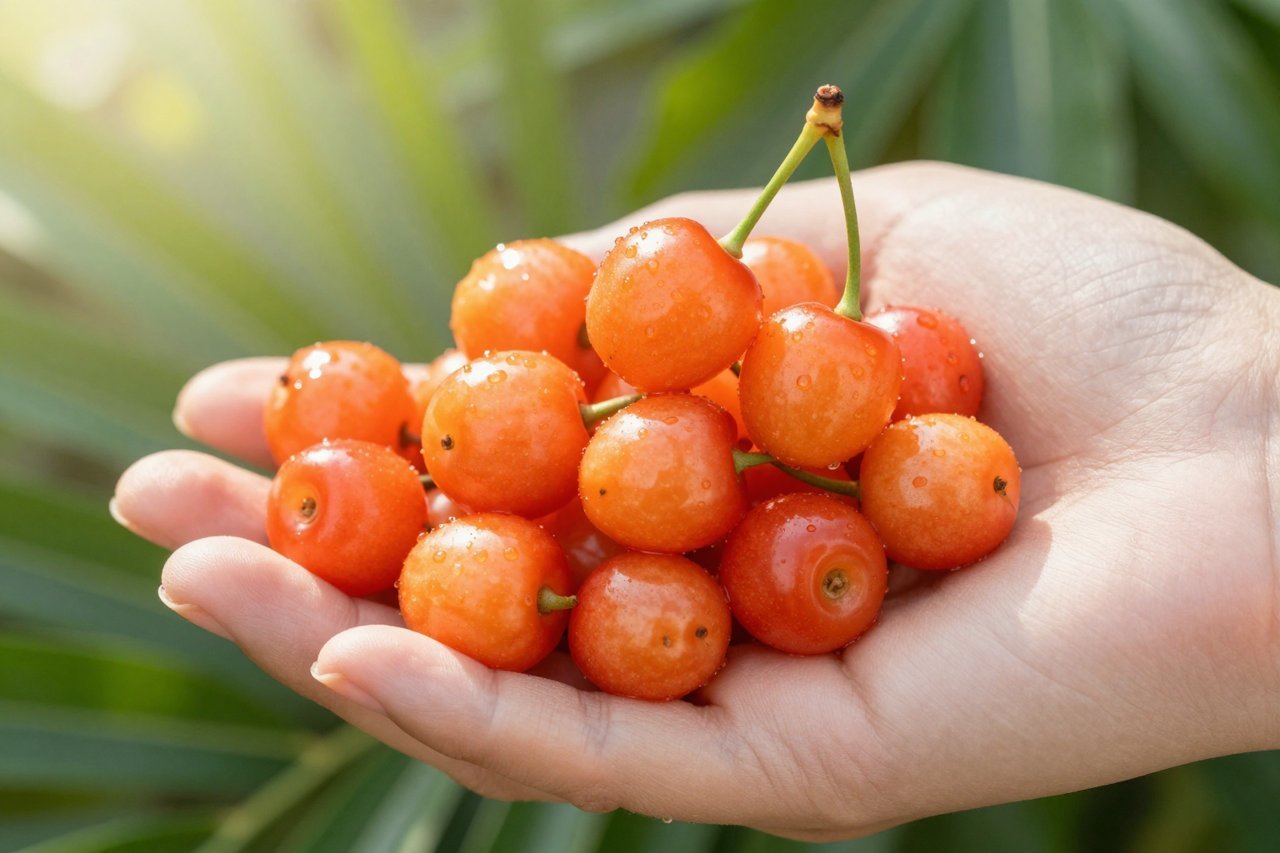
The acerola cherry isn’t the kind of fruit you typically find in a fruit bowl next to the bananas. It stays soft, tart and time-sensitive, and its flesh turns brown within days of being picked. For centuries, communities in the Caribbean and Central and South America have used this small red berry as food and bitter medicine. These days, its reputation as a natural source of vitamin C makes it one of the most interesting ingredients in supplement formulations. But if you look at the full picture, acerola benefits go much deeper.
Acerola, also called the Barbados cherry, weighs about as much as a grape. Yet a single one can hold around 80 milligrams of vitamin C. It also delivers provitamin A, B vitamins, magnesium and a striking mix of polyphenols. In this guide, I’ll walk through the most relevant research, the daily practicality of adding it to your routine, and the warnings you should keep in mind.
What Exactly Is Acerola?
Acerola belongs to the Malpighia emarginata species, a bushy shrub that grows well in subtropical and tropical climates. It loves dry soil and loves sunlight. If you trace its origins, you’ll find historical records pointing to the Yucatán Peninsula, the Caribbean and regions of western South America.
Contrary to what the “cherry” in its nickname suggests, these fruits are not related to European or North American cherries. They are slightly lobed, brighter orange-red when ripe, and juice bursts out as soon as you press them. Fresh acerola is not exported widely, so most people meet it as a powder, freeze-dried snack or extract in vitamin C blends.
What Makes Acerola Nutritionally Special?
The reason acerola has been studied so heavily starts with an astonishing vitamin C concentration. On a raw weight basis, acerola fruits can provide approximately 1,677 milligrams of vitamin C per 100 grams. That is around 20 to 30 times the vitamin C content of an orange by weight. But there is more.
- Bioactive phytonutrients, including anthocyanins and quercetin
- Carotenoids, such as beta carotene, which act as vitamin A precursors
- Minerals, including iron, calcium, magnesium and potassium
- B vitamins, specifically vitamins B1 and B6
These nutrients don’t exist in isolation. When you eat the whole fruit, the ascorbic acid works alongside hundreds of other molecules, which is why many researchers prefer to study whole acerola extract rather than isolated vitamin C.
Five Acerola Benefits Worth Knowing
1. A Directly Usable Form of Vitamin C
Many vitamin C supplements use synthetic ascorbic acid because it’s cheap and shelf-stable. But acerola provides ascorbic acid plus bioflavonoids that influence absorption. A whole cherry contains a mixture of compounds like rutin and quercetin, so your body shares the antioxidant workload.
A 100-gram serving, roughly four or five ounces, delivers close to 1,700 milligrams of vitamin C. That exceeds the typical recommended daily allowance by a huge margin. Since most people don’t eat the raw fruit, a small spoon of powdered acerola (one or two grams) gets you into solid territory. Some research suggests the natural matrix in acerola helps maintain vitamin C stability through the digestive tract, which means your body may actually put more of it to work.
If you’d like to dig deeper into the science behind this, our detailed guide to acerola cherry benefits explores the evidence in more depth.
2. Immune Function That Goes Beyond Ordinary Antioxidants
Immune performance usually benefits from vitamin C because it accumulates inside white blood cells and helps those cells travel and kill pathogens. Human studies show that maintaining adequate vitamin C blood levels can make the common cold less severe and shorten its duration. What acerola adds is a diversity of phytochemicals that may modulate inflammation in a distinct way.
In tissue cultures, acerola extracts have demonstrated antiviral and antibacterial activity that cannot be replicated by synthetic vitamin C alone. When you choose a berry rather than a chemical copy, you receive a cascade of molecules that work on different parts of the immune response. That gives acerola benefits special relevance during the colder months.
3. Collagen Production for Skin, Joints and Blood Vessels
If you want to understand why acerola increasingly shows up in collagen supplement stacks, remember that vitamin C is a co-factor for collagen synthesis. The body needs ascorbic acid to hydroxylate lysine and proline amino acids, a critical step in forming strong collagen strands. Without enough of it, skin laxity, fragile nails and tendon stiffness become more likely.
A study involving human skin cells showed that oral acerola-derived supplements helped protect against UV radiation-induced oxidative stress. That does not mean you can skip sunscreen. But the natural matrix of acerola cherries can increase the body’s tolerance to sun exposure while supporting long-term structural repair.
4. More Efficient Iron Absorption and Better Energy
Iron stores, endurance and fatigue are tied together. The biggest issue with plant-based iron is that non-heme iron is less absorbable. Yet vitamin C competes with phytic acid and improves solubility inside the intestines, making non-heme iron more bioavailable.
Because acerola offers such a large amount of ascorbic acid in one small food product, it works as a natural enhancer for any meal that includes leafy greens, lentils or fortified cereals. By rebalancing your body’s iron shuttle, you may also notice better oxygen delivery to tired muscles. Some sports research looks at acerola polyphenols as an aid to recovery, given their ability to reduce oxidative stress after exercise.
5. Fighting Oxidative Stress and Supporting Metabolism
Beyond vitamin C, acerola is rich in anthocyanins and phenolic acids that quench free radicals. In animal experiments, acerola extract has been shown to reduce LDL oxidation, a key step in the development of cardiovascular disease. Human trials are still limited, but consistent intake of phenolic-rich fruits is linked to better blood vessel function in population studies.
There is also early evidence that acerola extracts can help blunt blood sugar spikes after a carbohydrate-heavy meal. The natural polyphenols appear to slow down the breakdown of starch into glucose in the gut. That makes acerola an interesting functional food for anyone who wants to keep their energy levels even throughout the day.
The Right Way to Add Acerola to Your Routine
Fresh and Frozen Pulp
The best way to experience acerola is to eat the fresh pulp, but unless you live in the tropics or have a reliable supplier, that is not practical. Frozen acerola purée works well in smoothies and gives you a tart, apricot-like flavor. Look for pure fruit products without added sugar or preservatives.
Acerola Powder and Capsules
Most people choose acerola powder because it is easy to store and mixes into almost anything. A quality powder retains the fruit’s natural bioflavonoids, something that many isolated vitamin C powders do not. You can stir a teaspoon into yogurt, oatmeal or even a glass of water. Start with a small dose and check the label for vitamin C content, since different brands range from 15% to 25% vitamin C by weight.
Capsules are convenient for travel, but they usually contain less of the whole fruit matrix. If your main goal is convenience rather than getting the phytonutrients, capsules still offer sizable vitamin C support.
How Much Should You Take?
For general immune and antioxidant support, a daily intake of 250 to 500 milligrams of vitamin C from acerola is a reasonable target. That amount is considerably higher than the recommended daily allowance, but for such a reliable nutrient, it falls well within safe territory. At the same time, more is not better. Very high doses, typically over 2,000 milligrams, can cause stomach cramps or diarrhea in some individuals.
Possible Side Effects and Safety Notes
If you have a history of kidney stones, be cautious. Large amounts of vitamin C can increase oxalate excretion, which may raise the risk of developing another stone. People with iron overload conditions such as haemochromatosis should also avoid high-dose acerola, since the vitamin C helps absorb more iron than your body needs.
Because acerola also has antioxidant properties that can influence blood pressure and blood sugar, talk to your healthcare provider before using concentrated extracts if you are on medication for diabetes, hypertension or clotting disorders. For most people, however, adding acerola powder to a healthy diet brings mineral content, vitamin C and phytonutrients in one small package. Few foods can match that combination, which is why this fragile tropical cherry keeps appearing in research papers and supplement aisles alike.
