 1-800-656-4211




Blog
Blueberries and Health Benefits: What Happens When You Eat Them Daily

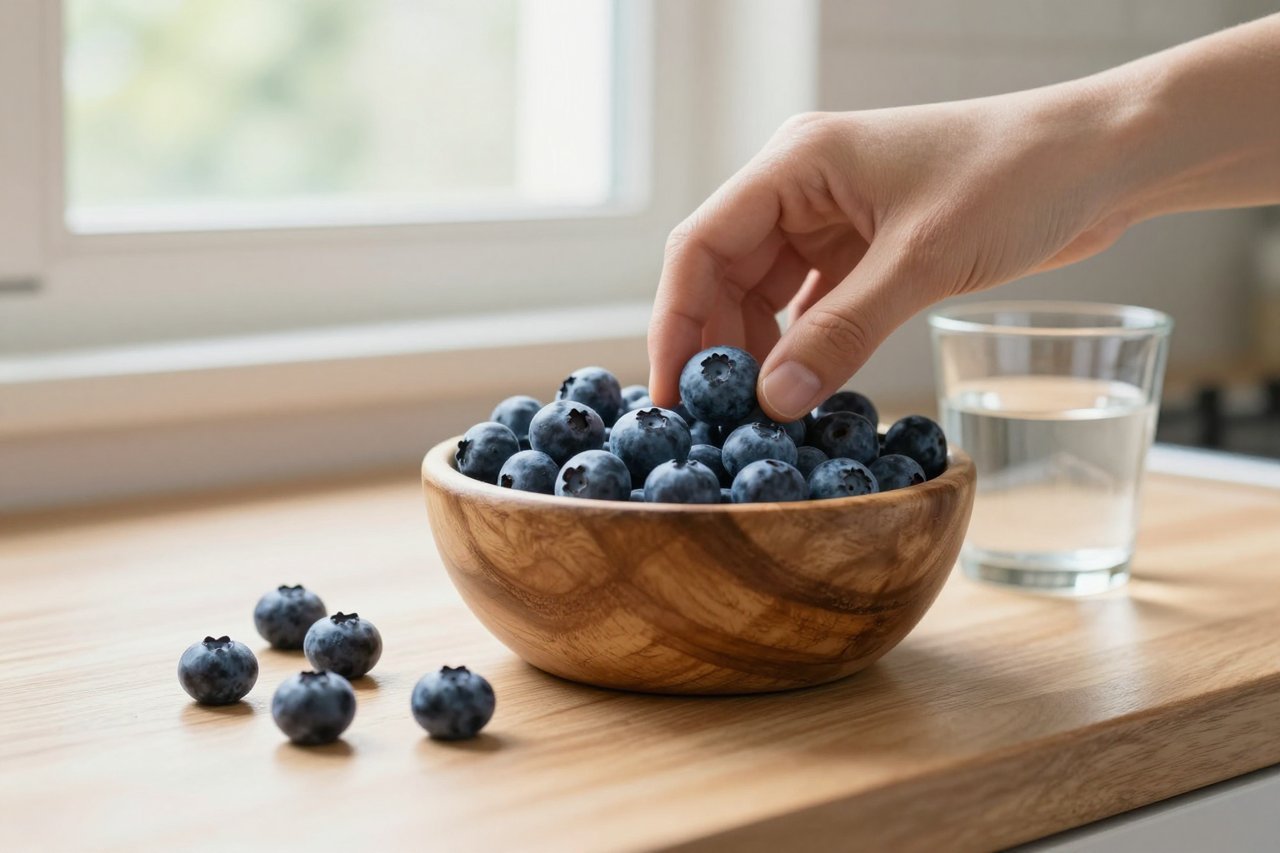
Every other week, it seems, there’s another headline about blueberries and health benefits. But behind the hype sits a genuinely impressive fruit. One cup of fresh blueberries delivers about 4 grams of fiber, 24% of your daily vitamin K, and a good slice of your manganese needs. The real heavy lifters are the anthocyanins, the pigments that give the berries their inky blue colour and act as antioxidants in the body. Let’s look at what the science says, and how these benefits hold up in real life.
What Makes Blueberries Unusually Nutrient-Dense
Anthocyanins: The Blue in Blueberries
Blueberries are one of the richest food sources of anthocyanins. These compounds are responsible for the deep blue, almost purple colour. In the body, they help neutralise free radicals, unstable molecules that can damage cells and accelerate ageing. A review in the Journal of Agricultural and Food Chemistry found that the anthocyanin content in wild blueberries can be up to twice that of cultivated varieties, though both are excellent.
More Than Just Antioxidants
It’s easy to reduce blueberries to antioxidants, but they also supply vitamin C (about 16 mg per cup), vitamin K, and manganese. Plus, they contain about 85% water, which makes them hydrating and surprisingly filling for their calorie count. Roughly 80 calories in a cup. That’s a combination not many fruits can match. If you want a fuller breakdown of the nutritional profile, the article explains why blueberries are the small fruit with big health perks.
Blueberries and Heart Health: More Than Just a Warm Fuzzy Feeling
The cardiovascular benefits are some of the best-studied. The anthocyanins in blueberries are linked to smoother blood vessel function and lower blood pressure. A 2019 systematic review in Advances in Nutrition looked at 22 clinical trials and found that regular berry intake was associated with lower LDL cholesterol and higher HDL cholesterol.
Specifically, a study from the University of East Anglia gave participants the equivalent of one cup of blueberries daily for six months. Those in the blueberry group saw a 4% reduction in systolic blood pressure, along with improvements in arterial stiffness. That might not sound dramatic, but across a population, it translates into around a 10% lower risk of heart attacks.
For a deeper look at the cardiovascular angle, see blueberry benefits from heart health to brain power.
Brain Power and Sharper Memory
Blueberries often get called “brain berries” and there’s data to back it up. A long-running Harvard study following over 16,000 women found that those who ate at least two half-cup servings of berries per week delayed cognitive ageing by up to 2.5 years compared to those who rarely ate them. The anthocyanins appear to cross the blood-brain barrier and promote communication between neurons.
Animal studies suggest that blueberry supplementation improves spatial memory and learning. In humans, a 2019 trial from King’s College London showed that a daily wild blueberry drink improved reaction times in children and older adults alike. The effect was noticeable within a few hours.
Blood Sugar Control and Type 2 Diabetes Protection
Given how sweet blueberries taste, people often assume they’re off-limits for blood sugar concerns. The opposite is true. Blueberries have a low glycemic index (around 53), and their fiber slows down sugar absorption. A 2020 study in Current Developments in Nutrition found that adding about 80 grams of blueberries to a high-carb breakfast significantly reduced the post-meal insulin spike compared to a meal without berries.
Over the long term, there’s also evidence that anthocyanins improve insulin sensitivity. A 2016 meta-analysis in the Journal of Nutrition found that berries, particularly blueberries, were associated with a lower risk of type 2 diabetes. The protective effect is likely due to both the fiber and the polyphenols.
Weight Loss, Cravings, and Smart Snacking
If you’re trying to manage your weight, blueberries are a solid ally. They’re low in calories, high in water, and the fiber helps you feel full. But there’s another benefit: they satisfy sweet cravings without spiking blood sugar.
One cup of blueberries is roughly the same sweetness as a small candy bar, but it comes with 4 grams of fiber, vitamins, and far less sugar. Swapping out a chocolate bar for blueberries on a weekday afternoon is one of the easiest changes you can make. If you’re building a list of better snack options, this round-up of healthy snacks for weight loss and food cravings includes ideas that pair well with blueberries.
How Blueberries Feed Your Gut Microbiome
Your gut bacteria need more than just fiber; they also feed on polyphenols. Blueberries are a prebiotic in many senses. The polyphenols that you don’t absorb in the small intestine travel to the colon, where gut bacteria break them into beneficial metabolites. Some studies show that regular blueberry consumption increases the abundance of Bifidobacterium and other beneficial strains.
A 2021 study in mSystems found that daily blueberry consumption altered the gut microbiome in a way that promoted anti-inflammatory compounds. That’s a big deal because a healthy gut microbiome is central to immunity, mood, and even weight regulation. For a broader overview of the many ways this berry helps, this overview of 15 blueberry health benefits and uses goes into other body systems as well.
Simple Ways to Make Blueberries a Daily Habit
Adding more blueberries doesn’t require elaborate recipes. Sometimes it’s just about tapping into a few versatile habits.
- Sprinkle them over Greek yogurt with ground flaxseed
- Mix into overnight oats with a pinch of cinnamon
- Add to a green salad with feta and walnuts
- Layer with plain cottage cheese for a high-protein snack
- Freeze them for homemade no-added-sugar popsicles
Keep a Container Within Eyesight
The simplest trick involves placement. A visible bowl of blueberries on the counter makes it far easier to grab a handful instead of reaching for processed snacks.
Frozen Are Fine, Maybe Better
Frozen blueberries retain almost all their anthocyanins. They actually don’t lose much over months in the freezer, so they’re a cost-effective way to get the same benefits. You can use them straight from the freezer in yogurt, pancakes, or baked oats.
Savory Pairings That Work
Blueberries aren’t just for breakfast. They work in salads with goat cheese and walnuts, or as a quick sauce for chicken or pork. A simple blueberry balsamic reduction takes less than 10 minutes and elevates roast meat.
Consider Your Smoothie Combinations
Many people toss blueberries into a breakfast smoothie with a banana. If that’s you, it’s worth knowing about a study that found polyphenols from berries are significantly less absorbed when mixed with a banana, thanks to an enzyme in bananas. The surprising research on why you shouldn’t add bananas to your smoothies explains the chemistry. So maybe keep bananas as a separate snack and let the blueberries shine on their own.
Blueberries aren’t a miracle cure, but they’re about as close as food gets. The combination of anthocyanins, fiber, and micronutrients supports everything from your arteries to your gut. And the best part is that consistency matters more than quantity; a handful a day is enough to shift things in your favour.
