 1-800-656-4211



Blog
Protein Powder for Muscle Gain: What the Label Won’t Tell You

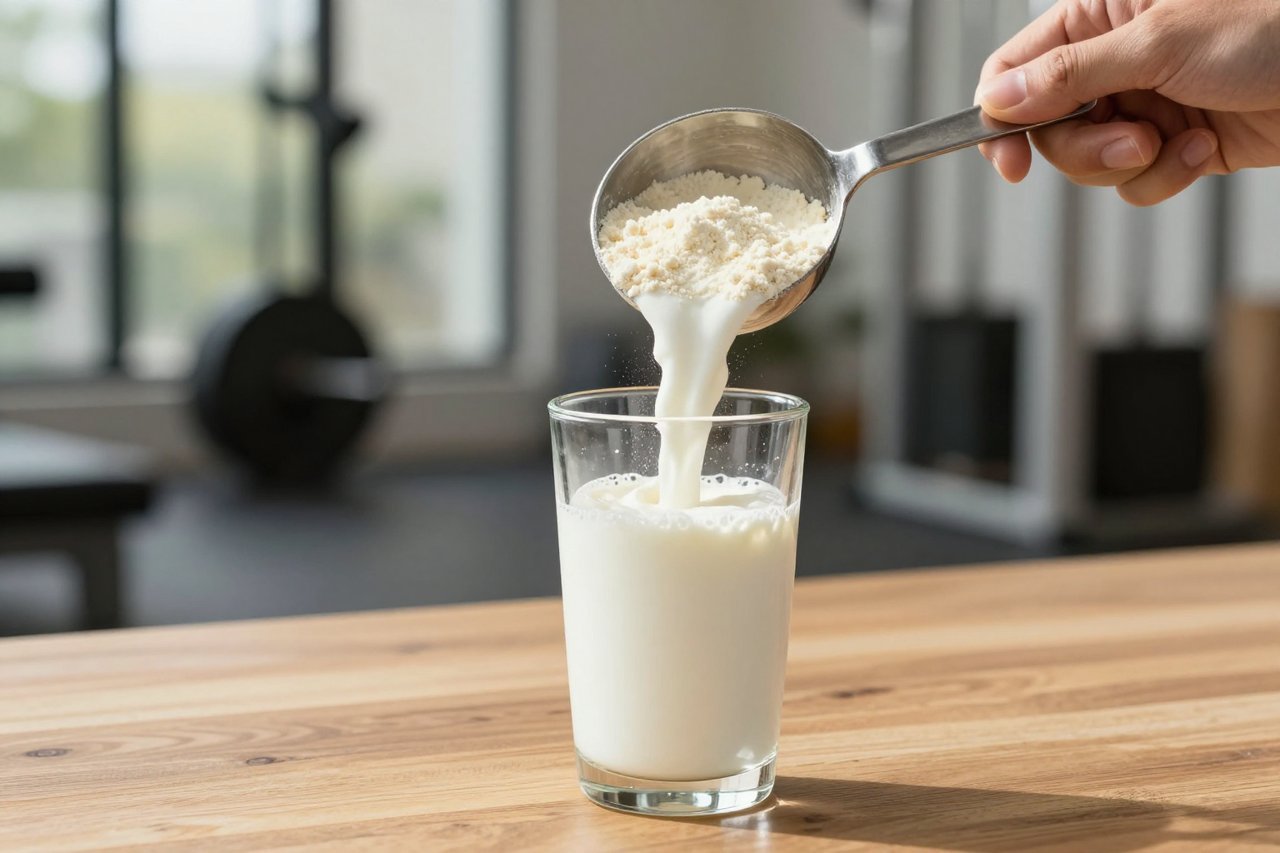
Walk down the supplement aisle and you’ll see a wall of tubs promising bigger arms and harder pecs. The sheer choice is enough to make your head spin. Whey isolate, casein, plant blends, mass gainers — which one actually helps you build muscle? And which ones are just flavoured dust?
The short answer: most protein powders work, but only if you pick the right one and use it correctly. Here’s what the research says and how to get real results without throwing money away.
Why protein is non-negotiable for muscle gain
Muscle doesn’t appear because you lift heavy. Lifting breaks down fibres; protein rebuilds them. To build new tissue, you need a positive protein balance — more in than out. The science points to about 1.6 to 2.2 grams of protein per kilogram of bodyweight for most lifters. An 80 kg man might need 130 to 175 g a day. Score that from food alone and you’ll be chewing chicken breast nonstop. That’s where protein powder becomes a convenient, digestible, cost-effective way to hit your numbers.
The leucine trigger
Your body doesn’t start synthesising muscle until a key amino acid, leucine, crosses a threshold — roughly 2 to 3 grams per meal. Whey is rich in leucine, which is why it’s the gold standard. Plant proteins have less, so you often need a larger dose or a blend.
Whey vs casein vs plant: which protein is right?
Whey concentrate and isolate
Whey is a fast-digesting dairy protein. Concentrate has more lactose and fat; isolate is more purified. Both get the job done. Isolate mixes more smoothly and is easier on sensitive stomachs, but it costs more. Do you need isolate? Only if dairy bothers you or you’re strict about carbs and fats.
Casein
Casein is the slow-digesting protein from milk. It forms a gel in your stomach and releases amino acids over hours. It works well as a nighttime shake, but for total daily intake, it’s not superior to whey. Some people find casein bloats them.
Plant-based options
Pea, rice, and soy proteins are solid choices. They’re not inferior, just have different amino acid profiles. Look for a blend that includes pea and rice, because they complement each other. If you’re vegan, plant protein is better than nothing, but check for added leucine or use a slightly larger scoop.
Protein powder won’t save a bad diet
The most common mistake I see is treating a shake as a meal replacement. A scoop of whey has about 120 calories. A bag of Doritos has about 600. Guess which one will fill you up? Protein powder is a supplement, not a substitute. Whole foods deliver other nutrients — iron, zinc, creatine (from meat) — that support muscle growth. So build your diet around real food. If you’re curious about other natural ways to support recovery, some athletes add things like pine pollen for its purported antioxidant and anti-inflammatory properties, but the evidence is nowhere near as strong as for protein. It’s worth reading up on pine pollen benefits if you want to expand your kit, but don’t expect it to change your physique. Protein is the ingredient with decades of research behind it.
How to choose a quality protein powder
Read the label like your money depends on it (because it does)
The FDA doesn’t vet supplements before they hit shelves. You’re relying on the brand. Avoid anything with a massive “proprietary blend” hiding low doses. Instead, look for a simple ingredient list: protein source, flavour, sweetener, and maybe an enzyme blend. Stevia and monk fruit are fine. Avoid “natural flavours” if you can, but it’s not a dealbreaker.
Check for third-party testing
Brands like NSFI, Informed Sport, or ConsumerLab test their products to ensure they contain what’s on the label. That’s your safeguard. If a company doesn’t list a certification, search for whether they use independent testing.
Don’t chase the cheapest tub
That $20 price tag might seem great, but it could be shorting you on protein per scoop. Compare the cost per gram of protein. A 5 lb tub that is $60 and has 30 g per scoop is better than a 4 lb tub for $50 with 15 g per scoop. Do the math.
When to drink your protein shake
The old “anabolic window” idea said you have 30 minutes after a workout before the famine begins. The science now says you’re not at urgent risk. A study found that as long as you hit your daily protein target, the exact timing matters little. But there is a good reason to drink one after lifting: convenience. You’re already at the gym; you just need fuel. Shakes are portable and fast. Mixing one post-workout is a simple habit that ensures you’re not skipping protein.
What about before bed?
Casein can be useful at night if you’re struggling to hit your numbers, but it’s not mandatory. A handful of Greek yogurt is just as effective.
Common mistakes that stall progress
- Using protein powder for every meal, not just supplementing.
- Not counting total protein from food — you end up with far less than you think.
- Timid scooping. Check the label: a scoop might be 25 g, but some people use a heaped scoop, which throws off your numbers.
- Choosing a mass gainer just because you want to “bulk”. Mass gainers are mostly sugar and maltodextrin. You can do better with regular protein powder and an extra baked potato.
- Ignoring your stomach. If whey makes you bloated, switch to isolate or hydrolysed whey.
Should you take protein on rest days?
Yes. Your muscles build during recovery, not during the workout. You still need that daily protein target on rest days. Many people think they can skip it, but then they lag behind on their weekly average. The recommended split doesn’t change dramatically. Keep your protein intake consistent every day for steady progress.
