1-800-656-4211




Blog
We Are on the Cusp of Another Natural Hair Movement

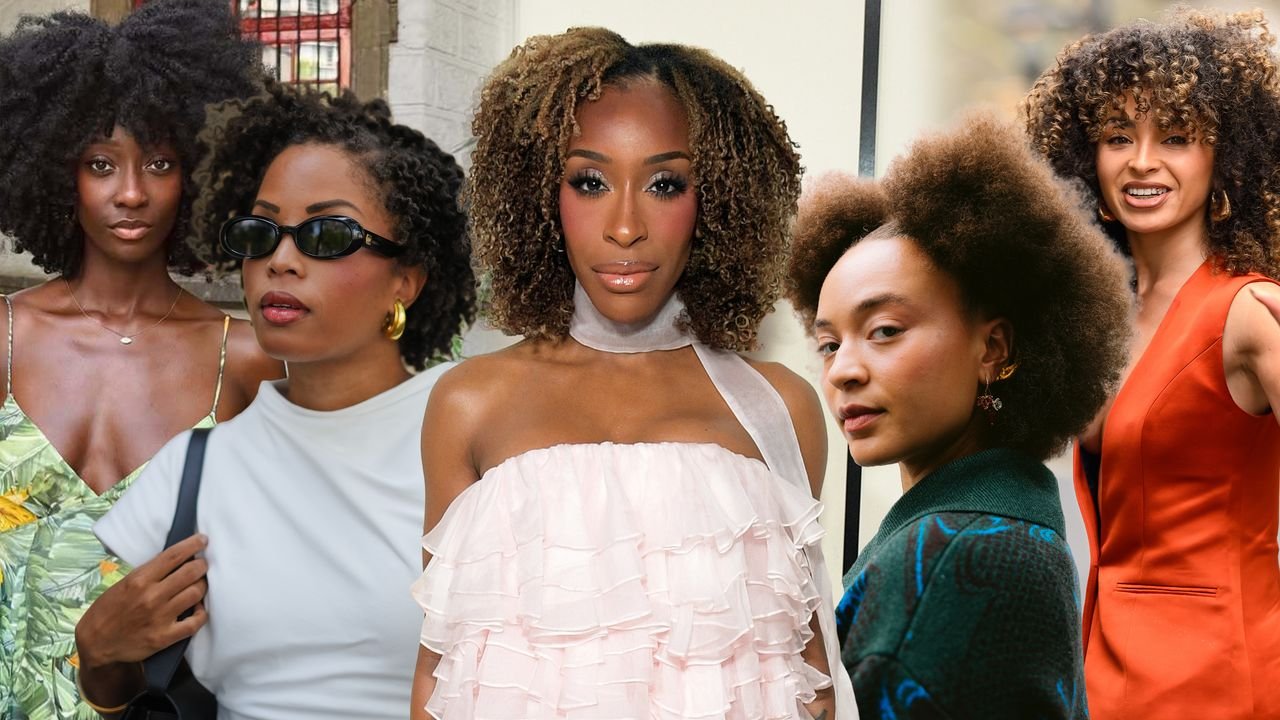
But Sharon argues that maintaining wigs and weaves can be just as much work. “I used to wear wigs exclusively for two years, so I know the process behind wigs,” she says, noting the method usually involves gluing the wig cap on, putting the glue on your hairline in three layers, waiting for each layer to dry before putting on the next, putting the band on for a few minutes, putting the spritz on—and that’s all before any styling.
“To me, it’s quite hypocritical that you can take time out of your day to do something as intricate as gluing a wig down, but washing your hair, putting conditioner on your hair, taking out your cornrows, is too much work,” Sharon says.
When you take maintenance out of the conversation, there’s still this uncomfortable truth that many Black women with tight curls and coils have been indoctrinated to believe their hair isn’t beautiful—and we have colonization, Eurocentric beauty standards, and systemic racism to thank for that. For years, Black hair was widely deemed unprofessional—and, in some spaces, still is. “In the industry that I’m in, there’s this unspoken rule that if you want to be successful, then your hair needs to look a certain way,” says Newby, who, in addition to being a content creator, is a host for red carpet events. “It is just really ingrained in me that for special occasions, your hair should be straight.”
While laws like the CROWN Act—a piece of legislation designed to prohibit workplace discrimination based on hair texture and styles such as braids, locs, and twists—have helped shift the negative perception surrounding natural hair, many Black women still contend with those underlying biases. Sharon hopes that her critique inspires deeper internal reflection to challenge those beliefs, for Black women today and for the next generation.
What will the natural hair movement 3.0 look like?
As a mom to a little girl with natural hair, the part of Sharon’s argument that resonates with me most is the point that an overreliance on wigs, weaves, and even braids can cause Black women to be disconnected from their natural hair—a mindset that will ultimately harm the next generation.
When Black women see their hair as something to be concealed in favor of textures that aren’t inherently ours, the message that gets passed down to our children is that their hair—our hair—isn’t good enough. It’s not that you have to get the practical knowledge to care for natural hair from your mother—that can easily be learned through watching online tutorials, as many people still do. It’s that we risk passing down to little Black girls the deeper belief that our natural hair is unworthy, unprofessional, and unlovable.
At the core of Sharon’s argument is a passionate desire to see Black women love and accept themselves wholly—including their natural texture. “My videos were never intended to get Black women to stop wearing wigs,” says Sharon. “I just want them to feel confident in their natural hair, in the hair that grows from their scalp. I want them to understand that you can feel so beautiful just rocking the curls on your head.”