 1-800-656-4211




Blog
Protein Powder for Muscle Gain: Side Effects That Actually Matter

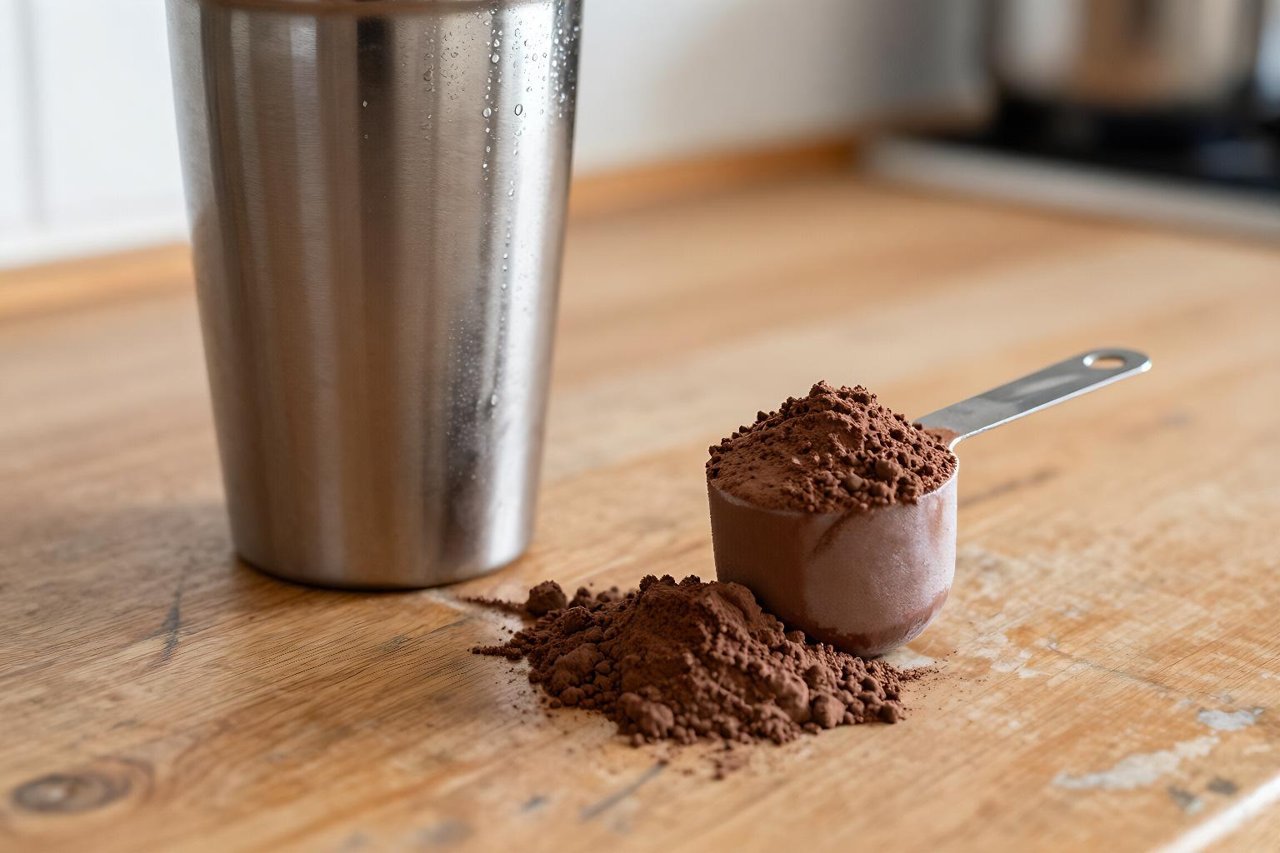
A 30-gram scoop of whey delivers roughly the protein of four eggs and a chicken thigh, costs less than a coffee, and mixes in ten seconds. That’s why the tubs keep selling. The part nobody prints on the front label is what happens by week three: the bloating on leg day, the breakouts along the jaw, the stools that suddenly need planning.
None of that makes protein powder dangerous. It means the side effects are real, usually mild, and heavily dependent on which powder you bought and how much of it you’re drinking.
How much protein you actually need for muscle gain
Most side effect complaints start with dose, not ingredients. The consensus figure in sports nutrition research sits near 1.6 g of protein per kilo of bodyweight per day for hypertrophy, with benefits flattening out past roughly 2.2 g/kg. For an 80 kg lifter, that’s about 128 g daily, spread over three to five meals.
Powder is a convenience tool for closing the gap between what you eat and what you need. If you’re already pulling 130 g from food, an extra 50 g from shakes is surplus, not stimulus. Excess protein gets oxidised or stored, and a big single hit is far more likely to leave you bloated than to build anything.
Digestive side effects: bloating, gas, and loose stools
Gastrointestinal trouble is the most commonly reported problem, and it almost always traces back to one of a few culprits.
Lactose in whey concentrate
Whey concentrate is typically 70–80% protein; the remainder includes lactose and fat. A 30 g scoop can carry 2–4 g of lactose. Fine for most people, miserable for anyone with even mild lactose intolerance. Whey isolate (90%+ protein) drops lactose below a gram. If you’ve been blaming “dairy” broadly, test isolate first, because plenty of people who react to concentrate are perfectly comfortable on isolate.
Sugar alcohols and fibre blends
Maltitol, sorbitol, and inulin are cheap ways to add sweetness or a fibre claim to a low-calorie protein. They ferment in the colon. Twenty grams of maltitol in one shake can produce cramping and loose stools within an hour for people who don’t tolerate it well.
Drinking it too fast, with too little water
A double scoop in 200 ml of water on an empty stomach is a lot of solute at once. More liquid, smaller servings, and food alongside it solve most of this without changing brands.
Do protein shakes damage your kidneys or liver?
In people with healthy kidneys, higher protein intakes up to around 2.8 g/kg have not been shown to cause renal damage in controlled studies. The confusion comes from creatinine. Protein intake and creatine supplements raise blood creatinine, which looks like impaired kidney function on a basic blood panel even when actual filtration rate is normal. If you’re getting bloodwork done, tell your doctor what you’re taking.
The exception is genuine. Anyone with chronic kidney disease, a single kidney, or advanced liver disease should have protein targets set by a nephrologist or dietitian. Protein powder isn’t automatically off-limits in those cases, but the quantity matters a great deal.
Acne and dairy-based powders
Whey, particularly concentrate, has been linked in observational studies to acne severity, and skim milk shows a similar pattern in adolescent cohorts. The likely mechanisms are insulin and IGF-1 signalling plus the dairy itself. The evidence isn’t strong enough to say whey causes acne in everyone, but plenty of lifters notice a change within a month of switching. If you’re prone to breakouts across your back and jawline, run an eight-week trial on a plant blend or an isolate and see what shifts.
Contamination and label honesty
Protein powders are supplements, not foods, which in most countries means they’re regulated after the fact rather than before. Three issues come up repeatedly.
- Heavy metals. Independent testing rounds have found lead and cadmium in some plant-based and cocoa-flavoured products, largely from soil uptake in raw ingredients. Look for NSF Certified for Sport or Informed Sport logos, which also screen for banned substances.
- Amino acid spiking. Protein content is measured by nitrogen, so manufacturers can add cheap glycine or taurine to inflate the number on the panel. A full amino acid profile on the label is a good sign.
- Serving size games. A “50 g protein” headline often means a 70 g scoop that also delivers 20 g of maltodextrin. Read the per-100 g column instead of the marketing.
The weight gain problem with mass gainers
Mass gainers sit on the same shelf and cause more trouble than plain whey, mostly because a serving can hit 1,200 calories with 80 g of sugar. Muscle gain is slow: roughly 0.25–0.5% of bodyweight per month for a trained lifter. A gainer adding 500 surplus calories a day will stack on fat faster than muscle. If you’re 60 kg trying to reach 70 and genuinely can’t eat enough, it has a place. If you’re already eating well, it’s an expensive route to feeling sluggish.
Stimulants and undeclared caffeine
Some powders blend protein with caffeine, guarana, or green tea extract, and the caffeine amount isn’t always stated clearly. A late shake carrying 150 mg of caffeine will wreck your sleep, and lost sleep blunts muscle protein synthesis more than an extra scoop supports it. Check the stimulant content if you train at 8pm.
When food does the job better
200 g of Greek yoghurt gives you around 20 g of protein plus calcium and live cultures. Cottage cheese, eggs, tinned sardines, lentils, and firm tofu all do similar work. Powder wins on cost per gram and convenience, not on diet quality. Athletes training twice a day, people in physical jobs, and anyone struggling to reach 120 g from meals get the most from it. If you eat meat twice daily and still aren’t growing, the missing piece is probably sleep, progressive overload, or total calories rather than another scoop.
How to get the benefit without the fallout
- Start at one scoop (20–30 g) daily for two weeks before increasing.
- Switch to isolate or a rice-and-pea blend if concentrate gives you gas.
- Mix with 300–400 ml of liquid rather than 150 ml.
- Keep total daily protein near 1.6–2.0 g/kg from food plus powder combined.
- Skip products listing maltitol, sorbitol, or vague “proprietary blends”.
- Buy brands with third-party testing logos and visible batch numbers.
- Increase water intake, since higher protein loads demand it.
If you’re already reacting, work through this order
Cut to a single scoop of plain whey isolate for ten days. If symptoms clear, the problem was dose or concentrate and you’re done. If nothing changes, swap to a rice and pea blend for another ten days to rule out dairy entirely. Still bloated? Log your total daily protein for a week; most people discover they’re at 200 g when they need 130.
If you have persistent loose stools, hives, or swelling, stop the powder and speak to a doctor, because a genuine dairy allergy behaves nothing like intolerance. And if acne is your main complaint, give any switch a full eight weeks before judging it, since skin turnover is slower than gut responses. Small, boring adjustments beat hunting for a magic tub.
