 1-800-656-4211




Blog
If You’re Using the UV Index to Tan, You’re Using It Very Wrong

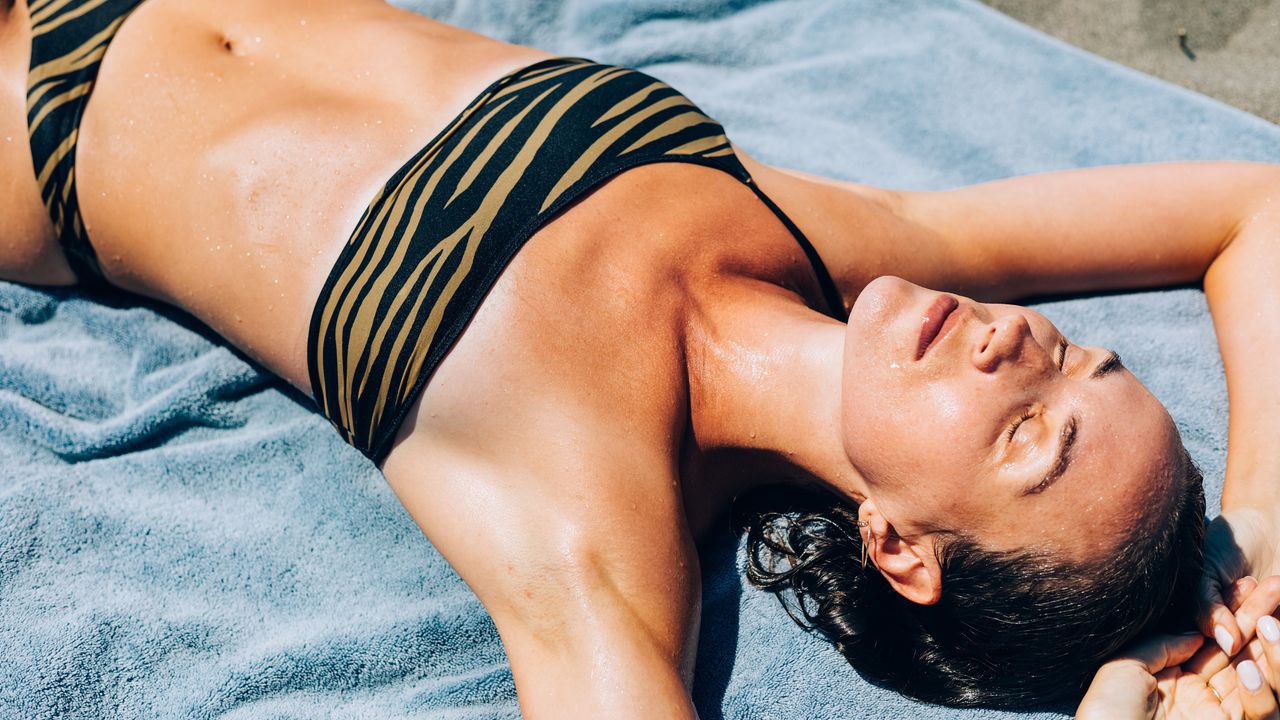
It shouldn’t come as a surprise that there are apps dedicated to tanning. There truly is an app for everything. Why wouldn’t there be one to tell you when to go outside, soak up the sun, turn over, and bake your skin until you achieve the crispy sheen of a Costco rotisserie chicken while accelerating every sign of aging and increasing your risk of cancer?
For many curious (and often quite young) tanners, whose entire lives already revolve around tracking everything from their periods to their reading habits with an app, it makes sense to optimize tanning this way. But there’s one part of the phenomenon that feels particularly dystopian: Many of them have taken the UV Index, a respected meteorological tool, and flipped the intent on its head. Instead of advising users to seek shade or stay inside when the index is highest, these apps reframe those peak hours as the best time to get a sweet tan.
Let’s back up and get scientific with it: “The UV Index was designed to help people understand the strength of ultraviolet radiation at a specific location and time,” explains Jonathan Porter, AccuWeather’s chief meteorologist and senior vice president of weather content and forecast operations. “The impact of UV Index numbers can depend on the length of exposure, the time of year, latitude, time of day, the amount and thickness of cloud cover, and various other atmospheric conditions.” The index measures UV levels on a scale of 1 to 11; the higher the number, the more damaging the rays. It was established in Canada in 1992, with the global UV Index taking effect two years later.
The App Store part makes it seem like a brand-new trend, but we were doing similar UV-maxxing during my youth in the late ’90s and early aughts. The UV Index existed when I was a tan-loving teen and 20-something, but I didn’t know one thing about it. Apps weren’t part of my vocabulary until the mid-2010s, unless you were talking about happy hour. And I wasn’t all that interested in meteorology. I did know, however, that “prime tanning hours” were between 10 a.m. and 2 p.m., and that’s when I was bound and determined to “lay out.” I could laze around on a towel for hours, sipping ice water (or, let’s be honest, a mixed drink in a thermos) and plowing through a paperback, happy as a proverbial clam. Had TikTok existed, alerting me to the existence of the UV Index and apps that promised to optimize my tanning habits, I would have been very into it. I wish I were shocked that young women today are using the UV Index to get tanner faster, considering how much more they know about the health and aesthetic risks posed by the sun. Based on my own youthful obsession with a tan, though, I’m really not.
