 1-800-656-4211




Blog
Fiber Supplements for Women: Side Effects Nobody Warns You About

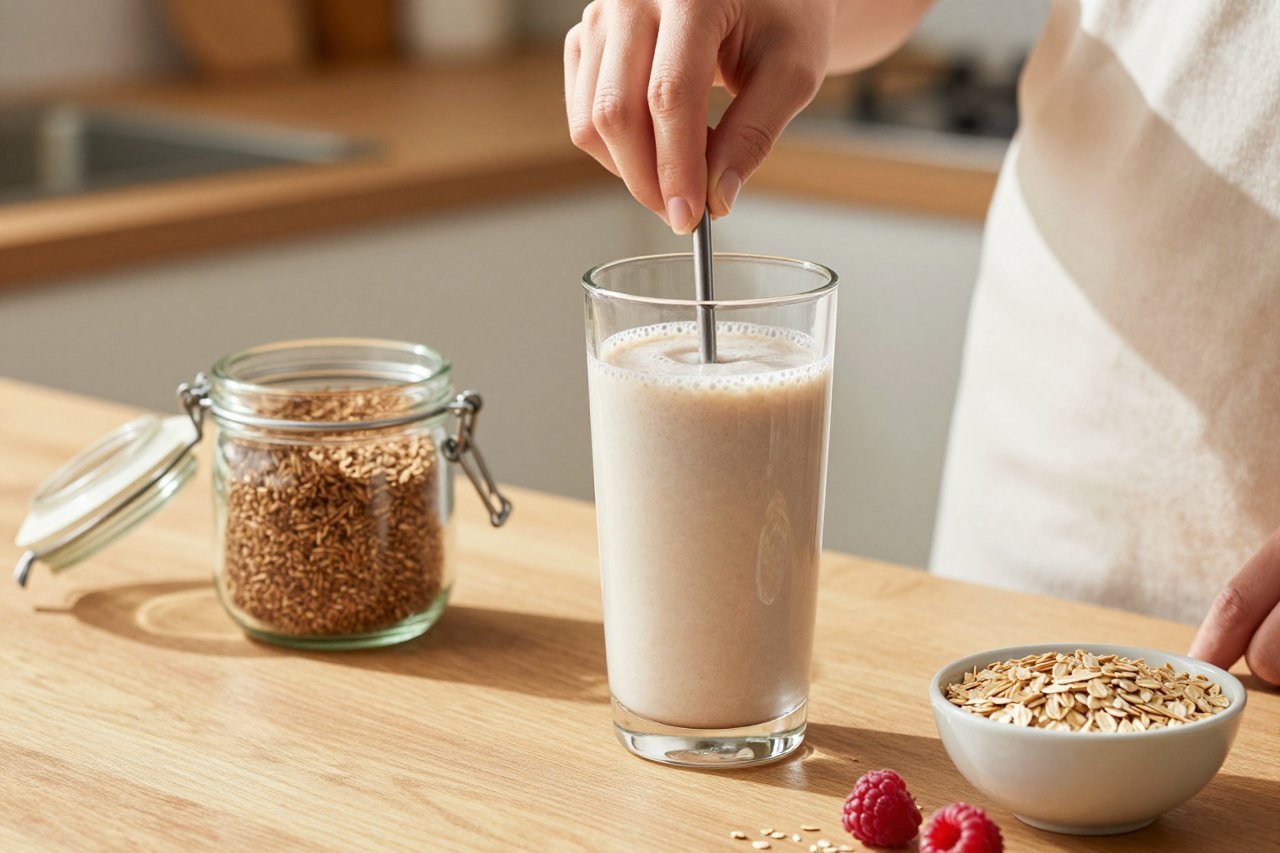
A friend started psyllium on a Monday, one rounded teaspoon in a tall glass of water, and by Thursday her jeans were leaving red marks on her waist. Nothing was wrong with her gut. She had gone from roughly 12 grams of fiber a day to 30 in under a week, and her colon had opinions about it.
That pattern repeats constantly. Fiber supplements are cheap, effective, and recommended for everything from constipation to cholesterol, which makes them one of the first things women add to a routine. They’re also one of the fastest ways to feel worse before you feel better. Most of the side effects are predictable and fixable once you know what’s driving them.
Why fiber supplements behave differently in a woman’s body
Fiber itself is generic. The body handling it isn’t. A handful of factors stack up in ways that matter.
- Body size and dose. Five grams is a much bigger relative hit for a 55 kg woman than for someone at 90 kg. The scoop on the label is not a personalised dose.
- Hormones and bloat timing. Plenty of women already feel abdominal fullness in the week before their period. Add a fermenting fiber on top and it becomes genuinely hard to tell which symptom belongs to what.
- Iron and calcium needs. Women are more likely to run low on iron and more likely to take calcium or a multivitamin, and some fibers bind those minerals in the gut.
- Thyroid medication. Levothyroxine is one of the most prescribed drugs for women, and psyllium can reduce its absorption meaningfully if the two arrive in the stomach together.
- Pregnancy and postpartum. Constipation is already common in both, so the urge to self-treat with a large scoop is high, and so is the risk of cramping.
The side effects you’re most likely to feel
Gas and bloating
This is the number one complaint. Soluble fibers like inulin, chicory root and some resistant starches aren’t digested by you at all. They’re fermented by bacteria in the colon, and fermentation produces gas. That’s not a malfunction, it’s the mechanism. The problem is speed: bacteria given 25 grams of new substrate after months of 12 grams will produce a lot of gas very quickly.
Psyllium behaves a little differently because it gels rather than fermenting heavily, which is why many women tolerate it better than chicory-based powders. But fast-fermenting sweeteners in fiber gummies and “gut health” blends can trigger the same bloating within an hour of eating them.
Cramping and that heavy, distended feeling
Gas has to go somewhere. When it collects in a bend of the colon, you get a sharp, localised cramp that eases when the gas moves. Women often describe it as a stitched feeling under the left ribcage. It usually settles within two weeks of consistent use, but it can be sharp enough to make you stop.
Constipation that gets worse, not better
Counterintuitive, but common. Psyllium can absorb many times its own weight in water. If you add a scoop without adding fluid, you’re essentially creating a gel plug. Any fiber supplement taken with 200 ml of water and nothing else through the day can backfire badly, especially in summer or for anyone who already drinks little.
Loose stools and sudden urgency
Too much at once, a fast-fermenting type, or the sugar alcohols in gummy formulations can tip things the other way. Sorbitol and maltitol pull water into the bowel. If your fiber gummies list either, that urgency after breakfast probably isn’t the fiber itself.
Less obvious side effects women report
Nutrient absorption and stacking problems
High doses of psyllium or wheat dextrin can bind iron, zinc, calcium and magnesium, reducing how much you actually absorb. If you take an iron tablet for heavy periods, swallowing it with your fiber drink is close to a waste of money. Leave two hours between them.
The same logic applies to the rest of your shelf. A multivitamin swallowed at the same time as a large fiber dose is a poor pairing, and some of the side effects of women’s multivitamins — nausea, odd stools, mineral competition — get worse when fiber is in the mix. Fiber isn’t unique here either; antioxidant supplements carry their own set of interactions worth checking before you build a morning stack.
Blood sugar dipping lower than expected
Viscous fibers slow glucose absorption, which is part of why they help with appetite and blood sugar. For a woman on insulin or a sulfonylurea, that slowing can push readings into hypoglycaemia territory, particularly if the fiber is taken without food. Talk to your prescriber before adding 10 grams of psyllium to a diabetes regimen.
Headaches, thirst and a dry mouth
Mild dehydration is the quiet one. It shows up as a dull afternoon headache, dry lips, and darker urine rather than anything dramatic. Fiber increases stool bulk and water loss in stool, so fluid needs genuinely go up by several hundred millilitres a day.
Choking risk and swallowing trouble
Dry powder that gels on contact with moisture can do exactly that in your throat. Always stir into a full glass, drink it within a minute or two before it thickens, and follow with more water. Never take a dry spoonful, and be cautious if you have any history of oesophageal narrowing or swallowing difficulty.
When to stop and get medical advice
Most fiber side effects are uncomfortable rather than dangerous. A few aren’t.
- Severe abdominal pain, or no bowel movement for three days alongside vomiting
- Blood in your stool, or black tarry stools
- Hives, facial swelling or wheezing after a psyllium dose (psyllium allergy is real and can be serious)
- A hard, distended abdomen with no gas passing at all
- Unexplained weight loss or a change in bowel habit lasting more than a few weeks
Stop the supplement and get seen. None of those symptoms belong to the normal adjustment phase.
Which type is gentlest for a first attempt
Not all fibers cause the same trouble. From most to least likely to cause gas and cramping:
- Methylcellulose — synthetic, non-fermenting, very low gas, good for constipated women who bloat easily
- Psyllium husk — gels well, moderate gas, needs plenty of water, best all-rounder for most people
- Wheat dextrin — slow-fermenting, mild, less effective for constipation
- Ground flax and chia — food-first options, gentle in small amounts, need to be ground and hydrated
- Inulin and chicory root — the biggest gas producers, best introduced at 1 to 2 grams, not 8
How to start without the misery
Halve whatever the label says and stay there for at least ten days. A quarter teaspoon of psyllium, or 2 grams of inulin, is a reasonable start. Then add a small increment every five to seven days, only if the previous week was comfortable.
Take it with food rather than on an empty stomach, and split it if you’re aiming above 10 grams. Eight to ten glasses of water a day is not marketing copy; it’s the difference between fiber that works and fiber that blocks you up. Some women find evening dosing gentler because they sleep through the early gas.
If bloating drags past two or three weeks rather than fading, more fiber isn’t the answer. It’s worth checking whether your baseline gut bacteria are part of the problem, which is why choosing a probiotic for women comes with its own side-effect list and its own slow ramp-up.
Watch your other powders, too. A spoonful of lion’s mane extract stirred into the same morning shaker as your psyllium is a popular pairing, and when something upsets your stomach you want to know which of the two caused it. Introduce one new supplement at a time, with a week in between.
The two-week test that tells you whether it’s working
Give any fiber supplement a proper two weeks at a stable dose before you judge it, and track four things in your phone notes: bowel movements per week, stool consistency on a simple 1-to-7 scale, gas severity out of ten, and how much water you actually drank.
What you’re looking for is a Bristol type 3 or 4, three to seven times a week, with gas that peaks in the first week and then settles. If the gas is still climbing at day fourteen, cut the dose in half and hold it there for another fortnight, or switch to methylcellulose. If stools are still hard pellets, your fluid intake is the likely culprit rather than the dose. And if nothing improves after a month of consistent, well-hydrated use, fiber may simply not be the missing piece for you — a GP visit and a look at thyroid, iron and coeliac screening will tell you far more than another jar.
